Spring 2027, April/May target
Exact dates follow route, vessel, safety, and sales gates. September 2026 is no longer the planning case.
A sacred passage through myth, body, becoming and beloved.
Internal working document · not for external circulation
This 8 July decision brief resets the Odyssey around Spring 2027. The meeting should confirm the April/May planning window, clarify the collaborative creative lane, name the owner lanes, and leave the team with a post-call work plan rather than another open discussion.
Exact dates follow route, vessel, safety, and sales gates. September 2026 is no longer the planning case.
Cheyenne has left the team as Creative Director. The prior creative conflict is closed. The active working spine is Odyssey/anagnorisis, and creative direction now moves through a collaborative creative lane.
Ionian/Ithaca is the mythic lead if the five gates pass. Saronic/Porto Heli becomes the operational fallback if two or more Ionian gates fail.
Use this checklist to test Ionian/Ithaca first. If two or more Ionian gates fail, Saronic/Porto Heli becomes the operational fallback for Spring 2027.
Zero or one Ionian gate fails: keep Ionian/Ithaca as lead and solve the gap. Two or more Ionian gates fail: make Saronic/Porto Heli primary for this edition and keep Ionian as future or reduced land-based variant.
Amanzoe or Porto Heli land temple confirms; protected coves are viable; hero vessel/support stack is credible; Athens airport flow is simple; permit/safety owner path is named.
Guy/TBL vessel responses; scout-team route/fixer notes; land-temple responses; preliminary permit/safety read; budget comparison at five, six, and seven pilgrims.
Safety/legal gate. No invitation copy should promise high-intensity scenes, cave entry, night water, nudity or erotic content, restraint, recording, archaeological-site staging, open fire, amplified sound, or private beach closure until the relevant DRI has confirmed the access, permit, consent, and safety path in writing.
Source-note rule. The Working Document is the canonical plan. Source Notes are provenance: raw scouting notes, villa leads, vessel links, and parked empty draft tabs. Do not treat source-note tabs as current plan unless their content has been folded into the Working Document.
After the call. Capture decisions in Meeting Notes, then fold accepted decisions back into the Working Document. Keep raw references in Source Notes. Update the HTML reading surface only after the Working Document is reviewed and cleaned.
Every thread of the voyage, and how far it has come. The clock is the fixed point; the board below it is the live state of every workstream across Creative and Production.
How to read the board. Each bar fills to its current stage (the lit cell is where it sits now), across Open, Drafting, In review, Decided, Locked. The near-term gate is the route and vessel decision, which route, scouting, vessels and budget all hang off.
The Google Doc is the canonical team edit layer. Once the Doc is reviewed and settled, the nightly lane exports it to markdown and flows accepted content into this HTML reading surface so the team can edit in one place and still read from a structured dashboard.
A single complete document with an executive layer on top. Nothing important has been stripped out; the purpose of this version is to make the detail easier to enter, not to replace it with a thin dashboard.
The immediate work is still supplier validation, route choice, land-temple feasibility, named safety/legal ownership, and a budget model that does not outrun the likely cohort.
Use the Contents menu (top right) to jump to the relevant area. Each major section is still intact below; the summary layer is there to orient, not to hide.
Canonical working rule. Team edits go into the Google Doc. The nightly lane settles the Doc first, exports the reviewed state to markdown, then flows accepted content into HTML; v2.0 was the exception because it was reseeded from hand-built HTML.
2 July 2026 · v2.2 refresh. April/May 2027 confirmed; legacy Magician travel constraint removed for Spring 2027; website and Google Doc cross-links added; HTML last-refreshed timestamp added; creative contribution lane clarified; Lucian leads invitation letters with Galad and possibly Geof; Comms tab sanitized.
Links: see top links, 00 / 8 July decision brief, 03 / Critical path, 18 / Routes, 19 / The route decision, and 30 / Sales, enrollment & contracts.
The cockpit. The operating window has moved from September 2026 to Spring 2027, with April/May as the target. The team now has time to prepare the decisions before the 8 July decision meeting: settle authority, rebuild the calendar, pressure-test the route and vessel stack, and turn safety/legal ownership into named lanes. The long pole remains pilgrim numbers, but the reset removes the false urgency of a September launch.
| Call | Ask first | Unlocks | Owner |
|---|---|---|---|
| Route-org partner IN CONTACT | Can you take the whole stack on our route at our scale — hero vessel, team vessel, support tender, private beach and villa access — and if so, what do you need from us before the call? | Whether a whole-stack partner path exists at higher cost but lower producer load. The team must supply cohort, sleeper and budget assumptions before the call or the vendor cannot quote honestly. | Lucian |
| Vessels | Guy at TBL is sourcing the whole stack; Lucian in daily contact. | All vessel options across both routes, consolidated through one source. | Lucian |
| Amanzoe / Porto Heli villas | Can you host a private 35-person ritual dinner with music, security and recovery space in the April/May target window? | Whether Saronic / Porto Heli has a premium land-temple fallback. If Amanzoe confirms, the Saronic route gains a credible Day 5 recognition and recovery venue and the route call simplifies considerably. | Greece scouting team |
| Safety / legal adviser | What agreements, permits, insurance and consent protocols are legally required for this exact production — a private ritual performance on Greek waters with paying guests? | Whether the public invitation can be finalised responsibly. The EU counsel is unavailable (Midsummer); a replacement must be found before the Spring 2027 permit calendar is set. This call is the only path to knowing which scenes can be promised and which must be held back. | Geof + Althea until DRI assigned |
Cohort confirmed → cabin and sleeper spec → hero-vessel availability → support stack → budget validated → deposit and hold. Blocked at the first link. The cohort number has not moved beyond 2 confirmed. Sales must be live now — not after creative locks — because the lead time for pilgrim decisions is months, not weeks. Neither the Magician nor Kronos has been asked to refer. The $184k exposure is the direct consequence of this chain being blocked.
Route confirmed → captain and fixer validation → landings, harbours and permits initiated → safety plan → invitation copy and deposit terms. The route and permits leg unblocks the moment the route resolves; the safety-plan leg stays blocked on the unfilled safety DRIs until they are named. The June scouting trip has produced strong evidence for both Saronic and Ionian; the gap to close is the Ionian middle (Sirens, embarkation, Phaeacian finisher). The route call with the scout team and the supplier call together constitute this week’s unlock for the whole chain.
Pilgrim skeleton agreed → spine confirmed → collaborative creative lane clarified → ritual matrix built → cast asks and priestess recruitment → rehearsal and safety walk-throughs. The previous creative fork is closed. The remaining work is collaborative authority: how the creative lane signs off the spine, scene list, consent boundaries, and rehearsal brief as the team clarifies the model on the call and over the coming weeks.
| Lock by | Milestone | If missed |
|---|---|---|
| Now to 8 July 2026 | Core decisions prepared before the decision meeting; Spring 2027 timing ratified; collaborative creative approval lane scoped; Odyssey/anagnorisis spine confirmed as active; safety/legal owner lanes assigned. | The decision meeting becomes a status meeting instead of a decision meeting; stale September assumptions continue to confuse the team. |
| July-August 2026 | Rewrite the operating plan around Spring 2027; define the route decision method; convert scout evidence into a short route recommendation; update budget cases; draft invitation and sales materials. | The reset remains conceptual and the team carries old calendar debt into autumn. |
| September-October 2026 | Supplier and route validation; legal/insurance path scoped; permit assumptions checked against the preferred route; land temple and vessel stack compared with real supplier responses. | A Spring 2027 launch risks repeating the September problem under a new date. |
| November-December 2026 | Sales, contracts, deposit logic, cancellation terms, and referral path ready; cohort thresholds and go/no-go authority documented while there is still time to act. | Commercial exposure becomes a January/February emergency rather than a designed decision. |
| January-February 2027 | Casting, priestess/holder model, safety protocols, medical and psychological first-aid plan, red-line consent register, and rehearsal brief complete. | The team enters launch quarter without enough runway for safe holding and rehearsals. |
| March 2027 | Suppliers contracted; route and land temple locked; permits and insurance confirmed; rehearsal calendar set; guest travel windows and transfer logic finalized. | Launch month becomes improvisation, with cost and risk rising sharply. |
| April-May 2027 | Launch only if route, vessel/land stack, safety/legal, cast, rehearsals, sales, and guest preparation have all cleared their gates. | Move or re-scope rather than launching a beautiful but under-held production. |
The five decisions that must close together.
None of these five requires more information to begin; they are all decidable now with what the team already holds.
Do not ask the team to decide the whole Odyssey at once. Move each decision through a gate: what answer is needed, who owns it, what evidence passes the gate, what it unlocks, and what happens if it fails. The gates are sequential where one creates the input for the next; they are parallel where the evidence can be gathered at the same time.
★ Reset call — spine and collaboration. The previous creative fork is closed because Cheyenne has left the team as Creative Director. The all-hands should confirm the Odyssey/anagnorisis spine as the active working spine, name the collaborative creative approval lane, and record how creative decisions move from proposal to approval before rehearsal.
| Gate | Question | Pass condition | Unlocks | If it fails |
|---|---|---|---|---|
| ★ Myth & spine | Is the Odyssey/anagnorisis spine confirmed as the active working spine, and how does the collaborative creative lane approve arc decisions? | At the 8 July decision meeting, the team confirms the Odyssey/anagnorisis spine, names the collaborative creative approval lane, and records how the lane resolves creative-production trade-offs with Lucian, Althea, Galad, Geof, Iffy, and Sarah Jack. | The arc, the rituals, the route emphasis, the invitation language, the cast asks, the modalities — the whole creative spine. Nothing downstream can lock until this is called. | Nothing downstream can lock. The team continues building two different experiences simultaneously; the ritual design, the invitation and the cast conversations all carry a fork that will eventually produce a contradiction in the room. The longer this stays open the more expensive the re-do. |
| G0 · Frame | Is 2026 presented as a complete one-off Odyssey, as the first chapter of a possible saga, or is the saga frame held internally until the route and commercial model are stronger? | Althea and Geof make the call explicitly: is the Odyssey a multi-year saga (a recurring annual arc) or a one-off? This is the multi-year frame question, not the per-event creative arc. Sarah Jack and Iffy are consulted where the frame creates production, safety or consent promises. No assumption that saga language is already agreed with the team or appropriate in the first public offer. | Invitation language, alumni and pilgrim status architecture, sales story, and whether repeat-journey ambition appears in the first public offer. Also gates the “First Crossing / Keeper of the Route / Returned” status-tier model — that architecture only makes sense if the long arc is at least internally live. | Default: sell 2026 as a complete Odyssey, with continuation held lightly and not promised. The multi-year saga is a powerful commercial and initiatory architecture; it should be designed as a production assumption even if it is not sold forward. |
| G1 · Cohort | What planning case do we price — 2, 5 or 7 pilgrims — and when is the Spring 2027 go / no-go decision? | Minimum viable cohort (2), target cohort (5) and stretch cohort (7) are explicit; sleeper count, priestess-to-pilgrim ratio (1:1, load-bearing) and cabin split between guests and team are explicit enough that supplier quotes can be compared like-for-like. The November-December 2026 go / no-go date is formally ratified with agreed decision conditions: confirmed count thresholds for green, reconfigure and cancel; who has authority to call it; fallback options (land-based edition, smaller cohort, moved edition); deposit handling for pilgrims already contracted. | Cabin count, priestess recruitment count, core crew split, budget model, vessel class and the sales targets that drive the commercial chain. Without an explicit cohort case the vendor call cannot produce comparable quotes and the budget model cannot be validated. | Use the 2 / 5 / 7 commercial ladder immediately as the working case. Flag that the 2-pilgrim case is not financially green — it is a debt / underwrite case. At five pilgrims on Saronic the net barely clears the base cost (under 2% margin); six is the practical floor for a margin-positive outcome. |
| G2 · Route | Does Ionian / Ithaca pass feasibility on vessel stack, airport flow, tenders, Phaeacian finisher, fixer and permits — or does Saronic become primary? | Named captain and fixer validate the route, confirm tender landings at the key ritual sites, establish there are no obvious permit blockers at the primary sites, and confirm airport flow (EFL for Kefalonia, not PVK which is once daily and tight). For Ionian, five gates must pass: hero vessel confirmed, land temple (Emelisse or Agia Efimia) confirmed, fixer active, airport flow viable, budget viable at six pilgrims. For Saronic, the same structure applies against the Saronic supplier base, with Amanzoe or a Porto Heli villa as the land-temple test. | Route announcement, scout brief, land-base calls, supplier holds, permit initiation and the creative route-specific ritual matrix. Every section of the document below this gate is conditional on the route answer. | If Ionian fails two or more of its five gates: Saronic becomes primary and the Ionian remains a future or reduced land-based variant. If Saronic also fails its land-temple gate: reframe the final night onboard and redesign Day 5. The route decision should be evidence, not preference — captain and fixer validation is the gate, not team opinion. |
| G3 · Vessel stack | Can we assemble hero vessel, scene vessel, support vessel and land temple on the confirmed route for the confirmed cohort? | At least one credible stack with cabins sufficient for the cohort and team, deck use and event rules confirmed, production conditions (sound, costume, props, non-standard landings) verified, insurance path identified, hold terms agreed and the support-RIB advance dressing confirmed as included or separately costed. Guy at TBL is running procurement outreach; responses feed this gate directly. | Budget model, itinerary, safety plan and the full guest journey. The hero-vessel deposit is the first significant financial commitment; nothing is deposited until this gate passes and the route gate has passed before it. | Reduce to land-based Ithaca or Kefalonia version (a villa on Ithaca or Kefalonia as the primary production venue, with day-sailing for scene moments rather than overnight charter), or move to Saronic with its more established supplier contact so far. A two-boat stack in place of three is viable if the cohort is small enough that the support RIB is included in the hero-vessel charter. |
| G4 · Endpoint | Where does Day 5 recognition, recovery and the Phaeacian abundance table happen, and what is the closing transfer flow? | Captain and fixer confirm the closing venue (Ithaca Vathy or Dexia for the Ionian; Porto Heli or a Saronic villa for the Saronic), the transfer flow to the nearest international airport, and a normal closing buffer for guest travel. No fixed pilgrim travel deadline currently constrains Spring 2027; individual guest travel limits should be confirmed before dates are published. Kalamata Airport is the nearest relevant international gateway if the journey ends near Simos Beach; Kefalonia Airport (EFL) if it ends in the Ionian. | Itinerary close, Day 5 design, invitation copy final paragraph, cast housing and recovery design, budget confidence on land-temple costs. Without a confirmed endpoint the invitation cannot be finalised and the production cannot guarantee what is being promised. | Reframe the final night onboard as the recognition venue, or move the route toward a stronger land base. The Phaeacian hinge — washed ashore, received in abundance, the whole tale told before conveyance home — is load-bearing for the Magician’s non-negotiable (integration begins before launch, not after). A reframe must preserve that structural function even if the specific venue changes. |
| G5 · Safety / legal | Is safety ownership resolved across the mandatory domains, and is the legal path to permits, waivers and insurance confirmed? | Maritime Safety lead named and briefed (the captain Guy at TBL brings with the vessel is the natural lead, named when the vessel is chosen). Medic confirmed with psychological first-aid capacity, not only physical — the deepest beats require the cleanest holding. Insurance / legal owner confirmed and a broker shortlist in place. Privacy / consent DRI named. EU legal adviser confirmed as replacement for the prior EU counsel (unavailable from Midsummer). Safety ownership, the consent taxonomy and the safety-signal protocol are all prerequisites for any scene reaching rehearsal. | Permit applications, waivers, cast contracts, rehearsal plan, invitation copy for any scene that involves intensity, and the red-line consent register. The consent taxonomy covers eight categories (physical intensity, erotic / sexual, emotional overwhelm, humiliation / shame, identity and belief challenge, group exposure, recording / media, post-container community) and must be explicit before arrival, not at intake. | No public claim around specific high-intensity scenes. No deposits on any site that requires a permit not yet applied for. Reduce night-water, cave and fire scope until the safety architecture is built. The scenes that go deepest are the last to be confirmed, not the first. That sequencing is the structure that protects both the pilgrim and the production. |
| G6 · Budget | Does the model clear meaningful margin at $77,000 per pilgrim on the confirmed route with the confirmed cohort? | Real supplier quotes (itemised: base charter / buyout, VAT, APA / fuel / port, catering / chef, crew gratuity, support boat, production load-in, permit / fixer / legal, overtime / late-night sound, weather contingency, cancellation exposure) replace the placeholder estimates. The model clears at six pilgrims with 10–15% contingency as a non-discretionary line and with known non-included costs explicitly modelled. Refund / cancellation schedule for pilgrims who withdraw is defined. Minimum-cohort cancel condition (below X confirmed by date Y) is formalised. | Supplier commitments, deposit placement, sales confidence and the go / no-go calendar. At five pilgrims on Saronic the net (~$346,500) barely clears the $340k base — under 2% margin. Six is the practical floor. On Ionian at six pilgrims the margin is approximately 5% — viable only with cost discipline. Seven on Ionian is the first clean case. Ionian artistic preference must not win by default; the financial case must be satisfied alongside it. | Cut scope to the Saronic / Argolic base case, increase the minimum cohort commitment, seek a named underwrite for the gap, or choose a cheaper route architecture (land-based Ithaca / Kefalonia is materially cheaper). The $184k–$201k exposure at two confirmed pilgrims is the consequence of the commercial chain being blocked; the budget gate clears when the cohort gate clears. |
| G7 · Creative | Can all five acts be staged safely on the confirmed route, rehearsed fully, and delivered to a standard that justifies $77,000? | Each act has a written state transition (from state → to state), a confirmed location, a named cast role and priestess role, a safety constraint and a fallback if the primary location fails. The scene-purpose gate is applied: every scene has a written answer to what it is for in the pilgrim arc; what state it moves the pilgrim from and to; what agency the pilgrim holds; what consent it requires; and what integration follows. A scene that cannot answer that question does not belong, however mythically fitting. Safety walk-throughs completed. Run of show signed off by the collaborative creative lane, Program Director and maritime safety lead. | Scout brief, rehearsal brief, cast asks, invitation promise and production readiness. This is the last gate before launch; it is passed by doing, not by planning. | Rewrite the route-specific ritual arc before any further sales commitments are made around specific scenes. A scene that has not been walked through at depth is not on the menu. |
| Role | Who |
|---|---|
| Production | |
| Executive Producers | Lucian · Althea |
| Producer | Sarah Jack |
| Program Director | Geof |
| Teamweaver | Iffy |
| EU Associate Producer | Cleo |
| Technical (light & sound) | Kendall |
| Creative | |
| Creative authority | Replacement creative authority or interim approval lane TBC |
| Bard | Galad |
| Musical Director | David Bergeaud |
| Ordeals | Tahl |
| Commercial and on the ground | |
| Sales & invitations | Althea |
| Greek scout / fixer | via Guy at TBL (to confirm) |
The route gate is the hinge. G2 gates more of the downstream work than any other single decision: vessel stack, land bases, permits, budget model, ritual matrix and invitation copy all wait on it. G2 is itself gated on the consolidated scout sites, the Phaeacian finisher contacts (Emelisse and Agia Efimia are named but uncontacted), and the fixer confirmation. That is why the route consolidation from the June scout and the supplier call together constitute the most consequential single week in the production calendar between now and departure. The route gate is not a preference vote — it is an evidence gate, and captain and fixer validation is the evidence.
The creative spine is not yet decided. This is the canvas the team works from: the proposed synthesis, the readings it draws on, and every open question with its trade-offs and what each choice does to the spine, the edge and everything downstream. Everything here is draft and open. Read across, add your view, and we shape it together.
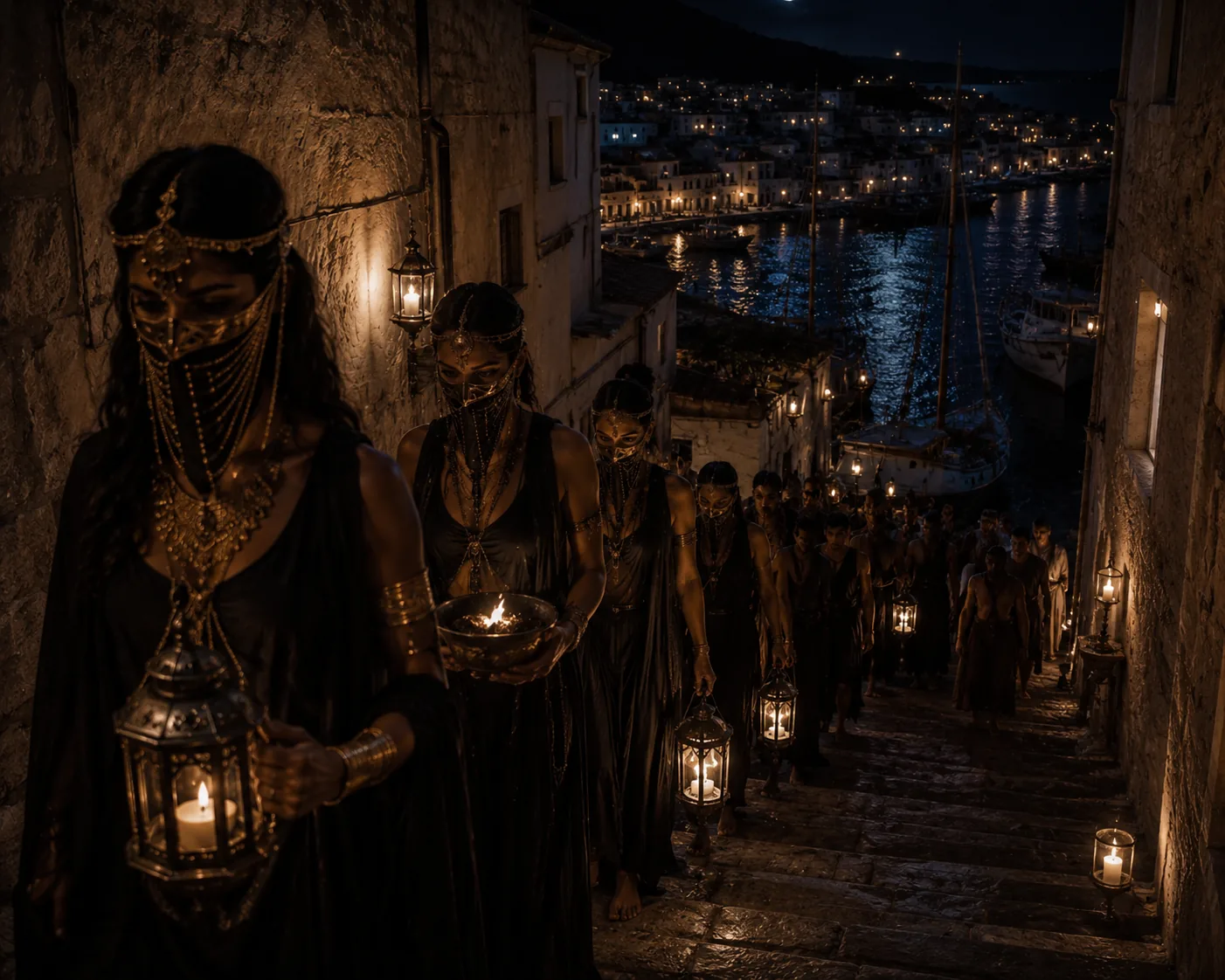
This whole section is work in progress. Nothing below is locked. The foundation, arc, engine, ordeals and experience that follow are the proposed spine, offered for the team to test, stretch and decide, not a settled answer. Push back freely.
Two words are used throughout. Spine is the core organising idea of the journey. Edge is the distinctiveness that justifies a $77,000 container and keeps this out of generic-retreat territory.
Being held and undone (the foundation), so that character is forged, is the mechanism that reveals the true sovereign within. Homecoming (Cheyenne) is the return that integrates that sovereign, and the counterpoint to the triumph the journey opens on; opening triumph and closing homecoming are what make this a descent-and-return arc. Anagnorisis, the Homeric word for recognition, is the engine across it, from recognising the won crown to recognising the sovereign brought home. The pilgrims are sovereigns who have already won their Troy and worn the crown. The journey is about recognising: first the true cost of the victory, then the self beneath the crown and the persona, then the home they have been away from. The climax of a homecoming is recognition, the moment the truth becomes visible.
The dramaturgical structure, the five acts that band the nine beats into movements. The production grain beneath whichever spine we choose.
Lay down the crown to reveal the true sovereign underneath: held and undone, character forged, then brought home. Fully drafted and red-teamed. Sharp and sovereign-coded.
Homecoming as the engine, not conquest. A Gathering, not a Triumph. The frame widens beyond the feminine to the masculine intelligences, holds men, women and couples, and sits inside the larger year-long Kadesha pilgrimage.
The undoing and the homecoming meet in one beat. The opening is the recognition of the triumph; recognition then runs to the homecoming at the end. Ithaca is never prescribed: each pilgrim knows it when they see it.
Each carries the options, the trade-offs, what it does to the spine and the edge, the downstream consequences, and whether it is a team call.
Options. The undoing (held and forged), homecoming, or the anagnorisis synthesis.
Trade-offs. The undoing is sharp and drafted but is only the mechanism and can read relentless. Homecoming is warm, inclusive and true to Homer. Recognition holds both, widening the reach while keeping the distinctiveness, though it is subtler and needs discipline.
Spine & edge. Sets the register of every section and the Day 5 climax.
Downstream. The opening, the arc language, the Day 5 climax, the invitation tone.
Team call. Proposed: anagnorisis (recognition).
Options. The Triumph (current), The Gathering (Cheyenne), or the recognition of the triumph (synthesis).
Trade-offs. Triumph is a clear high-status entry but celebrates conquest, and the Odyssey begins after the win. The Gathering gives arrival, community and the ancient play but can read soft. Recognition-of-the-triumph is sober and sovereign-true but needs careful staging so it lands.
Spine & edge. Defines Day 1 and the whole register; recognition-of-the-triumph is the most distinctive.
Downstream. Day 1 design, the ancient-theatre framing, invitation tone.
Team call. Proposed: the recognition of the triumph, with the Gathering energy inside it.
Options. The King Beneath the Crown, The Sovereign Beneath the Crown, or Beneath the Crown (Lucian); The Journey Home (Cheyenne). All work in progress.
Trade-offs. The crown titles are distinctive, paradoxical and sovereign-coded but male-centred. This first cohort is all men, yet the container should open to powerful women and couples. The Journey Home is warm and inclusive but more generic.
Spine & edge. The title is the visible tip of the spine call. Keep distinctiveness while opening the frame.
Downstream. Cascades through the document, the foundation page, the invitation and the brand.
Team call. Open, every option live.
Options. One priestess per pilgrim (current assumption), or a single meta-Virgil guide with Galad as bard at the reflection moments.
Trade-offs. Priestesses give deep individualised holding and safety in the deepest beats but are expensive (cost scales with the cohort), need long prep each, and carry a heavy recruitment load. A meta-Virgil plus Galad-bard is cheaper, gives year-arc continuity (Virgil led them through the Underworld in the Dante’s chapter and now leads the homecoming), adds a masculine guide, and is simpler to staff, but loses the 1:1 intimate holding and raises who holds each pilgrim at the deepest moments.
Spine & edge. Changes the texture of the container and the gender balance of the holding. A meta-Virgil through-line is distinctive and ties the year-arc.
Downstream. Budget (large), safety (the duty-of-care model must be redesigned if priestesses go), recruitment (the priestess track pauses), and the “Athena to her king” framing.
Team call plus Safety. Open. Current thinking leans away from 1:1 priestesses; explore the meta-Virgil model, and solve the deep-beat holding first.
Options. Include scenes of command, obedience and power dynamics (Cheyenne), or keep “release, never command” (current).
Trade-offs. Including them adds depth and honours the real power-dynamic work, and can be contextualised through mythic purpose. Against: real safety, consent and legal exposure, brand risk for the pilgrims, and a dependency on the unfilled Privacy/Consent DRI and the eight-category taxonomy.
Spine & edge. Affects how intense the container reads; handled well it is distinctive, handled badly it is a liability.
Downstream. The consent architecture, the safety DRIs, cast contracts, invitation copy.
Safety-gated. Design inside the consent architecture first; do not language it until the taxonomy and the DRI exist. Not a wording swap.
Options. Inclusive language now; the couples product as a separate question.
Trade-offs. Inclusive language is cheap and right. A couple changes the holding model, the consent architecture and the $77,000 price, so it is a different offering.
Spine & edge. Language widens the frame at no cost; the couples product is a separate decision.
Downstream. Couples would reshape holding, consent and pricing.
Inclusive language: adopt now. Couples product: a separate call, not urgent for this all-male cohort.
Options. How explicitly the Odyssey appears as one chapter of the larger year-long Kadesha pilgrimage (the pilgrims came through the Underworld in the Dante’s chapter; this is the homecoming chapter).
Trade-offs. Situating it in the year-arc reinforces the homecoming reading and the meta-Virgil continuity, and the multi-chapter pilgrimage is genuinely distinctive. Held too loudly in the first public offer it overpromises (see G0).
Spine & edge. Reinforces recognition and homecoming; the returning-guide continuity is distinctive.
Downstream. Invitation language, the saga and status architecture, what is sold forward versus held internally.
Team call with Geof, who stewards the umbrella. Situate it lightly here.
Register. The language stays mythic and ordeal-led. The homecoming is to what remained true while everything else changed, which each pilgrim fills in for themselves.
| Item | Disposition |
|---|---|
| Spine / engine | Team call, proposed anagnorisis (recognition) |
| Opening beat | Team call, proposed recognition of the triumph |
| Title | Team call, open (all WIP) |
| Holding model | Team + Safety, open; explore meta-Virgil + Galad-bard |
| Command / surrender scenes | Safety-gated, design in consent first |
| Couples product | Separate call, not urgent this cohort |
| Year-arc framing | Team + Geof, situate lightly |
| Masculine archetypes (as forces) | Adopted |
| Consequential-choice mechanic | Adopted |
| Invitation arc | Adopting the mechanic |
| Sirens: temptation | Adopted |
| Inclusive language | Adopted |
| Register discipline | Standing principle |
Every initiation has to answer four questions, and the order is not optional. When we started, the project had life in questions 3 and 4 (the myth and the practices) but was blank on 1 and 2, which are the ones that hold the others up. Two are now answered; the other two are open on a foundation that holds, and they are the live creative calls (see Creative directions).
| Question | Where it stands |
|---|---|
| 1. Who is the pilgrim, and who do they become? The transformation itself, at the level of identity. | Answered. He arrives a victorious king, fused to what he built and armoured, quietly carrying the question of who he is beneath it. He leaves as the true king: the sovereign who was always under the armour, forged whole by the trials and recognized at home. Lay down the crown; uncover the true king. |
| 2. What is the lived journey that changes them? Day by day, the thing that does the work. | Answered. The Triumph, then the descent: nine beats, each a loss that forges a virtue, down through the ego-death at the bottom and up into the homecoming and sacred reunion, with the faces of the feminine moving underneath (see The arc). |
| 3. What structure carries the journey? Hero’s journey, descent, the tentpoles, or something else. | Open, on a foundation. The arc implies separation, descent and return; the exact rendering (the twelve tentpoles, the five acts) is the proposed spine, a live call in Creative directions. |
| 4. What myth and practices clothe it? The Odyssey, the gods, the rituals, the modalities, the beauty. | Open, on a foundation. The Odyssey and its gods, the rituals and modalities: the live creative brainstorm, now resting on a foundation that holds (see Creative directions). |
A genuine, archetypal initiation set in Greece. At $77,000 a pilgrim, the only thing that can justify the price is a real transformation. Strip that out and what remains (beauty, luxury, a good story) is available elsewhere for a fraction.
So the whole design has to earn one sentence: these people leave genuinely changed. Everything below — the myth, the route, the rituals, the boat — is in service of that, or it is decoration we cannot afford.
“Lay down the crown, uncover the true king.” — You can return home, but you cannot return as the person who left. The journey is not about finding Ithaca. It is about becoming the person capable of arriving there.
Odysseus is not a wanderer who got lost. He is a king, a general, the sacker of Troy — at the height of his powers — who is held and undone, losing his fleet, his men, his name, and finally himself, before he is brought home as the true sovereign beneath the armour.
Our pilgrims are the modern version: founders, CEOs, empire-builders, warrior kings. People who authored their own futures and won, over years of real struggle. They arrive crowned. And the thing many of them are quietly carrying, the real question under the success, is who am I, if I am not this? Who am I beneath the empire, the role, the achievement — is there a person in here that is not the thing I built?
We do not tear the empire down, and we do not shame it. We honour it, and then we give them, for the first time in a long time, an identity outside of it: the true king who was always under the armour. They arrive as kings. They leave as themselves.
The confirmed pilgrims have named what they want simply. the Magician: “to be undone, and brought home, held the whole way.” Eleos has now committed to being in (payment not yet received), and has named his desire just as plainly: “we want to be the heroes”, not of a performed ordeal but of something real. These are not therapeutic goals. They are the thing many of them have wanted for twenty years and never said out loud.
This is a real passage, not a theoretical product. The shape is the oldest there is: from the summit of worldly achievement, the C-suite and the trading floor, to setting it down; through the trial and philosophy that rebuild character; to recognising the self the titles had been standing in front of. That is the passage we are designing.
This cohort is currently all men, and the masculine framing fits them exactly. The arc is not closed to women or couples — that is a live conversation — but it would be a deliberate re-open, not a tweak.
The fourteen weeks before the pilgrim boards the boat are the first act. Two instruments carry that approach: a sequence of letters addressed to the pilgrim as Odysseus, and a journal that travels with them across the seven days.
Seven letters, mailed over fourteen weeks, written as despatches from inside the Iliad. They are addressed to the pilgrim not as themselves, but as Odysseus: a king deep in the war, receiving news from the front and from home. By the time they board the boat, they have been living inside the myth for three months. They do not need to be introduced to it. They are it.
| Letter | Theme | Arc beat | What it does |
|---|---|---|---|
| Letters 1–3 | Deep in Troy | Building the victory self | Despatches from the siege. The strategy, the long years, the moment the Horse goes in. Letter 3 is a soldier’s account of Odysseus at the wall — how he looks from the outside at the peak. The pilgrim reads what the armour looks like when it is working. They arrive at Beat 1 already knowing what their victory tastes like. |
| Letter 4 | Troy is burning | The first hairline crack | The ships are loading. Agamemnon and Menelaus quarrel over spoils and credit. The victors disagree. The homecoming is messier than the war. The triumph is real — and something is already unsettled underneath it. |
| Letter 5 | From Penelope | The home that has changed | She has been waiting. The letter is warm, careful — and it is unmistakable that she has become someone else in ten years. The home they are returning to has changed. She does not say it directly. She does not have to. |
| Letter 6 | Signed by a mortal, written by something else | The threshold nearing | The most personal letter. Draws on one thing the pilgrim said in their intake — something that echoes back in mythic language. They do not quite know how the sender knew. You will not be home before autumn. The gods are arranging something. An enemy he does not yet know he has made. |
| Letter 7 | Just before launch | The call | Short. No sender named. A single page: “You have built something. All of it is true. Something is about to begin that will test whether you are more than what you built. Come.” |
The intake — sent when a pilgrim confirms their place — is not a questionnaire. It is a short prompt: what war have you been fighting, and what did winning it cost you? Their answer feeds Letters 1–3 and personalises Letter 6. Their specific battle becomes the Trojan War in the letters. Althea and the collaborative creative lane write the series; the intake material allows each letter to feel like prophecy rather than template. At scale, AI-assisted first drafts can be used, but every letter needs a voice-check pass from the collaborative creative lane before posting.
Given at embarkation — not before. It belongs to mythic time, not calendar time. It travels with them across all seven days and is the raw material from which the integration day retrospective is written.
The arc is a descent and a return. It opens on the triumph, the crown already won, then holds and undoes the pilgrim beat by beat; each beat lays something down and uncovers something truer beneath, and at the bottom (Beat 7, the Underworld) the self is set down entirely, then chosen back. The homecoming is the return that integrates the true sovereign the descent reveals, the counterpoint to the opening triumph. It fuses the hero’s journey, death-and-rebirth and homecoming, and beneath every beat runs a face of the feminine, an undercurrent no pilgrim is told about but every one of them meets. This is Lucian’s proposed transformational spine; whether the primary engine is the descent or the ascent and return is an open call (see Creative directions and the Honest state).
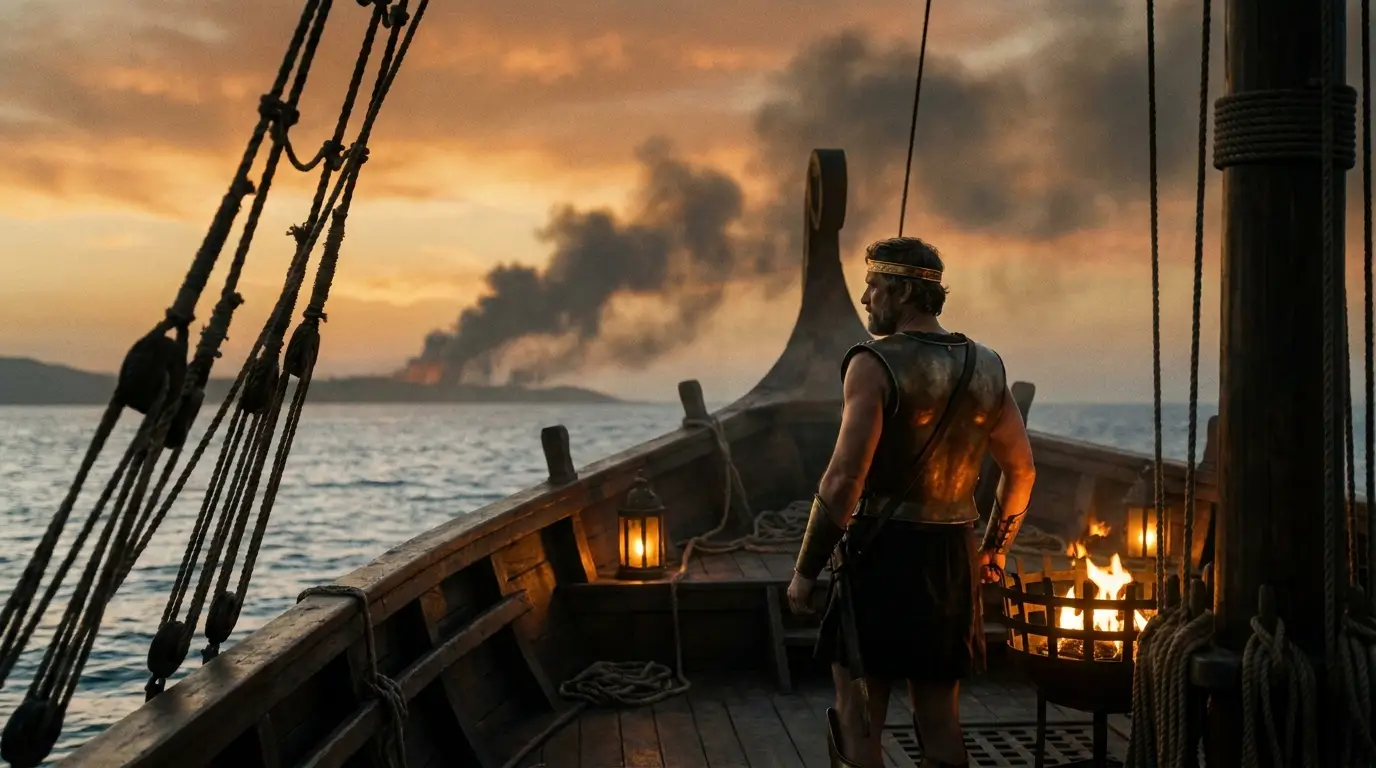
Beat 1
The king at the height of his power.
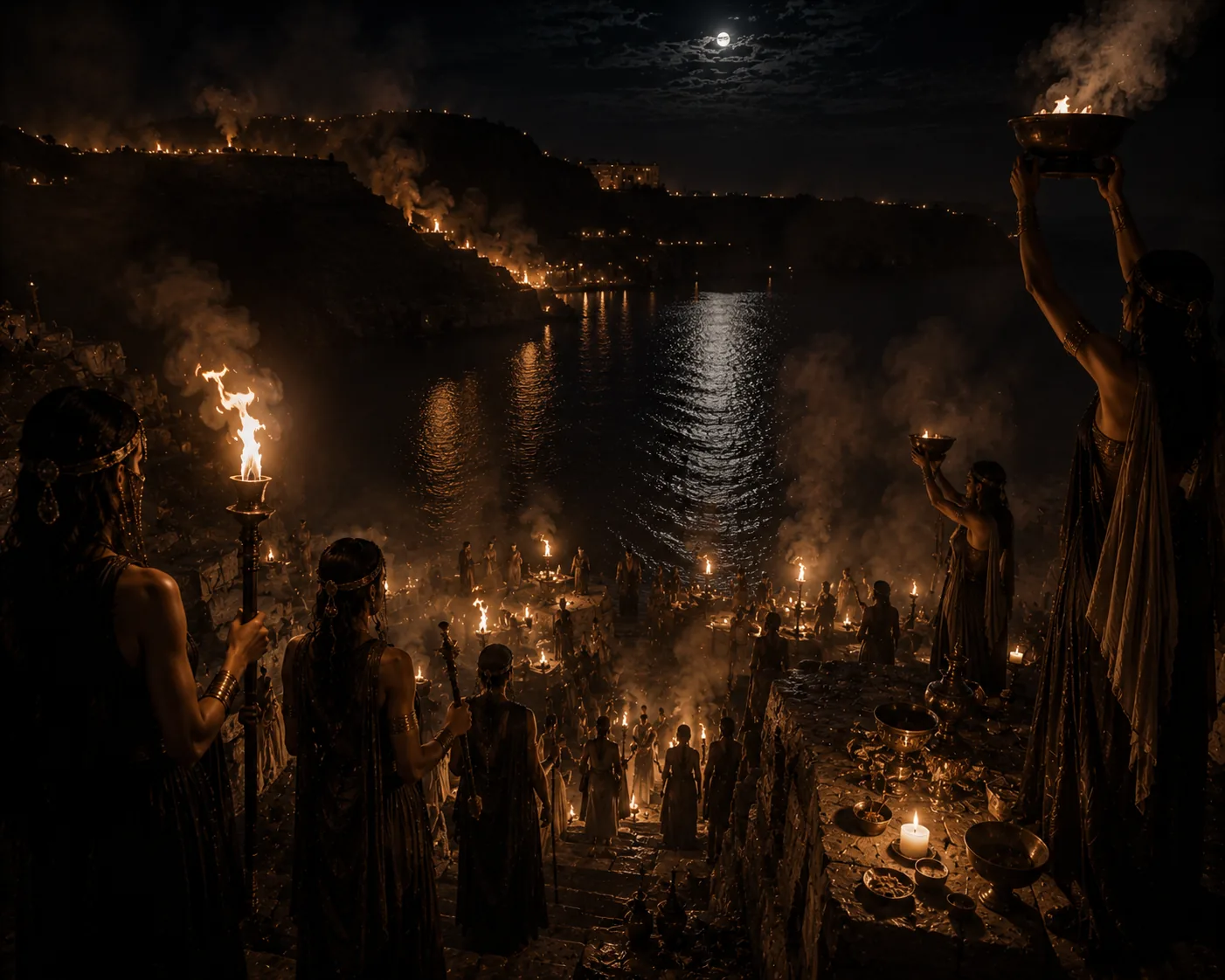
Beat 7
The undoing, at the Underworld.
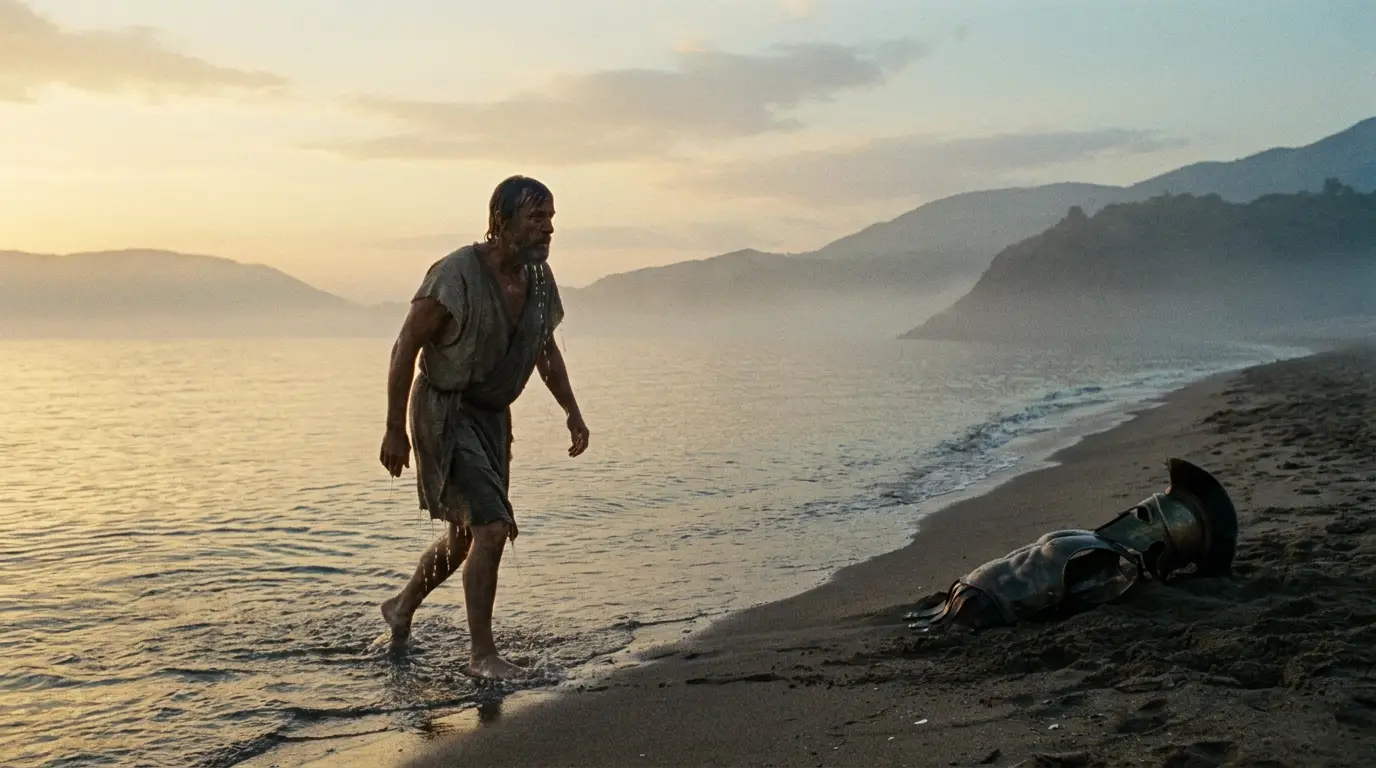
The return
The self met; the crown set down.
The diagram above re-reads the same nine beats through each lens. In one table:
| Beat | Lays down → uncovers | The feminine face | In the Odyssey | Act |
|---|---|---|---|---|
| 1 · The Triumph | the crown → the true king | The Absent Beloved (desire, longing) | Troy won; he turns for home, not yet knowing he needs her. | I · Triumph |
| 2 · Loss of certainty | the map → presence | The Lotus (oblivion) | The Lotus-Eaters; he refuses the sweet forgetting and drags his men back. | II · Unmaking |
| 3 · Loss of control | the helm → surrender | The Great Mother, the sea (elemental fury) | Aeolus’ winds, opened in sight of Ithaca; the storm hurls him back. | II · Unmaking |
| 4 · Loss of status | the title → essence | Her absence (the Cyclops) | He survives as “Nobody,” then his pride names him and earns the curse. | II · Unmaking |
| 5 · Loss of persona | the mask → the wild | The Enchantress, Circe (wild eros, sovereignty) | Circe, met as an equal; the appetite owned, not ruled by. | III · The Wild |
| 6 · Loss of destiny | the plot → freedom | The Siren (the deadly-beautiful) | Bound to the mast, he hears the annihilating song and lives. | III · The Wild |
| 7 · Loss of self | the “I” → the ground | The Mother, Anticleia (grief, the death-mother) | The Underworld; the ego set down before the dead. The axis of the arc. | IV · The Descent |
| 8 · Loss of everything | the wreckage → grace | The Tender Ones (Calypso, Nausicaa) | Scylla and the shipwreck; he washes up naked and alone, and learns to be received. | IV · The Descent |
| 9 · Homecoming | the crowned self → the true king, home | The Beloved (Athena, Penelope) | Ithaca; the scar, Argos, the olive-root bed, recognition and the meeting of equals. | V · The Return |
Face of the feminine
Desire and longing: the home he has been away from.
Face of the feminine
The sea: elemental force no will can command.
Face of the feminine
Mercy and care after the ordeal.
How the layers stack. The order is the transformation’s, not the poem’s. The feminine runs under every beat except the Cyclops, where her absence is exactly the point: the brute masculine with nothing to temper it. Two ordering questions are still open: where the Cyclops ordeal falls, and whether the Sirens crossing comes before the Underworld (see Creative directions).
The reason it can hold so many things at once is the way each day is constructed. Each day is a single theme, felt at four levels, carrying three aspects at once.
Different pilgrims drop into different levels at different moments; every level pulls the same daily flow.
Each aspect is present all day; the pilgrim encounters them in whatever order their own depth allows.
The nine beats stay the working unit — it is easier to hold the whole arc and see what is missing than from a collapsed five. But a day is not a beat: each day has a morning, an afternoon, and an evening, and may carry one beat, two, or a fraction.
Which beats fall on which days is provisional, marked in brackets, and settled later with the team and against the real locations, geography, and rituals.
One day, one theme (the mask), felt at four levels, pulling in the same direction:
| Level | How the theme lands |
|---|---|
| Inner | The pilgrim’s journal prompt: what persona did you put on for this room — who were you performing? A question with nowhere to hide. |
| Interpersonal | The priestess (as Circe) does not allow the performed self. She meets the person she actually finds, not the title. The eros of being seen through. |
| Collective | The cohort performs a shared ritual of mask removal — named, witnessed. Each pilgrim names the persona they arrived wearing. |
| Poetic / mythic | Circe turns men to swine — the animal beneath the mask. Moly is the herb of self-knowledge that holds the shape. The scene is lived, not explained. |
Loss (lay down the persona) + the erotic encounter met as an equal + self-mastery forged — one day, one theme, felt at four levels. This is the structural answer to “do less, deeper.”
What follows is a DRAFT reconciliation of two parallel, partly-duplicated arcs written by the collaborative creative lane and Althea and drawn from the Ritual Arc tab of the working Google Doc. It is not a creative ruling. Beat-to-location mapping is left deliberately open throughout; that belongs in the route section once the route is confirmed.
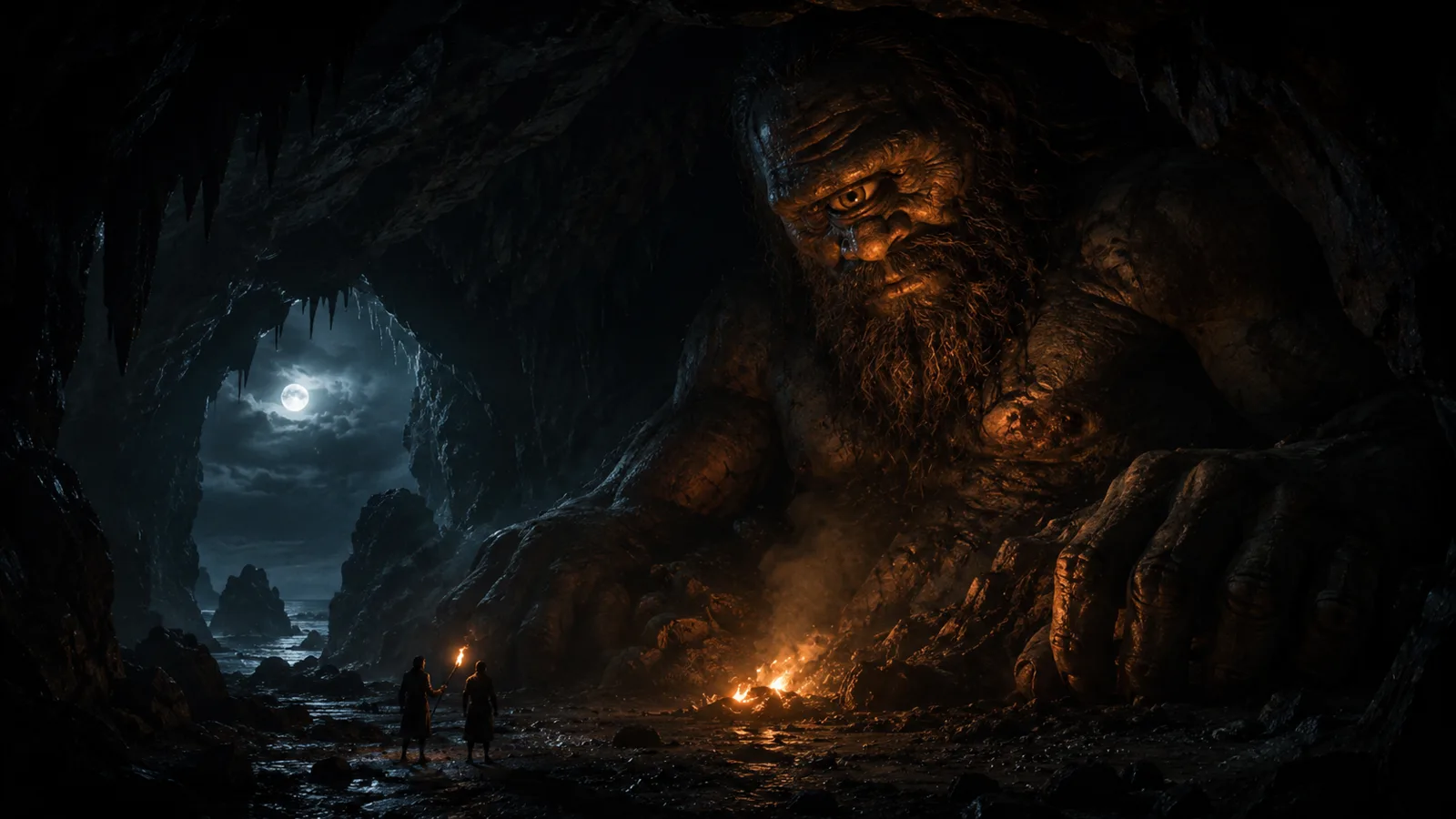
Status: draft reconciliation. Arc A and Arc B are both Cheyenne’s drafts of the day-by-day experience: Arc A her five-day kundalini-ascent version (THE CROSSING through HOMECOMING), Arc B her detailed scene-by-scene version (THE THRESHOLD through PROPHECY AND RETURN). Both are partial and partly duplicated; where they diverge materially, this reconciliation flags it. Neither has been ratified by the team. Both carry Cheyenne’s kundalini-ascent frame; whether that ascent is the primary engine, or a scaffold beneath Lucian’s death-and-rebirth descent-and-return spine (section 10), is the open engine question.
Invitation letters across the fourteen-week run-up, addressed to the pilgrim as Odysseus. Each arrives at a threshold moment in their preparation. The series ends with a short unsigned summons. The intake question placed at the centre of the arc: What war have you been fighting, and what did winning it cost you? This question is a commitment, not a journaling prompt: named privately, received by the team, held through the whole arc, and returned at the closing recognition answered by the journey. The Day 1 arrival ritual completes a preparation arc that began weeks earlier; how the two join up is open and belongs to the collaborative creative lane.
The pre-arrival preparation phase spans four to eight weeks before launch: an online ritual, a costume-and-altar prompt, a personal-myth questionnaire, and a packing guide. Three group online rituals occur across the preparation run-up, at successive new moons, covering desire and remembrance, shadow and threshold, and sovereignty and embodiment. One 1:1 session with the collaborative creative lane or assigned guide, plus three 1:1 sessions with each pilgrim’s assigned priestess, complete the preparation arc.
Beats: Victory (the king’s world at its height), opening of Certainty Lost. Kundalini: Root — threshold, departure, survival, belonging.
Guests witness a living tableau of the mythic characters they will encounter: Athena, Aphrodite, Hera, Circe, the Cyclops, the Sirens, Poseidon, Scylla. This is the introduction of the field before the descent into it.
Evening — Birth of Venus (Arc B placement). Sea-emergence ritual. Witnessed rebirth. The first consecrated night.
Divergence. Arc A stages the ancient-theatre presentation of archetypes on Day 1 evening; Arc B places a Birth of Venus emergence ritual there instead. Which holds the evening slot, and whether the other is moved to preparation, is the collaborative creative lane and Althea’s call.
Day 1 question: What journey am I being called into? Which parts of my psyche are revealed in these characters?
Calypso’s Invitation — Day 1 or Day 2? Arc B places the first major choice (Calypso’s secret invitation to remain behind in paradise) on Day 1, as the first test of commitment immediately at embarkation. Arc A places it on Day 2, after the seduction/enchantment day has softened the pilgrim. Placement changes what the choice means: Day 1 tests resolve before the journey has cost anything; Day 2 tests it after comfort has already started to work. This divergence is unresolved.
Beats: Certainty Lost, Control Lost. Kundalini: Sacral — pleasure, desire, enchantment.
Mythic function: seduction through beauty and comfort. Time becomes distorted. The nervous system softens. Pilgrims begin to forget why they came.
Environment: oils, baths, fruit, silk, perfume, slow music, erotic softness, hypnotic movement loops.
Prolonged experience technologies: prolonged eye gazing with a Lotus Eater or Calypso figure; synchronised breath; trance chanting; repetitive sensual movement. The goal is altered consciousness, not entertainment.
Privately offered: “What do you refuse to leave behind?”
Each pilgrim chooses one. This choice is secret and secretly shapes future encounters. This is the scroll/choice-point system in its first activation: no two pilgrims will follow the same Odyssey from here.
Physical challenge, church or enclosed threshold space. Third-eye activation. Blindfolded navigation — must find something in the dark.
Divergence: Cyclops placement. Arc A places the Cyclops ordeal on Day 2 as a perception and trust challenge (seeing with the third eye). Arc B moves the Cyclops to Day 3 as an appetite, ego, and shadow confrontation. The placement changes what the Cyclops means: Day 2 is about seeing; Day 3 is about power and animal hunger. This is one of the four open placement questions for the collaborative creative lane and Galad.
Day 2 question: What am I unable to see? What do I see with my third eye? What does trusting the unknown feel like in my body?
Beats: Status Lost, Persona Lost. Kundalini: Solar Plexus — power, appetite, sacrifice, shadow.
Sailing lessons continue. Then the Circe encounter: canyon or wild-shore setting; pilgrims carry huge vessels of Circe’s potion. The question underneath: is it their own undoing, facing the beast within? Circe does not punish; she reveals what participants unconsciously become to survive. Primal embodiment, seductive guides, shape-shifting performers.
Day 3 morning question: What spell am I under? Where do I subjugate the feminine? What do I become when I stop performing?
Day 3 afternoon question: How do I relate to power, beauty, strategy, and others? Which pole do I inhabit, and what does the other cost me?
Participants must choose a path. No explanation is given.
The Path of Scylla (confrontation and sacrifice): public witnessing, fear, exposure, intensity, physical challenge, rope/restraint, catharsis. Sacrifice: ego defenses.
The Path of Charybdis (dissolution): silence, sensory deprivation, floating, hypnosis, repetition, darkness, isolation. Sacrifice: identity coherence.
Afterward, participants compare experiences and discover that everyone’s Odyssey has diverged. The scroll/choice system has now forked the arc.
Divergence: Scylla-or-Charybdis placement. Arc B places the impossible dilemma on Day 3 as part of the Wild Shores. Arc A places it on Day 4 as the afternoon complement to the Underworld evening. Day 3 placement means the sacrifice precedes the descent; Day 4 placement means the descent follows the sacrifice. This is a structural decision about where the point of no return falls in the arc, and belongs to the collaborative creative lane and Althea.
BBQ on a private beach or a night ritual: participants write what must die and place it in a bottle. The writing is a commitment, not a ceremony — it is held and returned later.
Beats: Destiny Lost, Self Lost, Everything Lost — the axis. Kundalini: Heart and Throat — truth, devotion, temptation, expression. Both arcs agree: Day 4 is the deepest day. This should be one of the most memorable experiences of the entire Odyssey. Not a challenge. A descent.
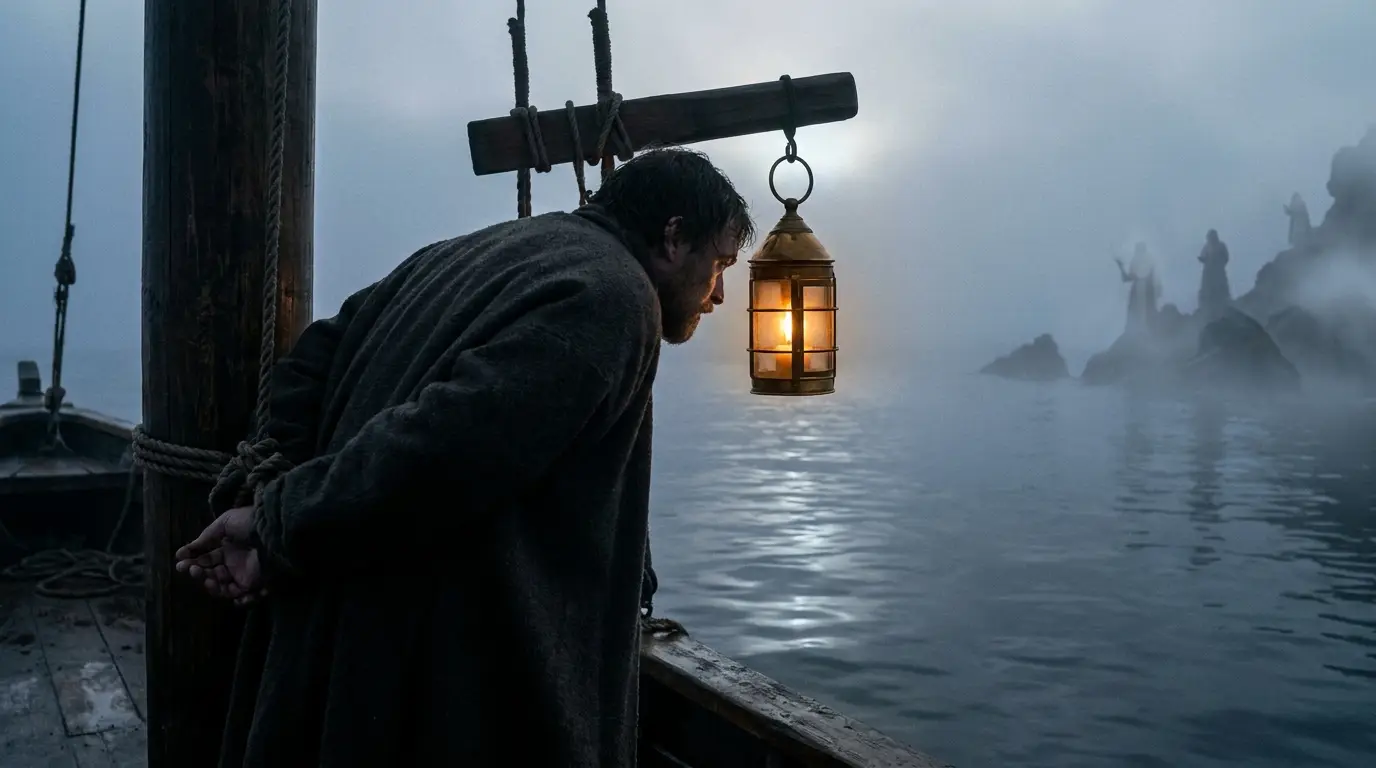
For hours beforehand, pilgrims hear distant singing across the water. Never fully seen. The longing builds. The Sirens sing each pilgrim’s deepest unconscious desires back to them:
The Siren Encounter: a soprano (opera, pole, contortion), a multi-instrumentalist (harp, violin, piano), Althea, and the named creative lead. Sirens on ship: pole dancer, opera singer, shibari, wax. Participants hear multiple siren calls in darkness and must choose which voice to follow. Each voice leads to a different revelation.
Yoni gazing: with a nymph figure while sublimating the awakened energy. Pilgrims must row or swim to shore — is there a choice? Kundalini practice: sensory sublimation while held in arousal.
Tied to the Mast: not punishment but devotion to destiny. “I refuse to abandon myself.” This is the moral hinge of the whole arc.
Day 4 morning question: What calls me away from my destiny?
The impossible dilemma: six-headed Scylla or Charybdis (the whirlpool). In Homer, Odysseus chooses Scylla, loses six men, then faces Charybdis when Zeus destroys the raft — he holds onto a fig tree branch as it spits him back.
Production translation: which way are you willing to be undone? A puzzle or treasure hunt in which the choice made changes what the participant experiences. The consequence is real, not theatrical.
Day 4 afternoon question: What am I willing to sacrifice? What form of loss can I choose rather than have done to me?
The Nekyia. Cave journey in the evening: bonfire in cave, ancestral voices, shadow work, death ritual. In Homer, Odysseus poured libations — of milk, honey, wine, water, barley — and the ghosts drank and regained memory. The pilgrims offer something of themselves.
Day 4 evening question: What must die? What do the dead know that I have refused to?
Divergence: Sirens before or after the Underworld. Arc A runs: Sirens (Day 4 morning) then Underworld (Day 4 evening). Arc B runs: Sirens as the morning lead and the Underworld as the descent. The question is whether the Sirens are the temptation that leads to the descent, or the test that follows the return from it. In Homer, the Sirens come after the Underworld. Whether mythic fidelity or the felt arc of the pilgrim’s Day 4 should decide this is Galad and the collaborative creative lane’s call.
Beats: the Phaeacian hinge, Self Remembered. Kundalini: Third Eye and Crown — prophecy, transcendence, return.
Silence until noon. The Phaeacian hinge: washed naked onto Scheria, received in abundance, and there telling the whole tale before being conveyed home asleep. The telling is where integration begins. Before the feast there must be the telling — this is the Magician’s non-negotiable, and the load-bearing reason the integration arc begins here, not at departure.
Raft Building (Arc A): pilgrims collectively build a real raft and must use it to reach the next location or island. A scroll or figure waits on a branch and directs them onward. This is the Calypso ordeal — the vessel home must be made by hand.
Divergence: Day 5 morning. Arc A builds a collective raft as the crossing act; Arc B stages oracle and silence only. The two positions are not incompatible but they read differently: the raft is an ordeal, a collaboration, an earned passage; the oracle is reception, stillness, surrender. Which tone opens Day 5 is the question for the collaborative creative lane and Althea.
Now the energy ascends fully: spinal breath, devotional movement, energetic circulation, partner practices, transcendence through presence. Not catharsis any more. Embodiment.
Recognition sequence: new garments, olive branches, new names or titles. Final witnessing — what the pilgrim is no longer available for; what they now embody. The Odyssey ends not with conquest but recognition.
Design note on failure mode the high-status king is in his natural habitat at a party and the armour can go back on at the exact moment it came off. The remedy is Recognition first, then feast — the witnessing must hold before the ecstasy opens. The priestess presence holds the line between sacred release and expensive excess.
Day 5 question: Who returns? Not who survived — who returns?
Neither arc details the integration day, but the Foundation treats it as first-class: the opening of the post-journey arc, not a logistics handoff. A private retrospective drawn from the pilgrim’s own journal. A witnessed re-entry. An evening feast as a closing consecration. The 90-day protocol is the first designed object after departure (not yet designed; see Section 16 / After the journey).
Guest travel buffer: no fixed pilgrim travel deadline currently constrains Spring 2027. Keep a normal Day 5-to-Day 6 closing and transfer buffer, and confirm individual guest travel limits before dates are published.
Cheyenne’s drafts map the journey explicitly as a kundalini ascent from Root to Crown. This is the historical energetic spine of her version. The useful material should now be harvested into the Odyssey/anagnorisis spine where it strengthens the active arc; it no longer sets the primary direction by default.
Recommendation (working analysis). Make the death-and-rebirth descent-and-return the primary engine and keep the kundalini ascent as energetic scaffold beneath it. The pilgrims arrive at the summit, sovereigns who have already won; their transformation is to be undone and remade, not to climb from root to crown, so a descent fits their psychology where an ascent works against it. The Odyssey is itself a nostos (height, undoing, the Underworld, return), so descent-and-return is the myth’s native engine and the ascent is an overlay. The descent gives a true crucible, the ego-death at the Underworld, and a recognition climax at the homecoming; a monotonic ascent has no death-and-rebirth pivot. Root-to-crown, chakra-per-day is also the lexicon of mainstream high-end wellness and reads generic, where a king broken and remade is what holds the container’s distinctiveness. And the faces of the feminine are honoured more fully running beneath the descent than as an energy ladder, so this reading serves the feminine more, not less. This is the working analysis’s view; the engine remains the team’s call at the myth gate.
| Day | Chakra | Mythic function | Primary scene |
|---|---|---|---|
| 1 | Root | Threshold, departure, survival, belonging | Embarkation, purification, fire crossing |
| 2 | Sacral | Pleasure, desire, enchantment | Lotus Eaters; first scroll/choice; eye gazing |
| 3 | Solar Plexus | Power, appetite, shadow, sacrifice | Circe, two-island competition, Scylla-or-Charybdis (one placement) |
| 4 | Heart and Throat | Truth, descent, annihilating beauty | Sirens, Underworld cave, removal of masks |
| 5 | Third Eye and Crown | Prophecy, transcendence, return | Oracle, raft, Dionysian feast, recognition |
Participants continuously uncover scrolls, symbols, hidden objects, riddles, and secret pathways. Some clues lead toward shadow; some toward prophecy; some toward intimacy; some toward temptation; some toward entirely different ritual pathways. No participant experiences the exact same Odyssey. This is the Nordic-LARP consequential-choice mechanic: real player choices that change the world and the pilgrim’s own outcome, so the consequences of their decisions are genuinely felt. Lucian owns the design of the mechanics; the arcs have already seeded the system through Calypso’s Invitation, Scylla-or-Charybdis, and the Siren voice-choice.
Each pilgrim faces ordeals shaped specifically to them, drawn from the intake questionnaire (the war they fought, what winning it cost them, what they refuse to leave behind). The trial lands on the actual person, not a generic scene. This is a stated creative intention, not yet designed. Owner: Tahl (§13 Ordeals), woven into the choice mechanics above.
Design gap: world-affecting choices. The choice-points designed so far (Calypso’s Invitation, Scylla-or-Charybdis, the Siren voice-choice) change the chooser’s own outcome. The fuller Nordic-LARP promise, where a pilgrim’s choice visibly changes the shared world or another pilgrim’s path, is intended but not yet designed. It is owned by the Ordeals workstream (Tahl); see the Ordeals section for the build timeline before the choice system is finalised.
Throughout the voyage, and especially concentrated on Days 3, 4, and 5:
The goal is altered consciousness as a transformational state, not entertainment. The programme calls for deeper somatic and Kundalini work — 2-hour-plus sustained states rather than 20-to-30-minute windows — with a preparatory dieta or cleanse in the weeks before arrival.
A storytelling or bard segment each morning carries the mythic arc and names what day the crew are sailing into. This holds the through-line even as individual experiences diverge through the choice-point system.
The structural question not yet resolved. Whether the primary engine is the ascent (rising to crown, illumination) or the descent (dying at the bottom and reborn) must be named before Day 4 and Day 5 can lock. Right now both arcs run both at once. This is the team’s call, and it decides what Day 5 actually does to the pilgrim.
From the 19 May call. One continuous initiatory container (ordeal and pleasure woven together, not siloed); a daily bard segment (Galad) carrying the arc each morning; deeper somatic / Kundalini work in 2+ hour states with a preparatory dieta or cleanse; minimal substances, at most a single mushroom ceremony in an Oracle-of-Delphi register, and no play-party elements, the focus being spiritual and energetic connection.
Ordeals are where the arc stops being a story the pilgrim watches and becomes one they are inside. Each is shaped to the specific person from their intake — the war they fought, what winning it cost them, what they refuse to leave behind — and each carries a real choice whose consequence is felt, by them and sometimes by the others.
Two mechanics run underneath every ordeal. The first is personalisation: no two pilgrims face the same trial, because it is built from their own intake rather than a generic scene. The second is consequential choice: the Nordic-LARP principle that a real decision changes the world and the chooser’s own outcome, so the stakes are felt rather than narrated.
Each pilgrim’s ordeals are drawn from what they named at intake. The Cyclops for one is appetite; for another, brute certainty. The trial is tuned so it cannot be met from the persona they arrived in — it asks for the thing they have been refusing.
The choice-points designed so far (Calypso’s Invitation, Scylla-or-Charybdis, the Siren voice-choice) change the chooser’s own path. The fuller layer, where a choice visibly changes the shared world or another pilgrim’s path, is the frontier this workstream owns, with consent and safety built into the frame from the start.
Owner. Tahl. Ordeal design sits between the creative arc and the safety architecture: every ordeal needs a written state transition (from-state → to-state), the agency the pilgrim holds, the consent it requires, and the integration that follows. An ordeal that cannot answer those does not go on the menu, however mythically fitting.
A transformation stands or falls on what is actually said in the room. The voice — plain, mythic, never explaining the undercurrent — is the through-line across invitation letters, scene text, priestess lines, and recognition. The voice and the scripts are not yet developed. This section holds the seeds, the structure, and the first drafts of the invitation letters in full.
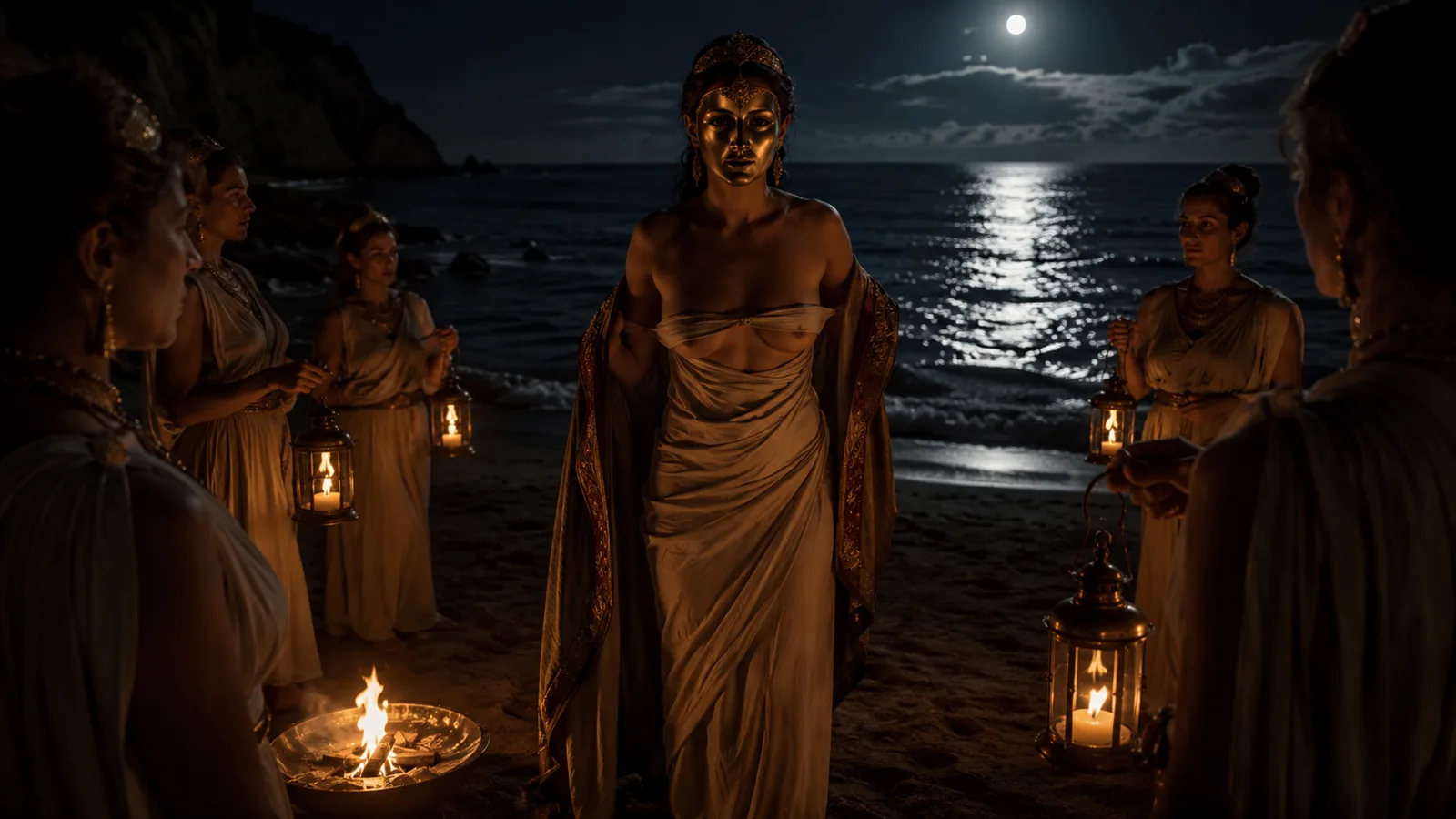
Status. The spine is not yet ratified, so the full scene text cannot be written. What follows is: the invocation seed, the scene-by-scene spoken-text brief, the priestess and Virgil line structure, and the seven invitation letters in full draft (from the Aphrodite’s Odyssey preparation arc). Owner: Lucian and the creative leads. First delivery: Chapter 01’s first scene as the test of the voice, plus the invitation letters refined against the confirmed spine.
The voice across all ritual text, letter, and scene language is:
Spoken at embarkation by the ship’s Virgil figure or the presiding priestess as the vessel leaves the harbour for the first time. This is the first ritual text the pilgrim hears. It does not introduce the programme; it drops the pilgrim into the field.
| Version (for the team to select from) |
|---|
You left a world behind. Do not look back at the harbour. The sea does not care what you have built. It has been here longer than your name. It will be here after the name is gone. Something in you already knows this. That is why you came. There is no map from here. There is only the water, and what it asks, and whether you answer. |
The one who sails from here is not the one who will return. They do not know this yet. You are on the wine-dark sea now. The gods are watching. Some of them are in your body already, waiting for the shore that will strip you of everything you think you need to be. What part of you has not come home yet? That is the one we sail toward. |
This brief names the voice requirement per scene. Full text is written by Lucian once the spine and placement divergences resolve.
| Scene | Speaker | Tone requirement | Seed text or first line |
|---|---|---|---|
| Embarkation / threshold crossing | Virgil figure (ship’s narrator); all priestesses present but silent | Weight, no warmth yet. The pilgrim is crossing, not being welcomed. | “You left a world behind.” |
| Lotus Eaters / golden prison | Calypso or Lotus-Eater figure — not explained, only embodied | Hypnotic, slow, seductive. Does not name what it is doing. No imperative mood. | “You could rest here. You have been carrying it so long.” |
| Circe encounter | Circe figure directly to each pilgrim in turn | Direct, commanding, without cruelty. She sees what the pilgrim becomes when no one is watching. | “I know what you turn into when you think you’re alone.” |
| Siren voices | the two Siren performers — sung, not spoken; heard from a distance first, then up close | The words must come from the intake material for each pilgrim. Each siren sings one true desire back at the one who carries it. Not flattery — recognition. | [personalised per pilgrim; drawn from intake responses to “what do you refuse to leave behind?”] |
| Tied to the mast | Virgil figure | Not a command. An offer. The decision must be the pilgrim’s. | “You can hear it all. You are not required to follow. That is the whole of it.” |
| Underworld descent — entrance | Silence initially. Then ancestral voices (pre-recorded or live ensemble behind darkness). Priestess speaks only at the libation moment. | The voice at the entrance is minimal: it names the act, not the intention. Deep quiet before speech. | “The dead remember everything. They have been waiting.” |
| Underworld — the ancestor speak | Voices from the dead (live or pre-recorded; personalised from intake where possible) | Each ancestral voice carries one truth the pilgrim has avoided. Not accusatory. Factual. | [drawn from intake material; what the pilgrim named as the cost of their war] |
| Oracle transmission (Day 5) | Priestess in the oracle role — one-to-one, private | Prophetic but grounded. Draws on observed transformation from Days 1–4. Not a reading; a witnessing. | “I have watched you for four days. Here is what I see.” |
| Recognition — new name and garment | Presiding Virgil; all priestesses witness | Ceremonial, precise, irreversible. The name is given once and not repeated again in the ceremony. Weight without drama. | “You crossed as [old name]. You return as [new name]. You are not the one who sailed from here.” |
Each priestess holds one pilgrim for the full arc. She is an Athena to her king: holds and challenges, never explains the feminine undercurrent, is the primary transformation-tracking instrument. Her three operating modes produce three categories of line:
Used when the scene is working and the pilgrim is in process. Minimal words or none. The priestess’s physical presence and eye contact carry it. Examples: a hand placed without explanation; a single word — “stay” or “I have you” — in a moment of overwhelm.
Used when the pilgrim is at a plateau or has retreated into performance. The question comes from her knowledge of the pilgrim — from the intake, from what she has observed across the days. It is specific to him, not generic. Examples: “What would it cost you to let that be enough?” / “Who told you that needed to be earned?”
Used in the recognition sequence and in the integration letter. The priestess names what she saw change across the arc — specifically, factually, without sentiment. This is the most load-bearing text she writes: it is the thing the pilgrim reads when the nervous system wants to return to the old story. It must be true enough to hold.
Invitation letters mailed over the fourteen weeks before launch. Each arrives at a threshold: not necessarily a date, but a moment in the preparation arc when the pilgrim needs to cross something. The series is the first ritual. The invitation does not sell the programme; it selects the person and begins the work.
Owner: Lucian and the creative leads, with the collaborative creative lane holding the voice call. These are seed drafts drawn from the Aphrodite’s Odyssey preparation arc and the foundation. They are not final; they are the first pass of the voice, to be refined once the spine ratifies.
Aged scroll or handmade card on parchment-weight paper. A lipstick kiss. A shell and a sprinkle of sand. A film photograph. An encrypted poem with a hidden word or clue. No return address. No explanation.
Text seed:
Somewhere between who you have built yourself to be and who you actually are, there is a crossing that has not been made.
You are being asked to make it.
Find the word hidden in what you hold. When you have it, you will know what to do next.
The digital prompt follows: “Shake your body for ten seconds. Sit down. Turn on your speakers. Take three deep breaths. Then open your email.” The invitation video is personalised by name in voiceover, ends with a held gaze and the single word: Odyssey.
The letter is an act, not a form. It arrives after the first response and asks the question the journey is built around.
Text seed:
What war have you been fighting? And what did winning it cost you?
Write your answer. Not the version you’d say aloud at dinner. The one you know at three in the morning.
Send it to [address]. One person reads it. It does not leave that room. It comes back to you on the last day of the Odyssey, when you will know what it means.
A welcome note. A cleansing ritual instruction: “Find a living body of water. Speak aloud an intention, a prayer, something you are letting go of, something you are offering. Then offer yourself. Submerge with intention.” Three journaling prompts: What version of you is ready to die? What kind of love do you long to be initiated into? Complete the sentence: The truth I have been hiding is…
An optional sigil: a printable or hand-drawn symbol to work with through the preparation months. A note on the ritual timeline and live calls ahead.
Text seed:
You are beginning to feel it: the loosening at the edges of the ordinary life. That is correct. That is the work starting.
This letter accompanies the first group online ritual. Theme: desire, remembrance, reclaiming the inner Aphrodite. Mini quest: build a small altar to Aphrodite; offer something to beauty each day for seven days. Give offerings to land or water (song, dance, flowers). Give compliments as offerings of love to those around you.
Text seed:
The sea does not ask whether you are ready. It asks whether you are willing. Those are different questions.
Online breakout rooms: partner work and solo work. Mini quest: commit to one discomfort-based practice for seven days (cold showers, silence, daily fear-facing). Journaling prompts: What does being out of control feel like in your body? What does being in control feel like? Does it have a colour, shape, smell?
Text seed:
You have been preparing. The preparation is almost done. What you carry on board is what the sea will work with.
Online mirror ritual. Mini quest: create a ritual costume or adornment that symbolises who they are becoming. Begin listening for the name of their mythic self — the name that will be returned at recognition.
Brief. Plain. No signature.
Text seed:
You know what you are carrying. You know what it has cost you.
The sea is ready.
We will see you at the harbour.
No return address. No name. The invitation series closes the same way it opened: a thing handed to you that you cannot entirely account for.
The foundation is proposed, and in review. The risk has flipped from no spine to falling in love with the spine before it is ratified. What follows is the team’s open list: genuinely unresolved questions, not polish. Each entry names who owns the resolution and what unlocks when it closes.
The spine is championed by Lucian and grounded in the Magician’s Dante feedback. It is the leading direction. It has not yet been ratified by the collaborative creative approval lane, Althea, and Galad.
The current spine proposal: the king undone to find the true king. Armour built to win, remade as someone safe without it. Does this land in the felt sense for the collaborative creative lane and Althea? Or is something off at the level of who the pilgrim is when they arrive and who they have become when they leave? This is Question 1 in the four-question sequence, and it must settle before any of the others can.
The arc currently runs two engines that pull in opposite directions: a kundalini ascent (Root to Crown, Days 1–5) and a descent (dying at Day 4, reborn at Day 5). Both are valid. Both can coexist. But one must be named as load-bearing, because it decides what Day 4 to Day 5 actually does:
Right now Day 4 says “what must die” and Day 5 is a crown ascent plus Dionysian feast — that is both at once. The team owns this call.
Update: the team has since settled this — the Sirens cross before the Underworld (the proposed spine’s signature); the live back-half question is now the Cyclops placement instead. In Homer, the Sirens come after the Underworld — the pilgrim rises from the dead and then faces the temptation to disappear into ecstatic beauty. In the current drafts, some placements reverse this. The decision changes the emotional logic of Day 4: does the Siren encounter send the pilgrim down, or does it test whether the descent has held? Galad and the collaborative creative lane own this hinge.
The Phaeacian hinge: washed naked onto Scheria, received in abundance, and the telling of the whole tale before being conveyed home asleep. The telling is where integration begins; it is load-bearing for the Magician’s non-negotiable (integration begins at the Phaeacian finisher, not at the closing). Its place in the nine-beat count is open. Whether it occupies Day 5 morning (oracle and silence) or is a separate beat on Day 5 afternoon is unresolved. The Phaeacian finisher venue (Agia Efimia / Hotel Odyssey at Sami versus Emelisse at Fiskardo) is uncontacted on the Ionian route.
Arc A (Day 2, perception, trust, the third eye) versus Arc B (Day 3, appetite, ego, animal hunger). The placement changes the meaning: Day 2 is about seeing; Day 3 is about power and shadow. The Cyclops on Day 3 pairs with Circe as a double confrontation with appetite and brute force; on Day 2 it opens the question of what the pilgrim can see about themselves before the enchantment day softens them. the collaborative creative lane and Galad own this.
Arc B (Day 3 afternoon, as the sacrifice of the Wild Shores) versus Arc A (Day 4 afternoon, as the complement to the Underworld evening). Day 3 placement means sacrifice precedes descent; Day 4 placement means descent follows sacrifice. The difference is whether the pilgrim enters the Underworld already undone, or whether the dilemma is the final thing before the cave. the collaborative creative lane and Althea own this.
Stage 9 of the nine-beat arc must resolve as surrender-and-belonging, not re-coronation. This is the one structural risk of the hero’s-journey frame: the high-status pilgrim arrives back at his natural altitude (the party, the abundance, the recognition) and the armour can go back on. The remedy is explicit: Recognition must precede feast; the priestess presence must hold the line between sacred release and expensive excess; the closing is not a victory parade but a witnessed homecoming. This is a production discipline, not just a creative intention — it must be built into the run-of-show.
Homer leads. But Persephone/Eleusis and Eros-and-Psyche remain explicitly open. The case from the myth-mapping work: if the spine resolves toward eros, union, or awakening, one of these may out-carry the Odyssey as the primary mythic vehicle. The Odyssey is strong on trial, descent, and return — it is weak on union and ascent. If those are what the arc turns on, the Odyssey will fight the design. The myth choice must be made and recorded, not assumed. Galad advises on accuracy; the collaborative creative approval lane holds the final call.
The net is the bottleneck. Four mandatory safety roles are unfilled. The deepest beats need the cleanest holding. Intimate and high-consent practices in both arcs need a red-line consent register and a named Privacy DRI before anything is promised or staged. These are not later clean-up items; they gate what can legally and ethically be offered in the invitation.
| Role | Why it is a gate | Status | Owner |
|---|---|---|---|
| Maritime Safety lead | Cave entry, night water, open fire, tender operations, weather abort authority. Day 4 descent cannot be staged without this person in place. | Unfilled | Iffy and Sarah Jack to assign |
| Medical DRI | Intake, medication/allergy tracking, seasickness, psychological-emergency protocol. Must hold psychological first-aid, not only physical. | Unfilled — Geof holds psychological protocol as placeholder but has not written it; due before creative-lock date TBC | Iffy and Sarah Jack to assign |
| Insurance and legal lead | Current cover does not extend to international maritime production or erotic/ritual performance. New policy must be bound before any deposit flows. | Unfilled — EU counsel unavailable (Midsummer); a replacement must be found before the Spring 2027 permit calendar is set | the prior EU counsel (when available); cover needed now |
| Privacy and consent DRI | Owns the red-line consent register, the eight-category consent taxonomy, and the safety-signalling protocol for low-light and restrained configurations. | Unfilled | Iffy and Sarah Jack to assign |
Every scene that enters the schedule must answer in writing, before it is placed: what is it for in the pilgrim arc; what state does it move them from and to; what agency does the pilgrim have; what consent does it require; what integration follows. A scene that cannot answer these questions does not belong in the programme, however mythically fitting it feels. This requires a named DRI to own the gate and a template to apply it consistently. Until the gate exists, scene-building risks outrunning safety architecture.
Intake consent must cover eight categories, not a single BDSM-derived frame. The line between a physical challenge with a safeword and challenging a pilgrim’s metaphysics or wealth identity must be explicit before arrival:
A near-miss in the Dante programme: pause/stop signals were not seen due to lighting, body position, and hand orientation. For the Odyssey, the protocol must address this specifically:
Integration is a designed arc, not a logistics handoff (the Magician’s non-negotiable). The post-journey arc is as designed as the journey itself. What follows is the current framework for integration, the 90-day protocol placeholder, the status-tier architecture, and the three failure modes to design against.
Status. The integration arc begins at the Phaeacian finisher (the telling of the whole tale before the homecoming), not at the closing ceremony. The 90-day protocol is the next design object; it is not yet designed. Owner: the team plus Geof as Program Director. The three failure modes below are design constraints, not risks to manage: they must be addressed in the structure before the offer is made.
Written by each pilgrim’s priestess from her observed notes across the full journey: a witnessed truth, specific, factual, particular to this person and what she saw change. Sent within five days of departure.
The letter serves three purposes:
A physical anchor handed to the pilgrim at the recognition sequence on Day 5 and carried home. Selected or created during the journey in relation to the specific arc the pilgrim walked. Options from the current design: a sealed vial of sea water collected during the voyage; a fragment of rope from the mast; an olive branch pressed and dried; a beeswax candle hand-poured to represent the passage through fire; a ritual oil blend to awaken memory and sensual power. The token is the thing that makes the Odyssey viscerally present when the integration practice flags in Week 6.
A curated collection symbolic of the mythic passage walked. Every item chosen deliberately. A love letter from the voyage in physical form.
For dreams, memories, erotic reflections, and continued myth-weaving in the weeks and months after return.
Captured during the Odyssey — a moment of power, presence, or transformation. Shot by the documentation team in the pilgrim’s consent window.
From Kadesha: a lipstick-kissed letter sealed with intention, honouring the soul’s journey and return. Personal; not mass-produced.
One to remember the birth from seafoam. One as a ritual vessel to continue work with the waters and the feminine mysteries.
Intuitively selected for each pilgrim’s energetic arc during the rite. A touchstone of what was transmuted and revealed.
A bespoke visual talisman created by a collaborating artist. Each pilgrim shares their journey in a 1:1 call, so their story may be translated into symbolic visual form.
Sacred sea salt, rose petals, and herbs blessed on the voyage. Used in a final homecoming bath — to cleanse, soften, and seal in the embodiment of the arc.
Hand-poured; the passage through fire. To be lit during a future ritual or moment of reclamation.
Collected during the Odyssey, holding the frequency of their baptism and transformation. A physical remnant of the mythic waters they sailed.
A custom anointing fragrance: rose, neroli, seaweed absolute, and amber. To awaken memory and sensual power in personal ritual across the integration months.
A single card intuitively drawn — a message for their integration phase. A guidepost from the unseen for the weeks ahead.
A personalised audio meditation, created from the arc the pilgrim actually walked, delivered digitally alongside the gift bag.
Before the pilgrim boards their flight home, a specific check-in date is agreed and entered in both calendars — not as a follow-up courtesy, but as a formal part of the arc. The pilgrim leaves the Odyssey knowing when they will be witnessed again. This is the first act of the taper.
| Timing | Contact | Purpose | Owner |
|---|---|---|---|
| Week 1 (2–3 days after return) | Integration letter from priestess, received within 5 days of departure. Brief check-in text or call from the priestess, not the institution. | Prevent collapse in the first window. The nervous system is rebuilding the old story. This contact names what is happening and holds the anchor. | Each pilgrim’s priestess |
| Month 1 (Full Moon) | Group online ritual: story sharing, anchoring, claiming what was received. Two 1:1 sessions with the pilgrim’s priestess. One final session with the collaborative creative lane or assigned guide. | Ground the transformation. Bring the myth home. Witness publicly within the cohort what each person is integrating. | Creative authority + priestesses |
| Month 3 | 90-day protocol checkpoint (content not yet designed). | The three-month mark is where integration either holds or the ordinary world has fully reasserted itself. This is the diagnostic gate. | Geof + priestess DRI (to design) |
| Month 6 | Status-tier review. Invitation to the next chapter (if saga architecture is alive). | The six-month mark is the first point at which the question of return is real rather than sentimental. | Team + Althea (sales frame) |
This is the next design object in the integration arc. It does not yet exist. What is known about its shape from the foundation and from the Dante reference:
Journaling prompts from the Aphrodite’s Odyssey arc, for the 90-day integration period (these are seeds, not the finished protocol):
Conditional. This status architecture is a working production assumption pending G0 (saga-frame) ratification; it is not sold forward in the first offer.
The saga architecture (2026 as the first chapter of a recurring annual arc) is held lightly and deliberately not sold forward. But the architecture should be visible as a production assumption, because it shapes how the alumni relationship is built from the start.
Completing the 2026 Odyssey. Founding-pilgrim recognition. Priority access to the next chapter. A private archive entry with the documentation from their arc. The name they were given at recognition is recorded in the archive.
Returns for a second chapter of the Odyssey in a subsequent year. Has crossed a second threshold. The route or mythic terrain of the second chapter is different from the first; there is no repetition. The second crossing is not available without the first.
Completes the full Ithaca arc across multiple chapters. The final recognition object is distinct and permanent. A private archive entry with the full journey documented. Ithaca is the destination of the Returned tier — this is the architecture that keeps the homecoming on the island mythically true and commercially legible across years.
Whether the two confirmed pilgrims (the Magician and Kronos) are consulted on the long-arc design before their first crossing is an open question. Their input changes the second sale conversation and the weight of the Tier 1 promise.
These are not risks to manage after the event. They are design constraints that must be built into the integration arc before the invitation is sent.
The pilgrim lands home, processes the experience in the first week, names it as a powerful thing that happened, and then files it. The integration arc appears complete because the pilgrim has a coherent story about it. But the coherent story is the closure mechanism, not the transformation. The design response: the priestess’s integration letter must specifically name what is not yet closed — the thing that will continue to surface for months, not just days. The week-one contact is precisely timed to interrupt premature closure before the story solidifies.
A high-status, articulate pilgrim who is accustomed to processing experiences well and to being seen doing so. He returns and performs the integration in the group ritual and the check-ins with the same competence he performed success before the Odyssey. The transformation is framed as another achievement. The design response: the priestess’s line must specifically distinguish between a report of what changed and an embodied living of it. The diagnostic question at Month 3 is precisely timed for this: at three months, the performance is harder to sustain than the actual change.
The post-journey contact becomes a warm marketing touch, not genuine witnessing. The pilgrim is kept warm for the next chapter rather than genuinely held in their integration. The design response: the integration contact (priestess letters, check-ins, the group ritual) must be structurally separate from the sales contact (next-chapter invitation, status-tier offer). They must not come from the same person in the same communication. The 90-day protocol is complete before any commercial invitation is extended.
The scouting layer is now a first-class part of the document because it converts route fantasy into route evidence. This section tracks the current Greece scouting movement, who is present, and what the trip needs to resolve for the main Odyssey route.
Athens, mainland Greece, and the Saronic Gulf as the active scouting field.
Lucian joins on Friday, June 5 for the full-group portion of the scout.
The scout should clarify whether the Saronic chassis can carry the desired ritual shape and what still needs to stay in the future-Ithaca lane.
Athens Airbnb: booked for May 31 – June 2. Keep scouting findings folded back into the source document and route sections below rather than leaving them trapped in chat or ad hoc tabs.
The June 2026 Greece scout was the first time the Odyssey team walked the actual terrain. It confirmed ritual sites in person across both the Saronic and the Ionian, surfaced a credible local contact in the Saronic, and exposed the frictions that desk research had papered over. It did not resolve the route question, but it substantially narrowed what remains open.
The team walked and felt both locations. The cave on Angistri with confirmed entry for a scene participant is the strongest Cyclops candidate found so far. Devil's Bridge at Methana — a cold spring accessible from the sea — is confirmed as the purification site, with the caveat that it is not private and timing matters: go early or late to avoid day visitors.
Flat siren rocks on Angistri were walked. The Ancient Olive Grove on Aegina was scouted alongside the Temple of Hellanios Zeus on the same ridge — the scout noted it is unguarded and that a local guide friend of Christos may be the access path. Both Siren and Lotus/golden-prison beats now have candidate sites that have been physically visited, not just mapped.
A water cave with a pebble beach on Angistri was tagged as the Aphrodite or Circe candidate. A small-island group reachable by Christos's RIB was identified for what has been labelled a competition scene. Both require return visits with production eyes. Neither has been assessed for safety, sound, or permit implications.
The Ionian leg was scouted over three days. The team sailed the Odysseia on a day trip from Nidri (which can be privately hired) and reached effectively every pin on the Odysseia map except Zakynthos. Confirmed in person: the bay on Atokos with the wild boars (a strong Circe site); multiple sea caves on Atokos (candidates for the yoni-gazing and other sea-cave scenes); and the Papanikolis sea cave off Nidri, large enough to take a boat inside. Ithaca, Kefalonia and Lefkada were all walked. The remaining gaps are specific, not structural: Zakynthos (Shipwreck Beach, the obvious shipwreck site, and the Blue Caves) was not reached, a Cyclops site is still to be chosen, and a couple of scene-to-site mappings remain. With five to six days on the water there is ample time. (Milos, Skopelos and Samos were also scouted with private access available, held as options for future editions.)
| Route | Before scout | After scout | Primary implication |
|---|---|---|---|
| Saronic / Argolic | Operationally favoured; ritual sites largely theoretical | Multiple sites now confirmed by walking; Christos established as local RIB contact with genuine access intelligence | Saronic is no longer just the "safe fallback" — it now has strong ground-truth, as does the Ionian after the June scout |
| Ionian / Ithaca | Artistically primary; airports and vessel options partly mapped | Scouted in person over three days (Ithaca, Kefalonia, Lefkada, Atokos, the Odysseia waters); most sites walked, with gaps now specific (Zakynthos, a Cyclops site) | A real, primary-grade route on ground-truth; the remaining gaps are closable, and the captain confirms coves and landings as standard |
| Private theatre (Zakynthos) | Not on the board | New contact: Theodore, owner of a private open-air theatre in Zakynthos, reached during the scout (+30 697 771 5676, uncontacted) | Opens a potential Zakynthos chapter or standalone performance site for a future edition; low priority for Spring 2027 |
The debrief on 6 June produced an unusually candid account of what went wrong on the ground. These are not one-off coordination failures; they are structural patterns that will recur unless addressed before the Spring 2027 rehearsal cycle.
Ground truth principle. Every site in the production that has not been physically walked by a crew member with production eyes should be marked as unverified in the itinerary. The scout confirmed this matters: the siren rocks and cave felt different on the ground than they appeared on the map, and that difference changed how the team heard the beat they were scouting for.
The current decision should be held between these two. Saronic / Porto Heli is easier to produce and likely more polished. Ionian / Ithaca is more mythically exact and may become the stronger one-and-done if the boats and land support line up.
Clarified (19 May call) — 2026 needs to feel complete in itself and should end in Ithaca where feasible. The saga frame is still a strategic question, not a settled promise. Ionian / Ithaca leads on fidelity to the source material (it is the real Ithaca, Odysseus’s actual home and the literal Homeric homecoming) and on production assets (the Odysseia, Shipwreck Beach, a private-hire cave and lake, the pig island). Saronic / western is a substitute geography: it carries fewer of those assets and is not the Homeric ground, but it was scouted more thoroughly (six days versus three in the Ionian) and is logistically simpler, with mainland access from Athens. It is the alternative if Ithaca feasibility fails.
Recommendation A · Mythic answer
Lefkada, Meganisi, Kalamos / Kastos, Fiskardo, Vathy, Ithaca, Kefalonia.
It makes the Odyssey geographically real. Ithaca becomes a lived arrival rather than a metaphor. PVK, Lefkada / Nidri, Kefalonia / EFL and Lucian’s 2024 Ionian route make the logistics more credible than Athens-default thinking suggests.
Luxury infrastructure is more fragmented, ports are smaller, the route needs a stronger local fixer. Land temple, support craft and cast lodging must be solved before this can be presented as lead.
The one-and-done mythic winner: not the easiest route, but the route with the strongest homecoming charge if suppliers pass.
Total sea
~44 NM
Access
PVK in / EFL out
Hero vessel
Aegeotissa II
Scene vessel
Odysseia · Corsaro
Weather risk
Low-medium
Privacy
High outside harbours
Recommendation B · Production chassis
Piraeus, Hydra / Limnioniza, Spetses / Zogeria, Porto Heli, Epidaurus.
Athens access, mature charter supply, sheltered waters, Porto Heli luxury infrastructure, Hydra / Spetses / Epidaurus texture, and a more controllable six-day production.
Not literal Ithaca. The story becomes Odyssey-inspired threshold and return rather than the actual homecoming island. Privacy and archaeological claims still need verification.
The first chapter — a polished, seductive, operationally reliable Odyssey opening that establishes the ritual grammar and prepares the ground for future return.
Total sea
~62 NM
Access
ATH in / ATH out
Hero vessel
Matina · Arktos · Athen.A
Scene vessel
RIB · day yacht
Weather risk
Low-medium
Privacy
Medium · verify
Each route below carries a Google Maps scout link, embedded reference, estimated nautical miles, underway time and production judgement. All nautical estimates are desktop planning estimates for call / scout prioritization only. A captain must validate any route before it becomes an operating plan.
Best mythic one-and-done candidate if supplier calls pass.
 © OpenStreetMap · © CARTO
IONIAN · NIDRI → ITHACA → EFL · ~44 NM · CAPTAIN TO VALIDATE
Access logic. PVK in / EFL out, or reverse. This avoids the Athens-first distortion.
Ritual use. Nidri / Odysseia threshold; Meganisi cave initiation; Atokos / Kalamos wild island ordeal; Fiskardo abundance; Kioni / Vathy / Dexia homecoming.
| Leg | Est. NM | Underway | Production note |
|---|---|---|---|
| Nidri → Meganisi | 3.7 NM | 0.4–0.5h | Easy first-water threshold. |
| Meganisi → Atokos / Kalamos | 10.9 NM | 1.2–1.6h | Strong remote-island beat. |
| Atokos → Fiskardo | 11.3 NM | 1.3–1.6h | Abundance / port transition. |
| Fiskardo → Kioni | 5.4 NM | 0.6–0.8h | Beautiful arrival in Ithaca. |
| Kioni → Vathy / Dexia | 5.1 NM | 0.6–0.7h | Recognition and homecoming. |
| Vathy / Dexia → Sami / EFL | 7.6 NM | 0.8–1.1h + road | Clean exit via Kefalonia. |
| Total sea estimate | 44 NM | captain to validate | Planning estimate; not a navigation plan. |
Working narrative + place visuals. Each day below pairs the leg with its mythic act and a candidate image. Images mix generated atmosphere plates with real-place photography — scout / fixer to confirm landings.

Nidri → Meganisi
I · Voyage — Threshold
Arrival at PVK; transfer to Lefkada. Embarkation at Nidri. Twilight oath and first crossing. Mooring at Spartochori, Vathi or Abelaki Bay.
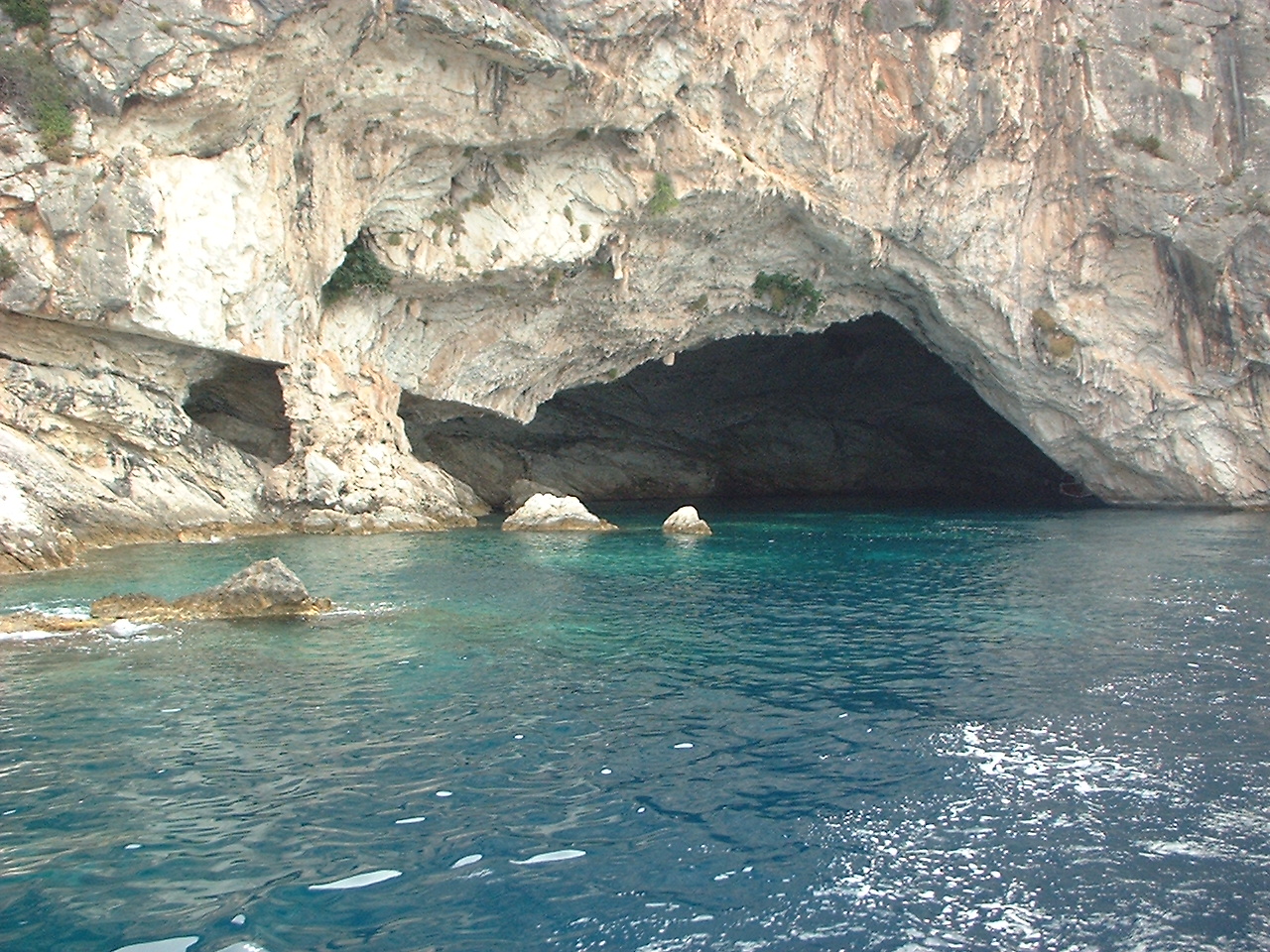
Meganisi → Atokos / Kalamos
II · Wreckage — Cave initiation
Papanikolis sea-cave as perimeter ritual (no physical entry without captain sign-off). Onward to wild waters around Atokos / Kalamos for first-rupture night.

Atokos → Fiskardo
III · Wild Shores — Ordeal
Wild-island day. Cyclops / exile feeling. Captain confirms anchorage and safety. Cross the Ithaca channel north to Fiskardo for evening abundance.

Fiskardo → Kioni
III · Wild Shores — Phaeacian abundance
Fiskardo Venetian colour and feast. Short crossing south to Kioni — Ithaca’s first harbour. The kingdom begins to feel near.
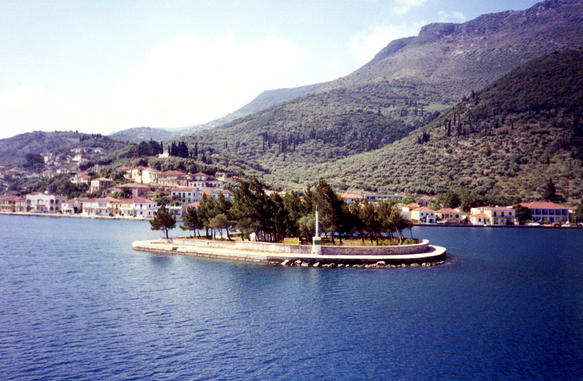
Kioni → Vathy / Dexia
IV · Dark Water — Descent
Cave of the Nymphs as perimeter procession. Dexia Bay / Bay of Phorcys as recognition field. Underworld night water.
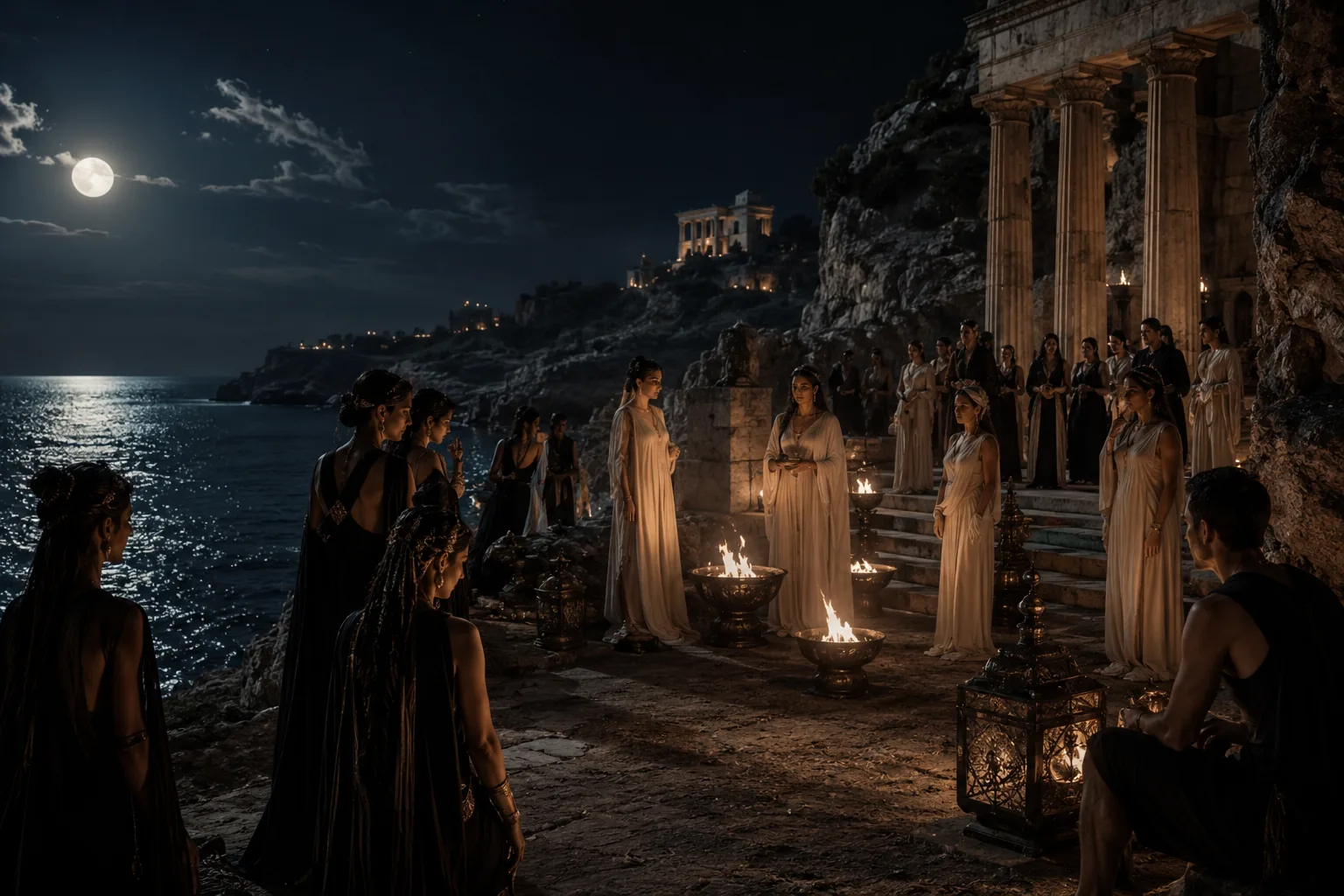
Vathy → Sami · EFL
V · Rooted Bed — Recognition
Rooted-bed rite, the olive branch, renaming. Sail to Sami; road transfer to EFL for departure. Integration morning.
Lived evidence that a six-day Ithaca route can feel real. Use as scout prompt, not captain’s plan.
 © OpenStreetMap · © CARTO
LUCIAN 2024 · NYDRI → MEGANISI → ITHACA → FISKARDO → LEFKADA · LIVED REFERENCE · SCOUT PROMPT
Access logic. PVK is the natural arrival for Nydri / Lefkada. EFL is the cleanest exit if ending near Fiskardo / Ithaca; PVK return also works if looping back to Lefkada.
Ritual use. Soft Lefkada threshold, Meganisi moorings, quiet Kalamos / Kastos water, Vathy / Ithaca homecoming, Fiskardo abundance, Lefkada west-coast beauty. Navagio preserved as spectacle idea, not a default V1 stop.
| Leg | Est. NM | Underway | Production note |
|---|---|---|---|
| Nydri → Meganisi | 3.7 NM | 0.4–0.5h | Excellent soft threshold; first mooring choice: Spartochori, Vathi or Abelaki Bay. |
| Meganisi → Kalamos | 13 NM | 1.4–1.9h | Quiet tavern / village night; decompression before Ithaca. |
| Kalamos → Kastos | 4.5 NM | 0.5–0.7h | Small-island stillness; useful for less production complexity. |
| Kastos → Vathy, Ithaca | 20 NM | 2.2–2.9h | Homecoming arrival; scored as a reveal, not just a port stop. |
| Vathy → Fiskardo | 15.5 NM | 1.7–2.2h | Lucian’s note: “15.5 NM. 7 swimming bays along the way.” |
| Fiskardo → Vasiliki / Sivota | 16 NM | 1.8–2.3h | Clean loop-back to Lefkada if using PVK return. |
| Fiskardo / Ithaca → Navagio | 45 NM | 5.0–6.4h | Spectacle extension only — public access restricted in 2026. |
| Total sea estimate | 117.7 NM | captain to validate | Planning estimate; not a navigation plan. |
Works with caveats. Best operations-first V1, but not literal Ithaca.
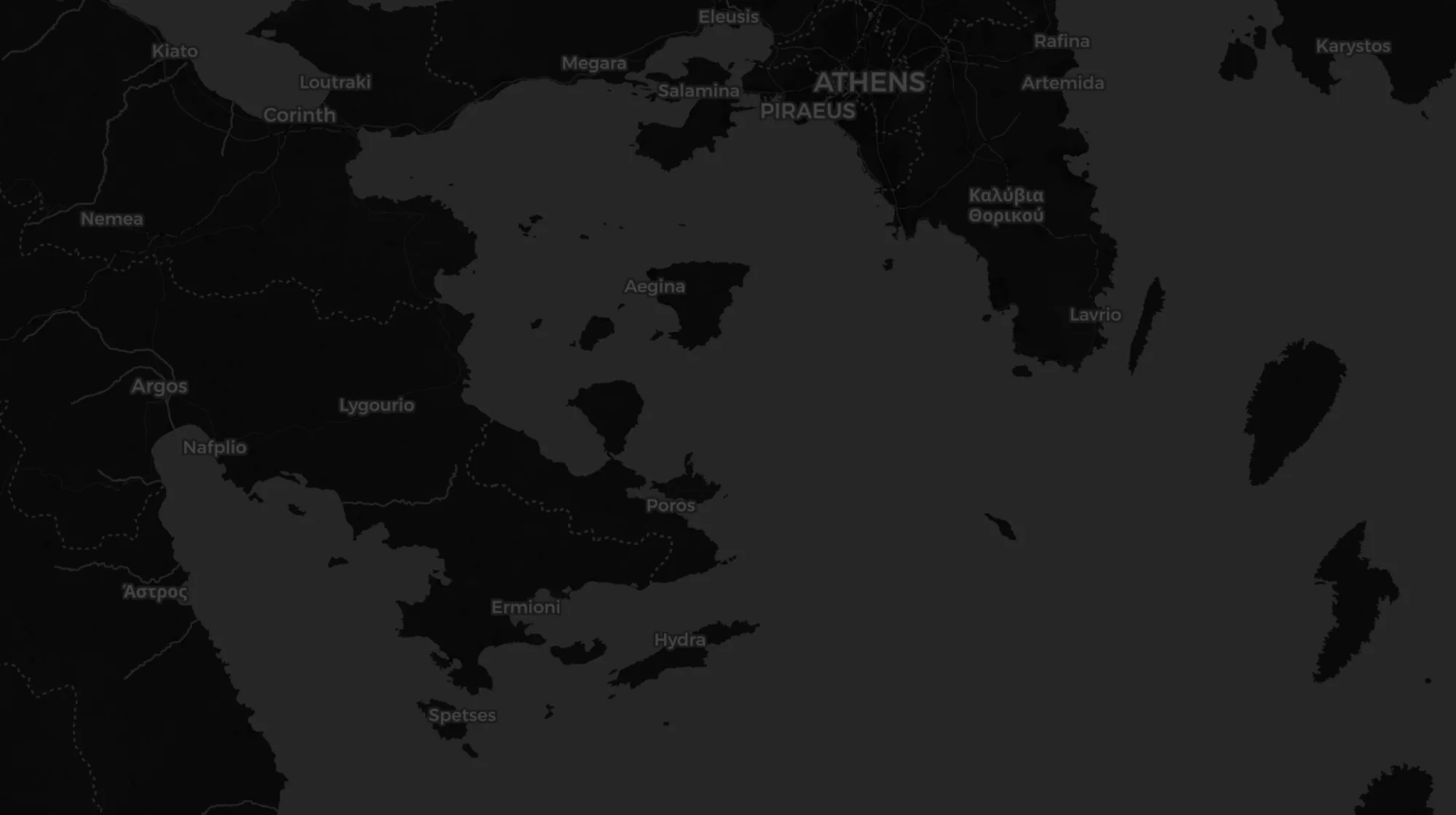 © OpenStreetMap · © CARTO
SARONIC · PIRAEUS → PORTO HELI → ATH · ~62 NM · CAPTAIN TO VALIDATE
Access logic. ATH in / ATH out. Helicopter or road transfer can support Porto Heli.
Ritual use. Invocation at departure; wreckage on Hydra / Limnioniza; Circe / wild shore at Zogeria; Sirens / dark water on Porto Heli coast; Aphrodite / Dionysus at villa.
| Leg | Est. NM | Underway | Production note |
|---|---|---|---|
| Zea / Piraeus → Hydra / Limnioniza | 39 NM | 4.3–5.6h | Long first sea leg; manageable with early embarkation. |
| Hydra → Spetses / Zogeria | 19 NM | 2.1–2.7h | Strong scenic transfer; check swell / landing. |
| Spetses → Porto Heli | 4 NM | 0.4–0.6h | Easy operational leg. |
| Porto Heli → ATH by road | — | ~2.5–3h road | The current working draft said ~1.5h; verify realistic road / heli timing. |
| Total sea estimate | 62 NM | captain to validate | Planning estimate; not a navigation plan. |
Working narrative + place visuals. Each day below pairs the leg with its mythic act and a candidate image. Scout / fixer confirms landings.

Athens → Hydra · Limnioniza
I · Voyage — The Call
Acropolis offering. Board the gulet at Piraeus / Zea. Long first sea leg; embark at dawn to absorb the crossing.

Hydra · Limnioniza
II · Wreckage — Cast upon the shore
Boat-access cove. Cast vessel arrives at dawn to set the scene. Dawn / dusk windows protect against day traffic.

Spetses · Zogeria Bay
III · Wild Shores — Circe
Pine-forest ritual. Tender drop from the gulet. Public beach risk; control via timing and tenders. Onward to Porto Heli.
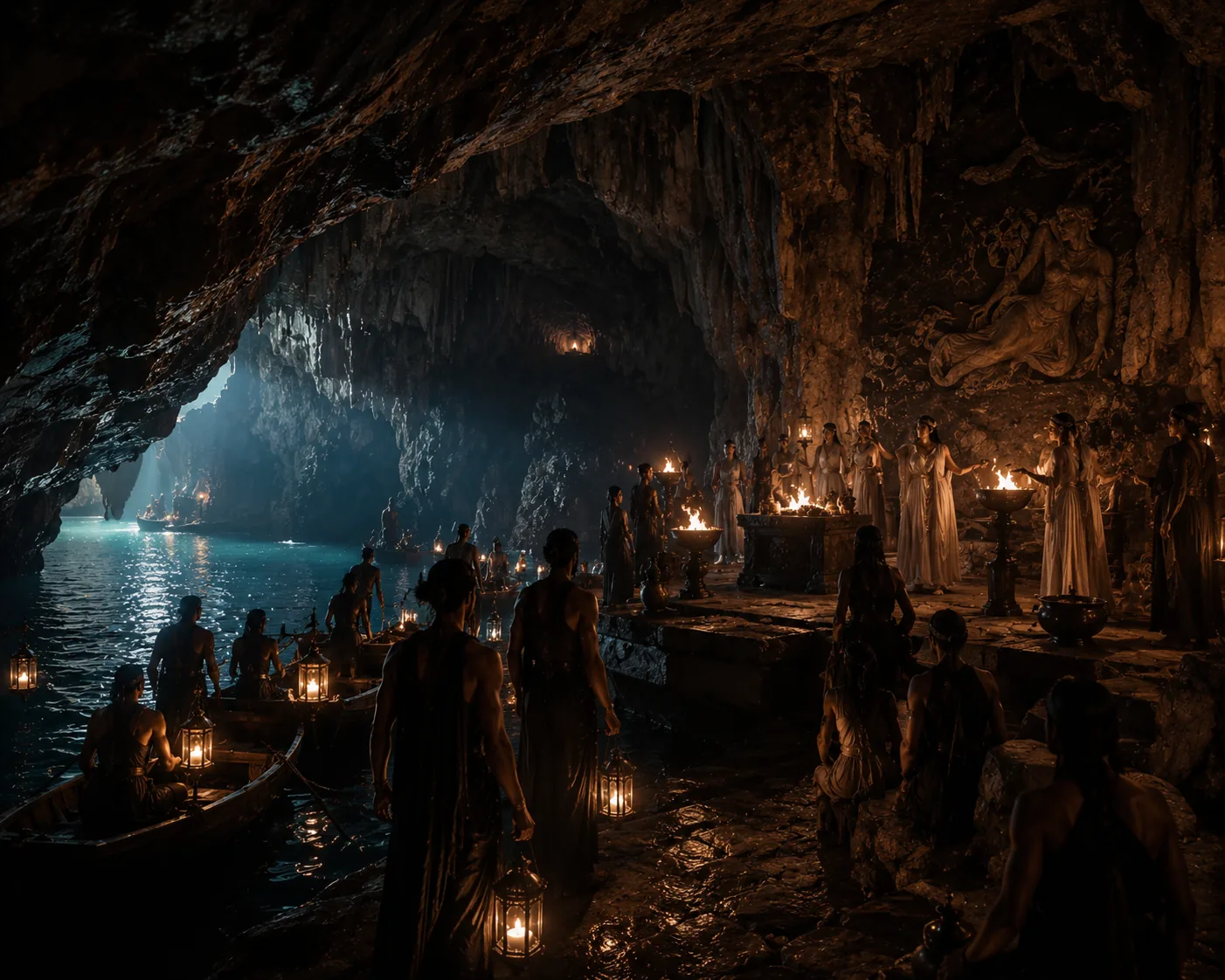
Porto Heli sea caves
IV · Dark Water — Sirens
Uninhabited mainland sea caves. Privacy verify-and-confirm. Sirens / underworld water. Lit return to land at sunset.
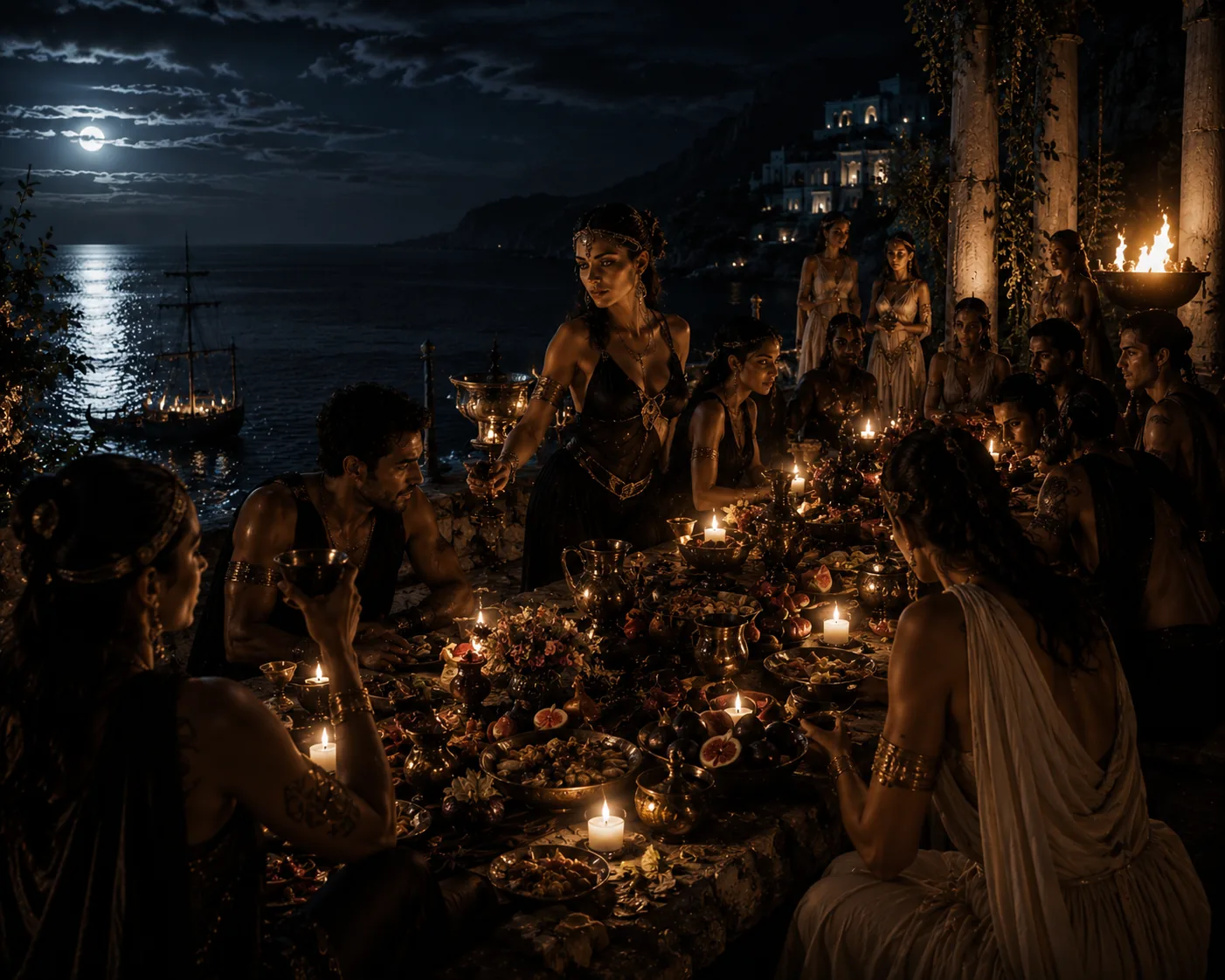
Villa · Porto Heli area
V · Rooted Bed — Dionysus
Day-5 villa night. 35-person Dionysian banquet. Sober guardians, music, fire, recovery space. Amanzoe candidate.
Athens Airport
V · The Return — Integration
Integration morning. Closing witness. Road transfer to ATH (2.5–3h verified). Pilgrims fly home.
| Day | Date | Location | Mythic act | Notes |
|---|---|---|---|---|
| Day 1 | Sep 11 | Athens / Piraeus | I — The Voyage of the Son / The Call | Acropolis offering; board gulet at Piraeus. |
| Day 2 | Sep 12 | Hydra · Limnioniza Beach | II — The Wreckage / Cast upon the shore | Boat-access-only cove; cast vessel at dawn to set the scene. |
| Day 3 | Sep 13 | Spetses · Zogeria Bay | III — Wild Shores / Circe | Pine forest ritual; tender drop from gulet. |
| Day 4 | Sep 14 | Porto Heli coast | IV — Dark Water / Sirens | Uninhabited mainland sea caves; privacy to verify. |
| Day 5 | Sep 15 | Villa · Porto Heli area TBC | V — Rooted Bed / Aphrodite | 35-person Dionysian party; 4-night villa. |
| Day 6 | Sep 16 | Athens Airport | V — The Return | Integration morning; pilgrims fly home. |
| — | TBC | Guest travel buffer | — | Integration should complete with enough time for an unhurried closing and onward travel. |
| — | TBC | Planning buffer | — | Confirm individual guest travel limits before dates are locked. |
Photographs of the real candidate places, attached to the decisions they support. Privacy, landing and seasonality must still be scout-confirmed.
Saronic · wreckage
Boat-access cove candidate for the wreckage / shore rite. Beautiful, sparse, mythically useful. Privacy, landing and dawn access need scout confirmation.
Saronic · wild shore
Pine-fringed bay and anchorage candidate for Circe / wild shore / seduction and transformation. Public beach context must be handled.
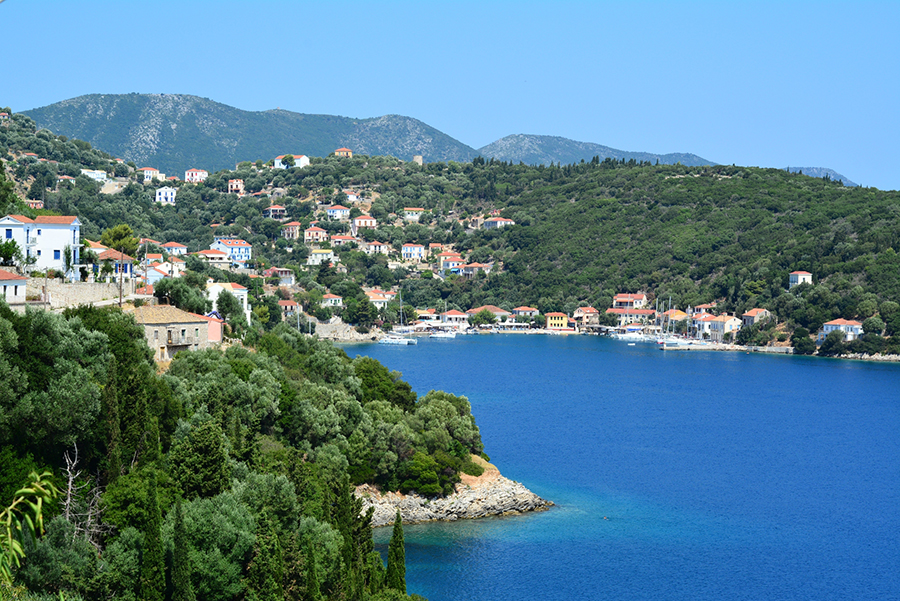
Ionian · homecoming
Homecoming harbour: intimate, beautiful, recognisably Ithaca. Public harbour reality means timing and privacy strategy matter.
Ionian · abundance
Abundance, civilisation, Venetian colour and practical support near Ithaca / EFL. Strong feast or transition-night candidate.
Grouped by the route each serves. Day 5 villa, cast accommodation, recovery space and banquet are the high-value asks; each lead needs a direct buyout / production-load conversation.
| Route | Land base | Where | Best for | Note |
|---|---|---|---|---|
| Ionian / Ithaca | Emelisse Nature Resort | Kefalonia, near Fiscardo | Strongest Ionian support base near Ithaca. | Private beach, event capability, views toward Ithaca. |
| Ionian / Ithaca | Perantzada 1811 | Vathy, Ithaca | Boutique buyout on Ithaca itself. | Smaller-scale; verify production / event capacity directly. |
| Ionian / Ithaca | Hotel Familia | Vathy, Ithaca | Alternative Ithaca boutique buyout. | Smaller-scale; verify availability and production fit. |
| Saronic / Argolic | Amanzoe | Argolic / Porto Heli | Serene high-luxury Saronic temple. | Buyout terms, external production rules and crew accommodation open. |
| Saronic / Argolic | Nikki Beach Porto Heli | Argolic | Saronic party / dinner alternate. | More lifestyle / club-coded; risks tone unless paired carefully. |
| Saronic / Argolic | Poseidonion Hotel | Spetses | Saronic event / dinner option. | Public visibility risk; curfew and load-in to verify. |
| Cyclades / future | Erosantorini | Santorini | Cycladic estate — only if Cyclades route revived. | Exclusive use, two private acres, 5 km from JTR. |
| Cyclades / future | One&Only Kéa Island | Kea | Land lead for the Saronic + Kea / Kythnos hybrid. | Discreet, private; marina / tender access to verify. |
| Cyclades / future | Gundari | Folegandros | Cycladic austerity option. | No airport on island; transfer and wind discipline matter. |
Research-ranked #3 (3.75). A Saronic spine with a Cycladic extension — more spectacle than the clean Saronic loop, less mythically literal than Ithaca. A useful hybrid, not the cleanest story.
Access logic. ATH in / ATH out via Lavrio or Piraeus. Kea is the closest Cycladic island to Attica, keeping transits short.
Ritual use. Saronic threshold and wreckage; Kea / Kythnos for wild-shore and dark-water beats; land-temple recognition at One&Only Kéa or an Argolic estate.
| Leg | Est. NM | Underway | Production note |
|---|---|---|---|
| Lavrio → Kea | ~14 NM | 1.6–2.1h | Short Cycladic hop; meltemi-exposed, scout wind. |
| Kea → Kythnos | ~17 NM | 1.9–2.4h | Quiet anchorages; wild-shore beats. |
| Kythnos → Hydra / Saronic | ~45 NM | 5.0–6.4h | Long return leg; plan as a passage day. |
| Saronic → Porto Heli → ATH | ~30 NM + road | captain to validate | Land-temple recognition; road / heli exit. |
| Total | ~106 NM | captain to validate | Planning estimate only. |
Land lead — One&Only Kéa Island (discreet, private; marina / tender access to verify) anchors the recognition night; Amanzoe / an Argolic estate is the Saronic alternative.
Works only if the passage is the ritual. Too much transit for a polished 5–7 day V1.
Access logic. ATH in, EFL or PVK out. A fly-in / fly-out plan across different airports is mandatory.
Ritual use. Athens invocation; Corinth cleft; Galaxidi / Delphi oracle; Ionian emergence; Ithaca recognition.
| Leg | Est. NM | Underway | Production note |
|---|---|---|---|
| Alimos → Corinth → Galaxidi | 90 NM | 10.0–12.9h | Very long first day. |
| Galaxidi → Fiskardo | 75 NM | 8.3–10.7h | Schedule-risk heavy. |
| Fiskardo → Ithaca | 15 NM | 1.7–2.1h | The payoff leg. |
| Ithaca → EFL / PVK exit | — | sea + road | Needs exact transfer design. |
| Total | 180 NM | captain to validate | Planning estimate only. |
Works with caveats. Better than Athens-by-sea, but less elegant than PVK / Lefkada.
Access logic. ATH in by road to Patras; EFL out cleaner than returning to Athens.
Ritual use. Road threshold from Athens; Fiskardo abundance; Kioni / Vathy homecoming; Dexia / Bay of Phorcys as recognition field.
| Leg | Est. NM | Underway | Production note |
|---|---|---|---|
| Athens → Patras by road | — | ~2.5–3h road | Practical, not magical unless staged intentionally. |
| Patras → Fiskardo | 40 NM | 4.4–5.7h | Captain to verify. |
| Fiskardo → Kioni / Vathy | 10 NM | 1.1–1.4h | Strong short mythic leg. |
| Ithaca → EFL | — | sea + road | Clean fly-in / fly-out exit. |
| Total | 50 NM | captain to validate | Planning estimate only. |
Probably wrong for V1 unless spectacle outranks control and dates move to shoulder season.
Access logic. JTR, MLO, PAS, JMK. Specialist aviation handling and PPR checks.
Ritual use. Caldera fire / ash; Kleftiko caves; Folegandros austerity; Delos as sacred order; Paros / Mykonos exit.
| Leg | Est. NM | Underway | Production note |
|---|---|---|---|
| Santorini → Milos / Kleftiko | 56.7 NM | 6.3–8.1h | Long exposed leg; weather-sensitive. |
| Milos → Folegandros | 28.5 NM | 3.2–4.1h | Good if weather holds. |
| Folegandros → Delos / Mykonos | 49.1 NM | 5.5–7.0h | Too exposed for a fixed ritual schedule. |
| Delos / Mykonos → Paros | 19.6 NM | 2.2–2.8h | Possible exit leg. |
| Total | 153.9 NM | captain to validate | Planning estimate only. |
Future-only. Not a 5–7 day V1.
Access logic. ATH / JTR / HER / EFL / PVK across a multi-week expedition. Not suitable for a six-day luxury retreat.
Ritual use. A true grand voyage: threshold, gods, labyrinth, exile, western return. Too big for V1.
| Leg | Est. NM | Underway | Production note |
|---|---|---|---|
| Lavrio → Kea | 25 NM | 4–5h | Old preserved estimate. |
| Kea → Delos → Naxos → Amorgos → Santorini | 160 NM | 27–31h | Cyclades chapter. |
| Santorini → Crete → Kythera → Pylos | 195 NM | 33–36h | Southern descent chapter. |
| Pylos → Zakynthos → Kefalonia → Ithaca | 95 NM | 15–18h | Western return chapter. |
| Total | 475 NM | 80–90h underway | 2–3 weeks minimum. |
Separate future concept, not the Odyssey middle by default.
Access logic. HER in / HER out. Land-first with marine accents.
Ritual use. Tribute ship; Ariadne’s thread; Labyrinth descent; Minotaur encounter; thread back; villa emergence.
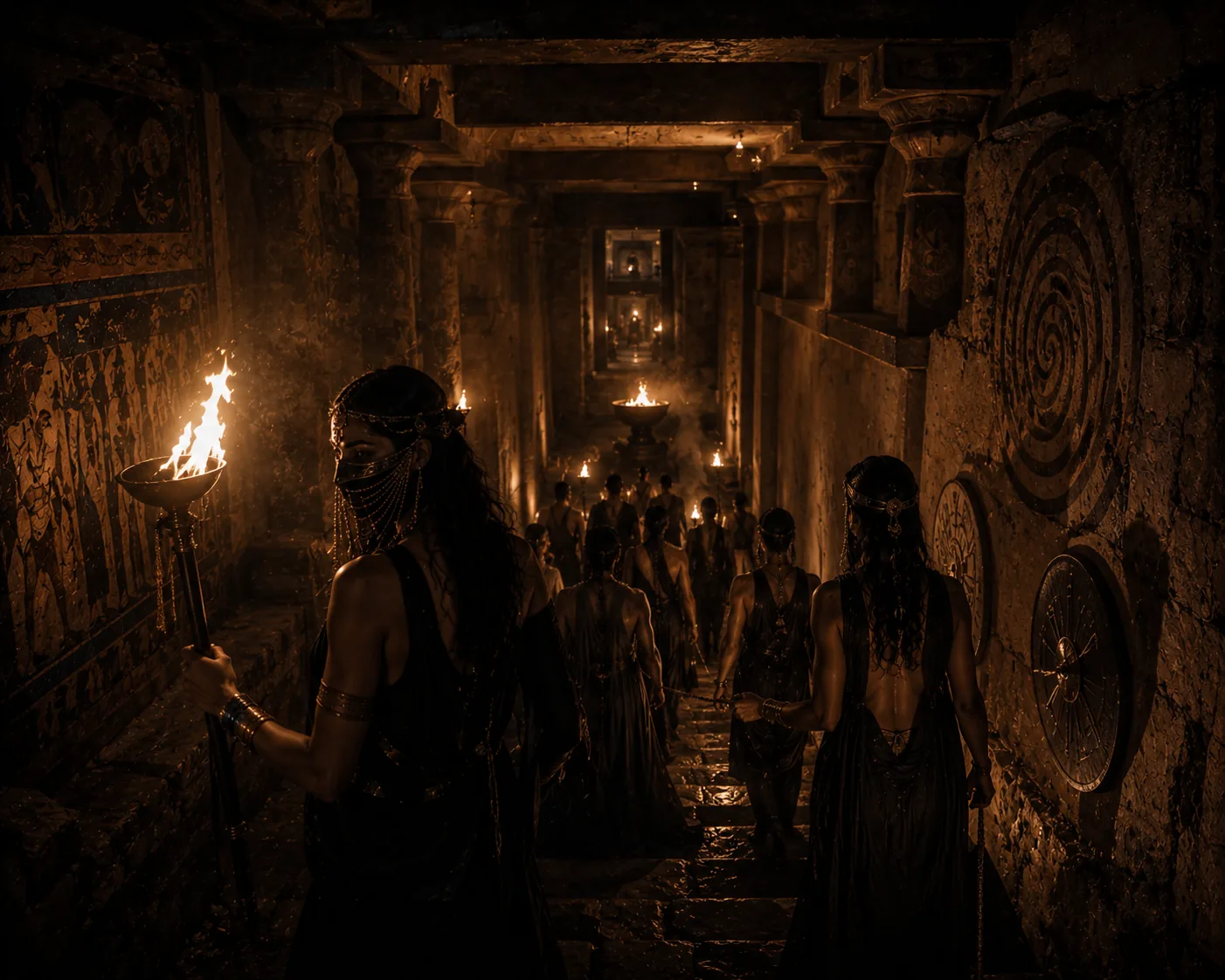
| Leg | Est. | Mode | Production note |
|---|---|---|---|
| HER → Knossos | — | ~20–30m road | Archaeological permit sensitivity. |
| Knossos → Lasithi / Diktaion | — | ~1.5–2h road | Mountain cave day; accessibility / permits. |
| Elounda / Spinalonga waters | — | local boat | Haunting island-fortress field. |
| South coast sea caves | — | scout required | Promising; not yet production-verified. |
Down the left are the mythic beats in day order. The two columns are the candidate routes. Cells name the scouted sites tagged by the June field team, with status marked. The gaps column is as important as the hits: they show where each route still needs feet on the ground before it can carry a scene.
Locations are captured; their use is open. The scout tagged the places; which beat each one serves — and what we do with them — is the team's open call. Some beats are explicitly unresolved; Cyclops placement is the clearest example. Status language: scouted = feet on the ground, tagged on the June map; identified = named in research or on the scout map but not visited in person; no site yet = the beat has no candidate on this route at this time.
| Beat · function | Saronic / Argolic Aegina · Angistri · Methana · Diaporia |
Ionian / Ithaca Lefkada · Meganisi · Atokos · Kefalonia · Ithaca |
|---|---|---|
| The crossing — departure threshold, rupture from ordinary identity |
Embarkation point TBD (Aegina or Methana); Tersane start — scouted | Nidri / Odysseia — scouted; Papanikolis sea cave, Meganisi — scouted |
| The golden prison — Lotus enchantment, sacred forgetting |
Ancient Olive Grove (Eleonas), Aegina — scouted; second olive-grove pin near Temple of Zeus — scouted | Atokos coves — scouted |
| Cyclops — appetite and brute force placement open: Day 2 or Day 3 |
Cave "you can put someone in there," Angistri — scouted; Peristeri Cave, Aegina (beautiful but requires fitness) — scouted | Matthew's Cave, Atokos — scouted; Papanikolis Cave, Meganisi — scouted |
| Enchantment — Circe erotic enchantment, the animal body |
Aphrodite's cave (water cave, mini pebble beach), Angistri — scouted | Yoni-gazing cave, Atokos — scouted; Cave of Eros (Spelaiou Erota), Zakynthos — scouted |
| Two-island competition group ordeal, power and choice |
Small-islands group, Christos's RIB — scouted | no site yet |
| Sirens — destiny lost the seduction of annihilating knowledge |
Flat siren rocks (Angistri) — scouted; siren cave (Aegina) — scouted; Ipsili siren caves — identified; volcanic-coast coves, two pins — scouted | no site yet — this beat is under-scouted on the Ionian; closable by extending time on the western coast |
| Descent — Nekyia death-rebirth initiation; encounter with the dead |
Kyra cave, Angistri — scouted; Peristeri Cave, Aegina — scouted | Melissani Cave, Sami (private hire confirmed, noon light) — scouted in person; Zervati Cave, Sami — scouted |
| Shipwreck — everything lost ego-death, undone to nakedness |
Helicopter wreck, Saronic Gulf — scouted; ancient city underwater — scouted | Zakynthos, Shipwreck Beach (Navagio), the literal shipwreck (proposed, not yet visited); Atokos / One House Bay — scouted |
| Purification threshold cleansing before recognition |
Devil's Bridge / Cold Spring, Methana (go early or late; not private by default) — scouted | no site yet — Dimosari waterfall is a candidate but needs April/May flow and access confirmation; treat as conditional |
| The telling — Phaeacian abundance integration begins in the telling |
Dinner spot, Metopi island — scouted; Amanzoe / Porto Heli villas — identified, uncontacted | Paleokastro, Kefalonia (oyster bar, "best Greek food so far") — scouted; Agia Efimia / Hotel Odyssey (restaurant named Mnistires, "the suitors") — identified, uncontacted; Emelisse / Fiskardo — identified, uncontacted |
| Homecoming — recognition return transformed; witnessed |
Temple of Hellanios Zeus, Aegina — scouted (unguarded; ask Christos's guide friend); round-church energy spot, Diaporia — scouted. Note: no true Homeric homecoming location on the Saronic; recognition would be designed, not found. | Vathy, Ithaca — scouted; Dexia Bay — identified; Cave of the Nymphs, Ithaca — identified (red line: no entry without fixer verification); Kioni — identified |
| Ritual island / natural theatre ceremony and witness, private ground |
Agios Thomas (uninhabited), Diaporia — scouted; Dorousa, Angistri (natural theatre, echoing shore) — scouted; Kyra islet (multiple caves and pathways for cast movement) — scouted | Private theatre, Zakynthos — scouted (owner: Theodore, +30 697 771 5676, uncontacted) |
Six days on the ground tagged almost every beat. The ancient olive grove for the Lotus, Aphrodite's cave for Circe, four distinct Siren spots, a Cyclops cave "you can put someone in," the two-island competition, a purification spring, and multiple ritual islands and natural theatres. The one true gap is a Homeric homecoming — recognition on the Saronic would be designed, not discovered.
The descent is doubly covered — Melissani and Zervati, both scouted in person — and Ithaca gives a real homecoming at Vathy. Atokos covers Cyclops and Circe candidates. The beats hardest to fake with production design are the ones the Ionian already holds by geography.
The Sirens beat has no tagged site, and the Phaeacian finishers — Emelisse, Agia Efimia — are named but uncontacted. This is the three-days-not-six story, not a structural weakness. Closable by extending feet on the Ionian's western coast before the route is confirmed.
A working leg-by-leg map of the Ionian route as it stands after the June field work. Sites and status are from the scout; the use of each site for which beat is the team's open call.
| Leg | Site | Status |
|---|---|---|
| Embarkation | Nidri / Odysseia, Lefkada | scouted |
| Threshold / first undoing | Papanikolis sea cave, Meganisi (enter by tender) | scouted |
| Wild-shore exile | One House Bay / Atokos coves (Matthew's Cave, Yoni-gazing cave, Rock Arch) | scouted |
| Descent / Nekyia | Melissani Cave, Sami — private hire confirmed, optimal light at noon | scouted in person |
| Phaeacian finisher | Agia Efimia / Hotel Odyssey (restaurant named Mnistires, "the suitors") or Emelisse / Fiskardo (~1 hour north) | identified, uncontacted — first call required before this leg confirms |
| Conveyance home | Sami-to-Pisaetos ferry, Ithaca (20–30 minutes; approximately 25 crossings per week in June–September) | verified |
| Homecoming | Vathy, Dexia Bay, Cave of the Nymphs — Ithaca | scouted; Cave of the Nymphs red-lined until fixer verifies entry |
Owner of the private open-air theatre (Anoichto Theatro Kamenis Choras) tagged on the Ionian scout. Appropriate as a ritual-island or natural-theatre site for ceremony, witness, or a recognition scene. Contact: +30 697 771 5676. Status: uncontacted — first call to confirm availability, exclusivity terms, and any amplified sound restrictions.
Identified on the Saronic scout as the operator of the RIB used for the small-islands group / two-island competition scene. Has a local guide friend connected to the Temple of Hellanios Zeus on Aegina. Status: informal contact; no formal outreach recorded. First ask: can he operate a support-RIB role for the full Saronic leg, including the competition scene and Zeus temple access?
Route open threads. The scorecard gives Ionian 4.09 versus Saronic 4.29, but the Ionian wins on mythic force and the team physically found the Saronic "not carrying it." Five Ionian gates must still pass before it goes primary: hero vessel, land temple, fixer, airport flow, and budget viability at six pilgrims. Airports: EFL (Kefalonia, many daily from Athens) is the recommended entry, not PVK (Preveza, once daily and tight); an Athens-in / Kefalonia-out open jaw is the cleanest shape. Additional Ithaca geosites not yet in the beat overlay: Rizes Cave / Cave of Eumaeus near Marathia (2-hour fitness-gated walk), Anogi Monoliths (Bronze Age standing boulders), Homer's School at Stavros (Mycenaean palace, a recognition anchor), and the Cyclopean Walls of Krani (a literal "Cyclops-built" image for a guide cue). All identified, none contacted. The Dimosari waterfall (a potential threshold site) runs autumn through spring and must be rechecked for April/May flow and access — conditional only. Katavothres sinkholes at Argostoli are geologically linked to Melissani — a literal "river under the world" available as a guide cue if wanted. Route mapping stays open until captain, fixer, and land-temple calls return.
A consolidated scan of candidate ritual sites across both live routes and future options, with crowd/privacy risk and the next action per site.
| Route | Ritual site | Practical access | Privacy | Permit | Next scout / call |
|---|---|---|---|---|---|
| Ionian · Ithaca | Nidri / Lefkada | Threshold embarkation; Odysseia scene vessel; PVK access. | Moderate | Low (private vessel); public harbour logistics remain. | D-Marin Lefkas / Odysseia calls. |
| Ionian · Ithaca | Meganisi sea caves | Cave initiation, oracle, blindfolded tender arrival. | Medium | Medium · landing / access & safety must be scouted. | Local captain scout. |
| Ionian · Ithaca | Atokos / Kalamos | Wild island ordeal, Cyclops / exile. | Medium-high | Low crowd, but anchorage / safety conditions matter. | Captain confirmation. |
| Ionian · Ithaca | Kioni / Vathy / Dexia | Homecoming, recognition, hidden gifts. | Medium | Harbours public; use timing / private dinners. | Ithaca local scout. |
| Saronic · Argolic | Hydra · Limnioniza | Sirens, no-car timelessness, wreckage and shore. | Medium-high | Hydra harbour public; south / water-access coves need scout. | Scout dawn / sunset privacy. |
| Saronic · Argolic | Spetses · Zogeria | Circe / wild shore, pine forest, seduction. | Medium | Public beach risk; control via timing / tenders. | Scout legal access and sound. |
| Saronic · Argolic | Porto Heli · Amanzoe field | Land temple, Aphrodite, Dionysus, recognition feast. | Medium | High if private estate; verify curfew / noise / security. | Call Amanzoe / villas. |
| Saronic · Argolic | Epidaurus | Healing oracle, theatre, Asclepian dream. | High | Archaeological sensitivity; visit not unpermitted stage. | Permit / legal pathway. |
| Cyclades | Santorini · Erosantorini | Fire island, ash, Birth of Venus, apotheosis. | Medium-high | Estate privacy possible; island crowd / port / geology risk. | Fresh local risk check. |
| Cyclades | Milos · Kleftiko | Sea caves, Sirens, underworld swim, pirate lair. | Medium | Weather / anchorage dependent. | Local captain. |
| Cyclades | Delos | Sacred order, Apollo / Artemis, divine court. | Very high | UNESCO / archaeology; visit only unless formally permitted. | Permit pathway only. |
| Crete · future | Knossos · Diktaion · Spinalonga | Labyrinth, thread, Minotaur, emergence. | High | Land-heavy; archaeological / cave access restrictions. | Separate concept scout. |
Three routes are live. One wins the operations argument. One wins the myth. One reframes the whole project as a recurring saga. The pages that follow build the working argument under each.
Recommendation A
Best mythic answer. Lefkada, Meganisi, Kalamos/Kastos, Fiskardo, Vathy, Ithaca. PVK in / EFL out, or reverse. Ithaca becomes lived arrival rather than metaphor, if supplier calls pass.
Recommendation B
Best production chassis. Athens access, Hydra, Spetses, Porto Heli, Epidaurus. Easier to staff, easier to control. Beautiful and feasible, but more symbolic than literal as an Odyssey.
Strategic expansion
Best strategic expansion. Each year is complete in itself. Returning pilgrims accrue status. Ithaca remains the eventual return without forcing every geography into one edition.
Planning doctrine — route, ships, experiences and tempo first; dates second. Athens is a useful gateway, not a fixed premise. September 11–21, 2026 is the target departure window (departure date TBC, pending vessel availability and run-of-show). Reject a route only after testing whether the route, vessel and air access can be made coherent — never on Athens-default inertia alone.
A decision tool, not a final verdict. The supplier calls test the two live leads first: Ionian / Ithaca for mythic truth, Saronic / Porto Heli for production control.
| Route | Mythic power | Beauty | Privacy | Luxury infra | Cost tendency | Sea / weather | Production control | Best use |
|---|---|---|---|---|---|---|---|---|
| Ionian · Ithaca | Very high | Very high | High outside harbours | Medium | Medium-high | Low-medium | Medium | Best one-and-done if calls pass |
| Saronic · Porto Heli | Medium-high | High | Medium | High | Medium | Low-medium | High | Best first-production chassis |
| Saronic + Kea / Kythnos | Medium | High | Medium-high | High | Medium-high | Medium | Medium-high | Best hybrid / threshold chapter |
| Cyclades · Santorini | High spectacle | Very high | Low-medium | High on land | High | High | Low-medium | Shoulder-season spectacle |
| Corinth · passage | High threshold | Medium-high | Medium | Medium | Medium-high | Medium | Low-medium | Only if passage is the ritual |
| Lavrio · Crete · Ithaca | Epic | Very high | Variable | Variable | Very high | High | Low for V1 | Future expedition / saga horizon |
Weights: myth 25 · control 20 · comfort 15 · vessel 15 · access 10 · weather 10 · cost 5.
Ionian / Ithaca remains primary only if these gates pass. Saronic becomes primary if two or more fail.
Inherited numbers are directionally useful but do not yet include route pressure, different-airport-in-and-out transfers, repositioning, support craft, permit / legal, private estate buyout, weather contingency and cashflow gates.
| Pilgrims | Revenue | Est. cost | Net margin | % | Read |
|---|---|---|---|---|---|
| 2 sold | $154k | ~$230k | −$76k | −49% | Development spend only. |
| 5 | $385k | ~$331k | +$54k | +14% | Near threshold; route overruns erase margin. |
| 6 | $462k | ~$348k | +$114k | +25% | Current model clears 15% target. |
| 7 target | $539k | ~$364k | +$175k | +32% | Best commercial protection. |
| Route | Low | Base | High | @ 6 px |
|---|---|---|---|---|
| Saronic / Argolic | $280k | $340k | $430k | +18% |
| Ionian / Ithaca | $320k | $395k | $500k | +5% |
| Saronic + Kea / Kythnos | $340k | $425k | $540k | −2% |
| Cyclades / Santorini | $430k | $560k | $750k+ | −35% |
| Corinth → Ionian | $390k | $500k | $680k | −20% |
Net after 10% referral fee at 6 pilgrims = $415,800. Bands are placeholders pending vessel / land-base quotes.
| Gate | Decision | Why it matters |
|---|---|---|
| 1 · Route family | Ionian vs Saronic vs spectacle vs longer arc. | Determines airports, vessels, scout agenda, land bases and quote universe. |
| 2 · Vessel hold | At least one hero vessel and one support / scene option available. | Without vessel availability, itinerary and budget are fiction. |
| 3 · Land temple | Villa / resort can accept privacy, party, cast and recovery. | Day 5 is too central to improvise. |
| 4 · Safety / legal | Consent, insurance, medical, filming, permits and confidentiality drafted. | Erotic ritual + boats + secluded sites requires a visible spine. |
| 5 · Sales / cash | 2 confirmed minimum, 5 target, 7 stretch; $77,000 fixed. The 2-pilgrim case carries stated debt exposure and is not a green-light model without cuts or underwrite. | Prevents deposits from outrunning revenue. |
Read — $77,000 is fixed (19 May call) regardless of land- vs sea-based configuration; the live levers are cohort (5 floor, 7 ideal) and route cost. Ending in Ithaca trends toward the 7-pilgrim target or tight cost control; the land-based option (villa, Ithaca / Kefalonia) is the lower-cost floor. Bands hold as placeholders until the vendor returns price / spec.
All figures below are placeholder estimates from budget model version 0.3 and the Economics note. They will be replaced by real quotes as vessel, land-base and crew numbers arrive. Do not treat them as commitments.
Ticket price is $77,000 per pilgrim, with a conservative 10% referral commission assumption yielding a net of $69,300 per seat. Two pilgrims are paid/confirmed (the Magician and Kronos). Eleos has committed to being in (payment not yet received). At two paid/confirmed seats, net revenue is approximately $138,600 against a Saronic base-cost estimate of approximately $340,000 — a gap of approximately $184,000. The Economics note puts the precise gap nearer $201,000 when referral assumptions are tightened. That gap is why sales must be live now, not after creative locks.
Note: Eleos has committed to being in; payment not yet received or contracted.
Budget reconciliation needed before circulation. The 2-pilgrim shortfall is cited as both ~$184k and ~$201k ($340k base minus $138.6k net = $201k, the figure the cohort-ladder table uses); the inherited baseline table is gross while the ladder is net; and the inherited ~$230k base diverges from the route bands ($280k–$395k). These need one consistent model, owned by the commercial lane (Lucian & Althea), before this section is treated as final.
Both paid/confirmed. The Magician and Kronos are committed and paid-in via their Kadesha subscriptions, which include the Odyssey — a formal deposit-and-balance schedule still needs recording as the cohort grows. Neither has been asked to refer, despite a $7,700 referral incentive that is available and active.
Five confirmed pilgrims before the Spring 2027 cohort go/no-go gate is the target case. At five on the Saronic base, net revenue (~$346,500) sits barely above the $340,000 base cost — under 2% margin. Five is break-even at best; six is the practical floor for the Saronic route.
Seven pilgrims on the Saronic base yields approximately $145,000 margin — the clearest green case. On the Ionian at seven, margin is workable but tight; cost discipline is not optional at that cohort on that route.
Three scenarios per route: low (aggressive negotiation, lean stack), base (working assumption), high (full stack, contingency, overruns). All figures exclude referral commissions already assumed in the net per-seat figure.
| Route | Low estimate | Base estimate | High estimate |
|---|---|---|---|
| Saronic / Argolic | $280,000 | $340,000 | $430,000 |
| Ionian / Ithaca | $320,000 | $395,000 | $500,000 |
| Saronic + Kea / Kythnos | $340,000 | $425,000 | $540,000 |
| Cyclades / Santorini | $430,000 | $560,000 | $750,000+ |
| Corinth Canal to Ionian | $390,000 | $500,000 | $680,000 |
At six pilgrims (net ~$415,800), only the Saronic / Argolic route reaches a meaningful margin (approximately 18%) on base assumptions. The Ionian / Ithaca route — the artistically preferred option — yields approximately 5% at six pilgrims and is workable only with cost discipline or a hard minimum cohort of seven. The Cyclades and Corinth Canal routes are not commercially viable at $77,000 per seat under current cost assumptions. A 10–15% contingency is built into the base model and is not discretionary.
| Confirmed pilgrims | Net revenue | Saronic read | Ionian read |
|---|---|---|---|
| 2 — confirmed now | ~$138,600 | ~$201,000 shortfall — not a production case | ~$256,000 shortfall — not a production case |
| 5 — target | ~$346,500 | Under 2% margin — break-even only | Negative — requires underwrite or cost cuts |
| 6 — practical floor (Saronic) | ~$415,800 | ~18% margin — first green case | ~5% margin — workable with discipline |
| 7 — stretch | ~$485,100 | ~$145,000 margin — production upside | Workable; seven is the hard floor if Ionian is chosen |
Ionian artistic-financial tension. If the route resolves to Ionian / Ithaca, seven pilgrims becomes the hard commercial minimum, not a stretch target. The artistic case must not win by default; the financial case must be satisfied alongside it before the route is confirmed. The Spring 2027 cohort go/no-go is the fence around the $184,000 to $201,000 exposure: at that date, if confirmed count is below target, the team must consciously reconfigure, underwrite the gap, or move the edition.
No supplier quote enters the model as a single all-in number. Every quote must itemise separately across the following fields — only itemised quotes can be compared across routes or used to validate the $340,000 / $395,000 base bands.
Two things are undefined and must be agreed before any further sales: the refund and cancellation schedule for pilgrims who withdraw after deposit, and the minimum-cohort cancel condition — below what confirmed count, by what date, does the team reconfigure, move, or cancel the edition. Agreeing the terms now, while the Spring 2027 cohort go/no-go still feels distant, is the only way to make it a decision rather than a drift.
| Decision | What must be agreed | Owner |
|---|---|---|
| Deposit and balance terms | What percentage is the deposit; when is the balance due; what triggers a full refund versus a partial one; the Magician and Kronos's current status (deposit paid or not) must be documented. | Althea · Lucian |
| Referral activation | The $7,700 referral fee is generous and active. Neither the Magician nor Kronos has been asked to refer. This is an immediate action, not a future one. | Althea (sales DRI) |
| Minimum-cohort cancel threshold | Below what confirmed count, by what date, does the team call cancel or reconfigure? Who has authority to call it? What are the fallback options (land-based edition, smaller cohort, moved edition)? | Lucian · Althea · team |
| Cohort go/no-go gate | Date TBC at the 8 July decision meeting. The logic and authority must be ratified by the full team before that date — not assumed. | Full team |
Budget open threads. The $184,000 figure is the working shorthand; the precise gap at two pilgrims is closer to $201,000. At five pilgrims on the Saronic, net revenue (~$346,500) sits barely above the $340,000 base — under 2% margin; five is break-even and six is the practical floor. Two critical terms are undefined and must be settled before more sales conversations: the refund and cancellation schedule for pilgrims who withdraw, and the minimum-cohort cancel condition. The deposit-versus-balance status for both confirmed pilgrims is not recorded — document it. The individual-versus-couple product fork is still live: if a couple joins, the one-priestess-per-pilgrim model, the consent architecture, and the price all need revisiting before that variant is offered. Althea is the sales DRI; outreach is ongoing, now focused on converting Eleos's commitment into payment and opening the next two prospects.
It is what lets the revelation happen. Erotic ritual + boats + secluded sites + UHNW guests requires a visible safety spine drafted before the public invitation hardens.
Critical path — own this now. Iffy & Sarah Jack stand up a dedicated Safety / Permits / Insurance workstream with its own session to develop the safety rules and resolve ownership across the domains below (Medical, Performance Safety, Maritime Safety, Insurance, Privacy). Permitting: strong bias to private sites; public / archaeological or theatrical use needs Ministry-of-Culture permits with real lead times; cultural grants unlikely on a four-month runway. EU counsel coordinates the EU legal adviser and a maritime-law contact.
Safety here is not opposed to the ritual ambition: it is the structure that makes revelation possible. The experience is designed to undo; the container holding that must be engineered, not assumed. Four mandatory safety DRIs are unfilled, plus a fifth performer-safety lead. Nothing downstream — permits, invitation copy, scene design, cast asks — can lock until these four names are in place.
| Safety domain | Requirements | DRI |
|---|---|---|
| Maritime | Captain authority and abort rules; tender operations; night movement and cave approach protocols; weather-window decision authority; coast guard and distress procedures; support RIB coordination | Unfilled — maritime lead required |
| Medical | Intake medical screening; medication and allergy records; seasickness protocols; nearest clinic and emergency transfer route per stop; psychological first-aid capacity (must be built into the medic role, not treated as a separate lane); psychological-emergency protocol currently held by Geof but not yet written — due before creative-lock date TBC | Unfilled — medic required |
| Insurance and legal | Vessel and event liability insurance; waiver and consent documentation; cancellation and weather cover; crew and talent visa needs by nationality and documentation, confirmed against the Spring 2027 timeline; EU counsel for permit applications, archaeological site access, drone, amplified sound and fire permissions; current cover is confirmed to exclude international maritime and performance use — a new policy and broker shortlist are needed. the EU counsel is unavailable (Midsummer) — a replacement must be found before the Spring 2027 permit calendar is set; this is an active gap. | Unfilled — insurance and EU legal owner required |
| Privacy and consent | Consent taxonomy across all eight categories (physical intensity, erotic and sexual content, emotional overwhelm, humiliation and shame, identity and belief challenge, group exposure, recording and media, post-container community); withdrawal protocol; photography and recording-consent handling; the individual pilgrim consent register; intake consent documentation; safety-signalling protocol for low-light, restrained, and face-down configurations (a hard lesson from Dante: signals must not rely on the hand used in the scene, and low-light configurations require a backup observer) | Unfilled — privacy and consent DRI required |
| Performer safety | The set and costume team work in tenders, sea caves, night sequences and open fire — a distinct risk profile from pilgrim safety. Needs a named owner separate from the medic role. Not yet assigned. | Unfilled — currently no owner; add to the DRI assignment call |
| Program safety | Psychological-emergency protocol; Geof (Program Director) holds this domain but the written protocol is not yet drafted; due before creative-lock date TBC; the medic DRI must be able to support psychological first-aid, not only physical | Geof — confirmed role, protocol not yet written |
These constraints hold until formally overridden by the responsible DRI in writing. No scene and no invitation copy should be designed against a site or practice that requires one of these to be lifted, until it is lifted.
Permits must initiate on the Spring 2027 permit calendar. Greek permitting for archaeological sites, beaches, drones, and amplified sound requires meaningful lead time. The permit calendar must be rebuilt backward from the April/May launch window once the route and scene list are locked. No permit-dependent scene should be promised in the invitation until its application path is known. Resolving safety ownership across these domains is the gate that unblocks the entire permits workstream. Geopark status on Kefalonia and Ithaca may add conservation permitting constraints to staging at listed geosites; this has not yet been assessed.
Weather constraints are route-specific because the sea-state sensitivity of each arc's most critical sites differs. Cave approaches are the most vulnerable sites on any route.
| Route | Key risk | Mitigation |
|---|---|---|
| Ionian / Ithaca | Afternoon westerlies build through the day and can close Meganisi and Papanikolis cave approaches with little warning. Kefalonia cave entries are similarly sea-state sensitive. | Captain owns passage timing; all cave scenes require a confirmed weather fallback venue before the scene is promised to pilgrims. Schedule cave-dependent scenes in the morning window. |
| Saronic / Argolic | South swell closes cave approaches; Hydra harbour becomes choppy on a northerly; volcanic coastline coves can be inaccessible in a short south-westerly. | Move all ritual scenes to protected coves on a swell flag. Maintain a list of accessible fallback coves for each scene location before launch. |
| Both routes | September late-season squalls — short but real, arriving fast. Cave approaches are the most sea-state-sensitive sites on any arc; night-water and open-fire sequences have an additional exposure. | Captain weather-window authority is non-negotiable and covers both routes. No cave entry on the captain's weather flag. Night-water sequences require a named abort protocol agreed before the voyage begins. |
Two domains in the register carry detail a table row cannot hold; both must be settled before creative-lock date TBC.
The set and costume team travel in tenders, enter sea caves ahead of pilgrims, work night sequences with open fire, and operate on open water in conditions the hero vessel does not face. This is its own risk profile and requires a named owner. It is not covered by the medic role or the pilgrim consent framework. Add to the DRI assignment call as a fifth unfilled role.
Geof (Program Director) is the named owner of the psychological-emergency protocol. The protocol has not yet been written. It is due before creative-lock date TBC. After that date there is no safe rehearsal runway for the Descent and Wild Shore beats. The medic DRI must hold psychological first-aid capacity, not only physical; these must be specified in the role brief. Cast decompression must also be kept fully separate from the pilgrim container, with a named structure, not an assumption.
Safety open threads. The captain Guy at TBL brings with the vessel is the natural maritime safety lead, named when the vessel locks: no separate cold recruitment is needed. The consent taxonomy must cover eight categories — physical intensity, erotic and sexual content, emotional overwhelm, humiliation and shame, identity and belief challenge, group exposure, recording and media, and post-container community — not one blanket frame. The scene-purpose gate from the Magician's Dante brief must be installed: every scene needs a written answer before it enters the schedule covering what it is for in the pilgrim arc, what state it moves them from and to, what agency the pilgrim holds, what consent it requires, and what integration follows. A scene that cannot answer does not belong, however mythically fitting. Resolving safety ownership (the rules Iffy and Sarah Jack are developing) is the single action that unblocks permits, waivers, cast asks, and invitation copy — nothing else does it.
The original plan named two boats. The right shape is four roles: hero vessel, team vessel, support craft, and land temple, each solved by the lead that best fits rather than forcing one platform to do every job.
A proposal, not a decision. The four roles below are a starting shape; the headcounts are genuinely open and the baseline itself should be challenged on the call, not confirmed as-is.
55–100 ft hero / pilgrim vessel. Cabin count scales with cohort, roughly a 50 ft / ~10-cabin vessel at the 5-pilgrim floor up to ~100 ft / ~25 cabins toward 7+ with a priestess each, core Virgils and crew. Core Virgils ride with the pilgrims continuously; the deck is dining room, stage, shrine and threshold.
Candidates: Aegeotissa II, Corsaro del Santa Maura, Matina, Arktos, Kairos, Athen.A.
35–40 ft motor yacht. Advances 3+ hours ahead to land cast and set the next scene before the pilgrim ship arrives, so each scene is found, not staged. A second support vessel may be added by crew size.
How this role is sourced is a separate question — see below.
RIB / tender + optional crewed catamaran. Marine safety lead, evacuation path, harbour transfers, weather pivots, scout / fixer movement. Carries gear too heavy or wet for the team vessel.
Istion Yachting, HELM and local providers supply this layer.
Villa or boutique buyout. Day 5 banquet, Aphrodite / Dionysus rite, cast accommodation, performer rest, chef base, security. Where the vessel cannot host nighttime / theatre / privacy elegantly, the land base picks up.
Route-specific — see the land bases under each route in §18.
What still has to be set (vendor call). The cohort drives the hero-vessel size (≈10 cabins at 5 pilgrims → ≈25 toward 7+ with priestesses, Virgils and crew). Performer / production / safety headcount and the boat-vs-island daily split are genuinely open and must come back from the team as ranges. The support vessel must outrun the longest leg and stage ahead — verify against real leg times, not the 1–2h assumption.
What combination of hero, team and support craft plus land base actually delivers the production, judged purely on what the staging needs, independent of who supplies it. Solve this first; it becomes the brief every supplier is measured against.
Either answer to Question 1 can be assembled piece by piece (brokers, individual charters, local fixer) or delivered as a single stack by a route-organisation partner. A partner trades higher cost for radically lower producer load — one option to price against DIY, not a commitment. Two vendor pricing workflows: (a) we set a vessel budget ceiling and the vendor proposes the best available spec; (b) we define the spec and the vendor prices to it. The team picks the workflow before Lucian’s vendor call.
Public-source candidates from the working dashboard and deep research. Most require direct contact to confirm availability for the production format and route window.
| Category | Lead | What it is | Route fit | Call priority |
|---|---|---|---|---|
| Hero mothership | Aegeotissa II | 40m wooden yacht · 12 cabins · 25 guests · 5 crew. Corfu / Lefkas. Private & cabin charters. | Ionian / Ithaca | Call first. Custom 5–7 night route, deck use, events, insurance. |
| Small hero / scene | Corsaro del Santa Maura | 16m wooden replica galleon · 5 cabins · 10 guests. Lefkada. Private charter only. | Ionian / Ithaca | Call first. Most theatrical pilgrim vessel; needs overflow cast / crew plan. |
| Scene vessel | Odysseia | Nidri / Lefkada · ancient-galley-styled day / private-event boat with wide flat deck. | Ionian / Ithaca | Contacted — awaiting reply. Sunset / night legality, ritual package, sound / light, costume / prop storage. |
| Saronic mothership | Matina | 38m traditional Greek-owned wooden gulet · 8 cabins. Athens market. | Saronic / Argolic | Operations-first lead; Saronic route, weekly / day-rate rules, deck use. |
| Saronic mothership | Athen.A | 32m Greek-flagged wooden gulet · 8 cabins · 16 guests. Built 2013. | Saronic / Aegean | Route flexibility; whether private immersive production is acceptable. |
| Classic motor sailer | Arktos | 42m motor sailer · 5 cabins · 10–11 guests. Athens / Nea Peramos base. | Saronic / prestige | Strong aura but cabin count tight; availability, cost, production permissions. |
| Classic yacht | Kairos | 38m classic staysail schooner · 8 cabins · up to 16 guests. Mediterranean. | Prestige / any route | Greece positioning and private event terms. |
| Classic charter | Puritan / Orianda (via broker) | Classic Med-charter sailing yachts; visually superb for mythic staging. | Prestige | Availability, Greek licensing and total cost open. Source via IYC or Luxury Charter Group. |
| Tall ship / large format | Running on Waves | 64m sailing vessel · 18 cabins · 42 guests. Greece among operating areas. | Spectacle / large | Overbuilt for 7 pilgrims; useful for expanded production or sponsor edition. |
| Small-ship operator | Variety Cruises (Galileo / Panorama) | Motor sailers in the ~24-cabin range; practical for larger groups; less bespoke. | Backup / large | Full-ship charter terms if cohort grows. |
| Support operator | Istion Yachting | Greek charter operator with bases at Athens, Lefkas, Corfu, Kos, Rhodes, Lavrion. | All routes | RIB / catamaran support, skipper fleet, base logistics. |
| Superyacht broker | IYC Greece | Superyacht broker / charter management. Athens office. | Motor-yacht fallback | Use only if motor-yacht control outranks wooden mythic aura. |
| Greek operator | Golden Yachts | Greek superyacht builder / manager. Piraeus / Athens. | Motor-yacht backup | Production support; wrong aesthetic as hero vessel. |
| Broker | GuletBroker | Greece / Turkey gulet broker. | All | Greece wooden vessels by route, not generic inventory. |
| Broker | BestGulet | Greece / Turkey / Croatia gulet broker. | All | Athens and Ionian wooden-vessel shortlists, deck rules, availability. |
| Broker | HELM | Yacht charter operator / broker named in the working dashboard. | All | Support yacht / RIB and gulet alternatives. |
| Broker | Luxury Charter Group | Classic-vessel / UHNW broker. | All | Classic vessels and support craft suitable for discreet production. |
| Marina | Where | What it is | Use |
|---|---|---|---|
| D-Marin Lefkas | Lefkada, Ionian | Ionian gateway marina, 17 km from PVK; direct access to Ithaca, Kefalonia and Meganisi. | Ionian embarkation engine. |
| Marina Lefkas / Nidri | Lefkada | Charter / cruising base for the Ionian; Odysseia’s home port. | Ionian embarkation alternate. |
| Flisvos Marina | Athens (Palaio Faliro) | Premium Athens yacht marina handling vessels 15–110m. | Saronic / Cyclades departure. |
| Astir Marina (Vouliagmeni) | Athens (Vouliagmeni) | High-end marina marketed for ATH-airport proximity. | UHNW arrival logistics. |
| Porto Heli Marina | Argolic Peloponnese | Sheltered natural bay; 149 berths; mature support infrastructure. | Saronic land-anchor port and tender hub. |
| Alimos / Zea | Piraeus / Athens | Major Athens charter marinas named in the working dashboard. | Backup embarkation; broker default. |
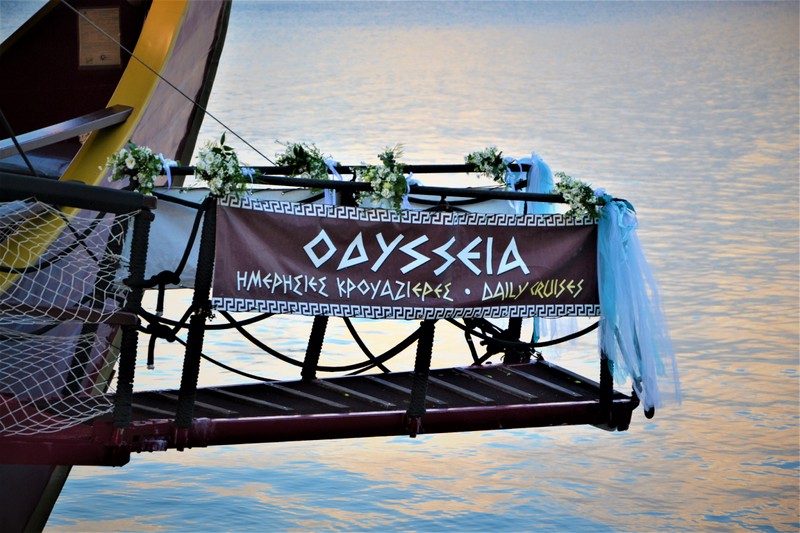
Ionian vessel · scene
Scene-vessel candidate with broad deck language for private cruises / events. They have responded positively on custom / non-standard itinerary; private day-hire ~€2,500/day (refined quote to confirm). Ritual-day boat, not the sleeping mothership.

Ionian vessel · hero
40m wooden mothership candidate · 12 cabins · 25 guests · Corfu / Lefkas orbit. Needs direct call.
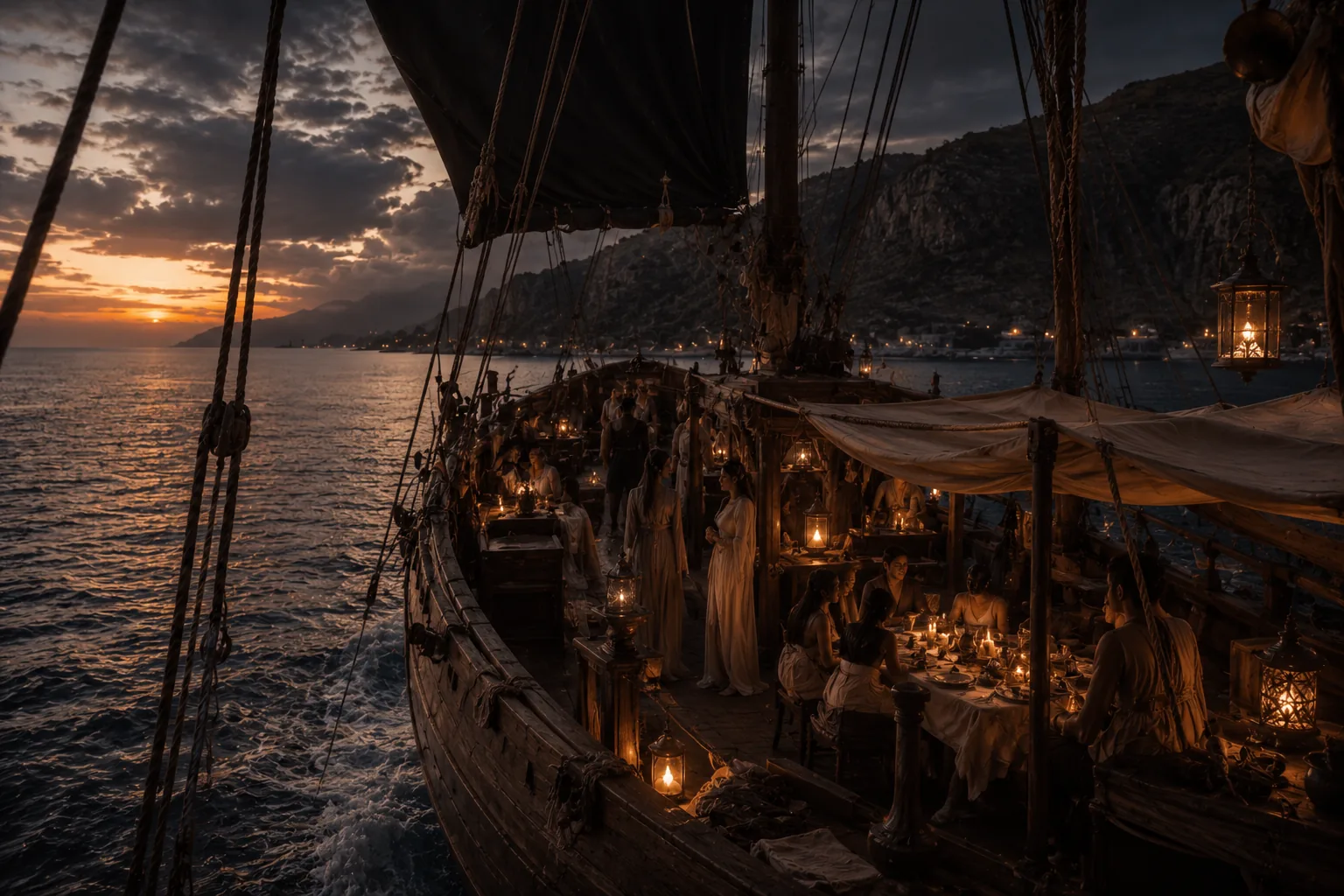
Concept · deck life
The hero vessel as temple, dining room, stage and moving threshold. Reference for deck use, lighting and ceremonial staging.
Vessel-role rule. Do not ask one boat to do everything. First question on every call is not price: it is whether the vessel can legally, safely and beautifully support a private ritual-theatre production.
The self-procure versus route-partner question is resolved: we are using Guy at TBL as the route-organisation partner, and he is actively running outreach to every lead on our behalf. Tersane 8 is confirmed unavailable. The route depends on the vessel: Guy at TBL provides it and will bring the captain and a chef with it if we want, and can source local fixers — collapsing three apparent gaps (captain, fixer, chef) into the single vessel decision. All other leads in the vessel table below are now being worked by Guy; the ~June 20 vessel-lock date still stands. Pull his responses into the route and vessel call the moment they arrive.
The four-role stack is the working production assumption. No single vessel should attempt all four jobs.
Carries the pilgrim core overnight. Sets the register — mythic, private, distinct. Cabins, deck space for ritual, night-use and sound permissions are all mandatory asks in any quote.
Used for one or two specific mythic moments where a different vessel serves the scene better than the mothership — a threshold arrival, a galleon for the wild shore, an intimate craft for the Nekyia approach.
This role is not an upgrade; it is a production requirement. The set and costume team must travel ahead of the pilgrim vessel to dress each shore location before pilgrims arrive. A second vessel — RIB or crewed catamaran — is therefore required at all times on the water. Every vessel quote must confirm whether a support RIB or tender is included or separately costed. Istion Yachting (multiple Greek bases, crewed) is the best support-craft candidate identified to date; HELM Brokerage is an alternative.
A villa or resort for luxury, after-dark ritual, and overnight needs the vessel cannot hold elegantly. Must support privacy, dinner with amplified sound, cast housing, and transfer flow. Decision is route-dependent: Emelisse or Agia Efimia for Ionian; Amanzoe / Porto Heli for Saronic.
| Vessel | Route fit | Specs (public, unverified) | Production read |
|---|---|---|---|
| Aegeotissa II aegeotissa@gmail.com · +30 694 553 9438 |
Ionian / Ithaca | 40 m, 12 cabins, 25 guests | Strongest one-and-done Ionian lead if custom-night flexibility and deck ritual use verify on the call. Comes with a 16 m wooden replica galleon (Corsaro del Santa Maura, 10 guests) that is the most theatrically distinct small-vessel lead in the field — but the galleon needs a land or support pairing for overnights. |
| Matina | Saronic / Argolic | 38 m, 8 cabins, Peter Sommer-operated | Solid Saronic fallback. Tour-operator coding needs to be confirmed before assuming full production flexibility. |
| ARKTOS | Saronic / premium | ~42 m, approximately 5 cabins | Strong visual register. Broker opacity is a procurement friction point; cost is likely high. Needs a direct line before it can be modelled. |
| KAIROS | Saronic / Cyclades | 38 m, 8 cabins, 16 guests | Excellent vessel language. 2026 availability is unconfirmed — earliest first ask is a date hold. |
| Athen.A | Saronic / Cyclades | 32 m, 8 cabins | Practical wooden option. Broker-only access; requires a formal outreach step before any discussion of terms. |
| Tersane 8 | Saronic (original preferred) | — | Confirmed unavailable. Off the list. |
| Lead | Role in the stack | Production read |
|---|---|---|
| Corsaro del Santa Maura (part of Aegeotissa fleet) |
Scene / intimate ritual vessel — Ionian | 16 m wooden replica galleon, 10 guests. The most theatrically distinct small-vessel lead in the field. Requires a land or support pairing for overnight; cannot carry the full stack alone. |
| Odysseia Lefkada +30 6970 122 745 |
Ritual day-vessel / threshold arrival — Ionian | Best ritual day-vessel identified to date. Night legality and amplified sound permissions unconfirmed — the key call questions. Has indicated openness to a private, non-standard itinerary. |
| Istion Yachting | Support catamaran / logistics base | Best support-craft candidate. Crewed, multiple Greek bases, can travel ahead of the hero vessel to dress shore locations. Every lead quote should confirm whether this role is included or is a separate line. |
| Emelisse Hotel, Fiskardo | Ionian land temple / Phaeacian finisher / overflow | Buyout, private dinner, tender access — all unconfirmed. Approximately 1 hour north of Agia Efimia; the more polished option but also the more logistically distant from the Sami–Ithaca ferry axis. |
| Agia Efimia / Hotel Odyssey | Ionian land temple / Phaeacian finisher | Closer to the Sami–Pisaetos ferry than Fiskardo; restaurant is named Mnistires ("the suitors") — a built-in mythic cue. Terms unconfirmed; first call needed. |
| Amanzoe / Porto Heli | Saronic land temple | Villas, beach club, private event capacity. Cost and ritual-tolerance (amplified sound, fire, large-group ceremony) unconfirmed. First call ask: can you host a private 35-person ritual dinner with music and recovery space? |
Vessel open threads. The confirmed cohort must come first — cabins and vessel class follow from pilgrim count, and no deposit should land before G1 (cohort) is passed. The key call question for every vessel: does the charter fee include a support RIB and tender, or is that a separate line? Two large-scale backups exist if the cohort grows significantly beyond seven — Running on Waves (~18 cabins) and Variety Cruises (~24 cabins) — but both read too cruise-coded for the lead role and should not enter the planning case unless scale demands it. The inquiry skeleton for formal vessel outreach is already drafted; it should go to every lead the moment the route direction confirms, with Guy's TBL outreach running in parallel. Track all responses into the procurement register as they arrive.
This is the single working register of every supplier the production needs to engage. Statuses reflect what is known as of June 2026. The majority are not yet contacted. All vessel and land-base contacts should be treated as urgent given the vessel process failure in late May.
Vessel urgency. Tersane 8 — the only TBL vessel that fit the budget — had its hold expire before the team reviewed it. Guy at TBL is now the engaged route-org partner, in daily contact with Lucian and sourcing the whole stack; the lapsed Tersane 8 hold is the resolved historical trigger, not a live item.
| Supplier | Category | Route fit | Contact | Status | Next action | Owner |
|---|---|---|---|---|---|---|
| Aegeotissa II / Aegeotissa Yachts | Vessel — hero / mothership | Ionian / Ithaca | aegeotissa@gmail.com · +30 694 553 9438 · aegeotissa.com | Not yet contacted | Email + call: custom 5–7 night private charter, cabin plan, route flexibility, deck use for ceremony | TBC |
| Corsaro del Santa Maura | Vessel — intimate pilgrim / scene vessel | Ionian / Lefkada / Ithaca | Same Aegeotissa contacts | Not yet contacted | Include in Aegeotissa call: pair with support stack, assess comfort level, safety certification | TBC |
| Tersane 8 (via TBL) | Vessel — hero / mothership | Saronic (Tersane base; date TBC) | Via Guy at TBL — relationship repaired | Confirmed unavailable — off the list. The TBL relationship is repaired; Guy is sourcing the full stack. | No further action — vessel closed. TBL (Guy) is sourcing alternatives across both routes. | Lucian / Sarah Jack |
| Matina | Vessel — hero / mothership | Saronic / Argolic | petersommer.com/gulets/matina | Not yet contacted | Email broker: Saronic private charter, 5–7 nights, Athens or Porto Heli routing | TBC |
| Athen.A | Vessel — hero / mothership | Saronic / Cyclades | guletbookers.com/gulet-athen-a/ | Not yet contacted | Contact broker: confirm 2026 Greece location, private charter terms, cabin standard | TBC |
| ARKTOS | Vessel — premium hero / schooner | Saronic / premium Greece | boatsatsea.com/charter-yacht-arktos | Not yet contacted | Broker inquiry: availability, Greece positioning, rate and capacity | TBC |
| KAIROS / Sailing Classics | Vessel — classic staysail schooner | Saronic / Cyclades | sailing-classics.com/en/kairos/ | Not yet contacted | Inquiry form: private charter, Greece positioning, 2026 availability | TBC |
| Running on Waves | Vessel — large backup / canal route | Canal / large-scale | running-on-waves.com/charter/ | Not yet contacted | Hold as backup; contact only if cohort exceeds 7 or canal route advances | TBC |
| Supplier | Category | Route fit | Contact | Status | Next action | Owner |
|---|---|---|---|---|---|---|
| Odysseia Lefkada | Vessel — ritual deck / scene vessel | Ionian / Nidri / Meganisi | +30 6970 122 745 · +30 6932 310 975 · +30 6936 835 997 · odysseia-lefkada.eu | Not yet contacted | Call first: private event deck, evening timing, sound rules, custom route, quote | TBC |
| Christos (Saronic RIB / local) | Fixer — local operator / scene access | Saronic / Argolic | Contact details not yet captured — introduced on the June scout; follow-up required via the scout team | In-person contact made during scout; formal engagement not yet agreed | Secure contact details from Althea or Cleo; confirm availability for September; brief on production scope; ask about his guide friend for the Aegina temple site | Althea / Cleo |
| Istion Yachting | Vessel — support / RIB / catamaran | Ionian and Saronic | istion.com | Not yet contacted | Contact after primary route narrows: RIB or catamaran support, skipper, base logistics | TBC |
| HELM | Vessel — broker / support sweep | Greece (route-agnostic) | helm.yt/yacht-charter/greece | Not yet contacted | Send production brief after route confirmed | TBC |
| Supplier | Category | Route fit | Contact | Status | Next action | Owner |
|---|---|---|---|---|---|---|
| Emelisse Resort | Land base — Phaeacian finisher / recognition day | Ionian / Kefalonia / Fiskardo | emelisseresort.com/kefalonia-weddings/ | Not yet contacted | Email events team: buyout terms, private dinner, late sound, tender access, external production load-in | TBC |
| Agia Efimia — Odyssey Boutique Hotel | Land base — Phaeacian finisher / Sami-cluster alternative | Ionian / Kefalonia (Sami) | hotelodyssey.gr · +30 26740 61089 | Not yet contacted | Call: waterfront capacity for ~35 guests, buyout, sound rules, restaurant Mnistires private hire | TBC |
| Perantzada 1811 | Land base — boutique Ithaca option | Ionian / Ithaca | Public contact to verify | Not yet contacted | Research contact then call: boutique buyout, dinner, production flexibility, overflow rooms | TBC |
| Amanzoe | Land base — Saronic / recognition / recovery | Saronic / Porto Heli | aman.com/resorts/amanzoe | Not yet contacted | Contact events: villas, beach club, buyout terms, external production rules, tender logistics | TBC |
| Poseidonion | Land base — Saronic / dinner / event | Saronic / Spetses | poseidonion.com/en/events | Not yet contacted | Contact events: dinner or event hire, rooms, external team access, tender logistics, curfew | TBC |
| Theodore — private theatre (Zakynthos) | Land base — open-air private theatre | Ionian / Zakynthos (future potential) | +30 697 771 5676 (captured during June scout) | Not yet contacted — contact exists | Hold for now; contact only if Zakynthos chapter advances or a standalone performance venue is needed | TBC |
| Nikki Beach Porto Heli | Land base — party / alternative layer | Saronic / Porto Heli | nikkibeach.com/porto-heli/happenings/ | Not yet contacted | Hold as tone-risk alternative; contact only if Amanzoe and Poseidonion do not work | TBC |
| Erosantorini | Land base — Cyclades option | Cyclades / Santorini | erosantorini.com/concept/ | Not yet contacted | Hold if Cyclades route revived; do not pursue while Saronic or Ionian is primary | TBC |
| One&Only Kea Island | Land base — Kea hybrid | Kea / near-Athens | oneandonlyresorts.com/kea-island | Not yet contacted | Hold as hybrid lead; contact after route is confirmed and if Kea variant gains traction | TBC |
| Supplier | Category | Route fit | Contact | Status | Next action | Owner |
|---|---|---|---|---|---|---|
| Ionian fixer | Fixer — cove access / harbour / tender reality | Ionian / Ithaca / Lefkada | Not yet identified | Unsourced | Identify through Aegeotissa Yachts call, local captain networks, or Odysseia Lefkada contact chain | TBC |
| Athens / Saronic fixer | Fixer — permits / harbour / archaeology | Saronic / Argolic | Christos is a candidate; additional event fixer may be needed | Partially — Christos has on-water access but broader permit intelligence is unconfirmed | Test Christos on permit and harbour-authority questions; identify a separate event or film fixer if needed | Althea / Cleo |
| Hellenic Film Commission / permit adviser | Permits — archaeology, drones, filming, performance | All routes | Not yet sourced | Unsourced | Initiate as soon as the preferred route and scene list are locked — permits have a roughly two-month lead time and must clear before rehearsal and launch | Safety DRI (TBC) / EU counsel |
| Maritime Safety Lead | Safety-legal — on-water safety / first aid | All routes | Usually the skipper; first aid certification must be confirmed | Unnamed — critical gap | Name this DRI immediately; confirm first aid certification and brief on descent, cave, and night-water scenes | Lucian (to assign) |
| EU Legal and Insurance Counsel | Safety-legal — consent, insurance, performance policy | All routes | EU counsel (currently managing Midsummer; capacity limited) | Not yet engaged for Odyssey | Engage the EU counsel or source an alternative with EU maritime and event experience; must be active by 1 July to meet permit timeline | Lucian / EU counsel |
| Aviation handler | Permits — private / VIP arrivals | PVK / EFL / ATH / JTR (route-dependent) | Not yet sourced | Unsourced | Source after route and arrival airport confirmed; required for open-jaw feasibility and apron management | Sarah Jack |
The performing and holding team is a first-class production system, not set dressing. The priestess-per-pilgrim ratio is load-bearing architecture. The facilitation layer holds three functions in permanent tension: the breaker, the holder, and the witness. Every role below serves that engine.
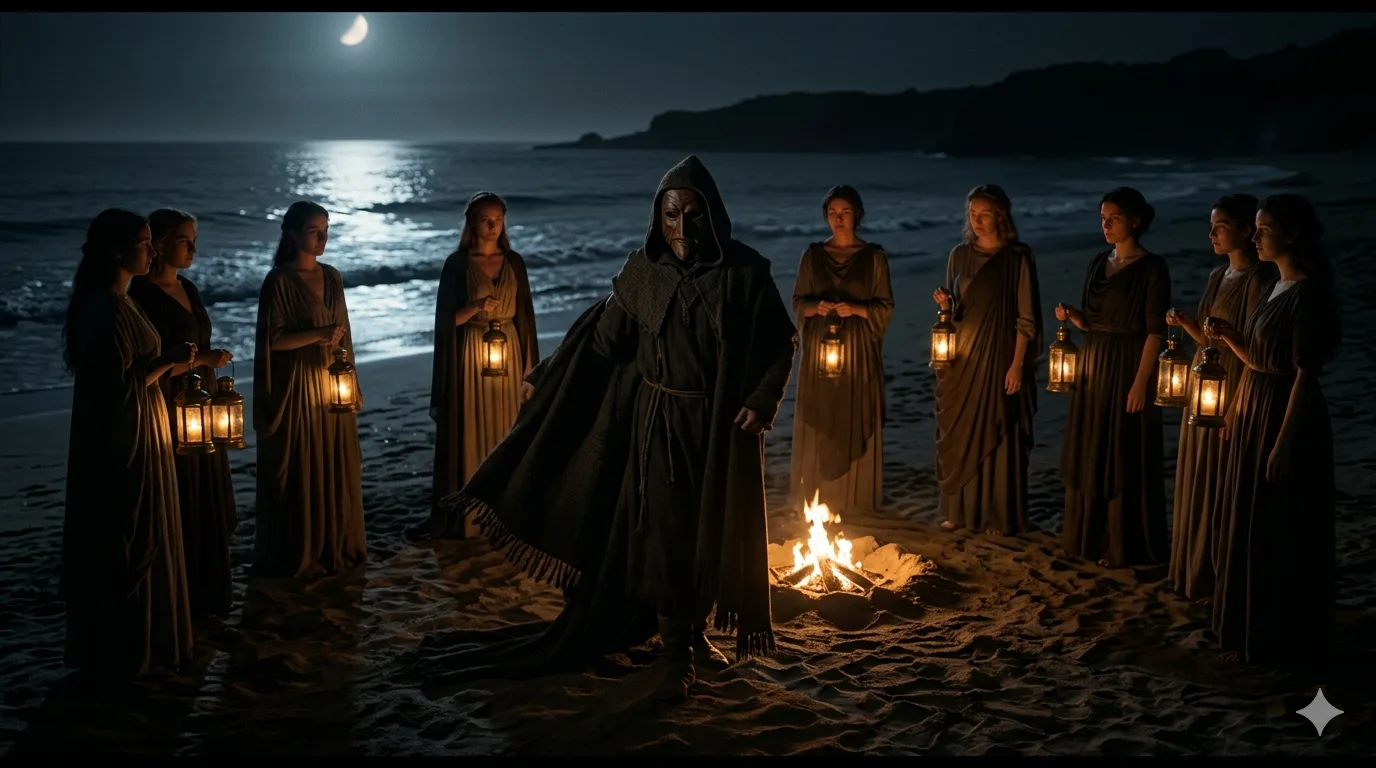
Each pilgrim has one priestess assigned to them for the full journey. The assignment is fixed. The consistency of the relationship across the whole arc is structural, not a luxury. A priestess who arrives mid-arc does not carry the picture of who the pilgrim was on Day 1; without that accumulated knowledge, the recognition and witness functions in the later arc stages cannot be real.
The priestess is a container. That word is precise. A facilitator leads process; a guide points the way; a therapist works with content; a performer enacts a role. The priestess holds the space in which the pilgrim's experience can happen at full intensity without the container collapsing. The distinction is load-bearing.
Athena as the priestess archetype. The second mythic lens (the Faces of the Feminine) gives the priestess cohort their mythic name: each is an Athena to her king. Athena is the divine feminine as wisdom and protection, present the whole way, guiding without controlling. Like Athena, she both holds and challenges. She does not explain the feminine undercurrent — she embodies it. Told to the pilgrim, the covert journey dies; the priestess carries it silently through her presence alone.
The number of priestesses required matches the confirmed pilgrim count: six to seven. Recruitment has not been formally opened. This is a long-lead item and is on the critical path: preparation lead time is significant, and the right people need to be identified and given at least eight weeks of preparation before the September departure. Recruitment should begin no later than early July.
| Arc register | Priestess function | Key discipline |
|---|---|---|
| Arrival / Victory | Orient and welcome; establish presence without claiming closeness; the pilgrim is intact and has not been asked anything yet | Remain peripheral; available but not prominent |
| Feast / Seduction register | Available if the pilgrim is disoriented; otherwise does not intervene; the feast is for the pilgrim, not the container | Minimal presence; do not fill silence; do not interpret the feast for them |
| Threshold / First undressing | Becomes more visible; witnesses the act of setting down without narrating it; literally holds what is set down | Witness, do not explain; hold the object of setting-down |
| Descent / Dark water | Physical proximity — close enough to reach without searching; minimal intervention; knows when the produced ritual has ended and what her role is at the transition; leads immediately into integration | The highest-stakes register for the priestess; requires the strongest personal containment capacity; must have traversed this territory herself |
| Recognition / Witness | She sees the pilgrim — not their persona, their performance, or who they arrived as, but who they are now. She confirms what she has seen. This is one of the most intimate and powerful moments she offers. | Genuine recognition, not therapeutic mirroring; "this is who you are; I have watched you for six days" |
| Return / Integration | Gradual handing-back; supports the pilgrim's own articulation of what has happened; does not provide a narrative | The dependency of the descent register releases; do not fill the space they now need to inhabit |
The priestess may hold therapeutic training, but her role here is distinct from therapist, counsellor, or performer. She is separate from the Enchantress, the Host, and any archetypal-role cast member. Programme and arc decisions belong to the ritual leads. The role distinctions protect the pilgrim.
The minimum personal preparation requirements: she has traversed genuine initiation territory herself; she understands the arc at each stage; she has experience holding people in states of intensity; she can maintain her own centre when the person next to her is in genuine distress; she has received, and can access in real time, the intervention protocol for the descent register.
Every effective initiation system contains three relational functions working in productive tension. These are not hierarchy: they are roles that must coexist and sometimes conflict, with the collaborative creative lane as the live arbiter when they do.
Challenges, confronts, disorients; holds the edge where transformation becomes possible. The breaking function does not operate without the holding function being ready. If the holding lead says the container is at capacity, the collaborative creative lane does not push further. That boundary is what makes the creative vision possible.
Ensures difficulty does not exceed the container; knows when enough is enough; monitors the overall state of the group (individual pilgrims are the priestesses' domain). The holding function does not preemptively prevent difficulty: Geof's job is to ensure the difficulty does not damage, not to make the experience comfortable.
Neither breaks nor holds but confirms what is true. The witness function does not interpret for the pilgrim — what is seen is offered; the pilgrim makes their own meaning. Carried at the facilitation layer by Galad (mythic witness), and at the individual level by each priestess for her assigned pilgrim.
| Role | Person | Function in the facilitation layer | Status |
|---|---|---|---|
| Creative authority | Replacement creative authority or interim approval lane TBC | Collaborative creative approval lane; governs the 70%/30% tonal ratio; arbitrates breaker/holder conflict; protects enough oversight distance during descent for judgment and containment | |
| Program Director | Geof | The holding function within the facilitation layer; integration architecture; safety; monitors group state; owns the intervention protocol; is the go-to when any team member has a wellbeing concern; the one who knows when enough is enough | |
| Bard | Galad | The symbolic and mythological intelligence of the arc; the witness function at the archetypal level; ensures Homeric and mythic language is used with depth, not as decoration; can name in real time what arc stage a pilgrim is in, in Homeric terms. Whether present for the full 6-day arc or advisory only is an open question — his scope in the live production requires clear bounding: he is not a therapist, programme director, or performer | |
| Teamweaver | Iffy | Theatrical and ritual execution of the arc sequences; directing the performing cast; managing the physical production of each scene; the interface between creative vision and physical delivery (crew and cast); shapes the environment in which breaking and holding happen | |
| Musical Director | David Bergeaud | The sound world and emotional nervous system of the production; designs and delivers the sound world for each arc register; responds in real time to the state of the room or shore; coordinates with Iffy on cue timing; a facilitation function in its own right, not a technical support function — a musician who reads the room and adjusts is structurally more powerful than recorded playback in ritual contexts | |
| EU Associate Producer + scout | Cleo | European production-specific considerations — permits, local contacts, cultural navigation; supplements the on-the-ground Greek focus; scope relative to Sarah Jack to be defined clearly before the production begins | |
| Producer | Sarah Jack | Operational spine of the production; manages all supplier relationships (vessel, villa, transport, permits, insurance); runs the production schedule; manages support vessel logistics and advance-party shore prep; ensures crew egress from each site before pilgrims arrive; first call for any operational problem; communication channel to pilgrims should be minimal and indirect — issues affecting a pilgrim should route through their priestess or Geof | |
| Greece Scout / Fixer | via Guy at TBL (to confirm) | Greece-based operational partner; site scouting and photography; permit and authority navigation; local supplier network; weather and seasonal intelligence; must receive a clear written site brief for each location, including what the arc requires (access time, darkness level, fire/torch permission, water access, egress route), as soon as the route is confirmed |
No named marine safety lead yet — a prerequisite to any water-based rehearsal or scene, and the G5 safety gate (see §27). The captain Guy at TBL brings with the vessel is the natural lead, named when the vessel locks.
This is the highest-trust creative partnership in the production. The right people need to be identified, approached, and given eight weeks of preparation before the Spring 2027 rehearsal cycle. Recruitment ownership: Geof and the collaborative creative lane jointly. Route: network, not open call — candidates must have traversed genuine initiation territory themselves. Fee, travel, accommodation, and preparation time to be confirmed with Sarah Jack.
This gap affects every logistics decision about what travels on the vessel and what pre-positions on shore. The set team is responsible for dressing each arc location before pilgrims arrive — the principle is dress the shore before they arrive. Everything is set up and struck within hours. The costume designer also governs the wardrobe arc (see Visuals section). This gap needs to close soon.
Food in this production is a ritual and theatrical function, not a hospitality service. The feast meal is designed in collaboration with the collaborative creative lane. The chef must know the emotional arc: what is this meal for? What is the pilgrim carrying when they sit down? They must operate on a vessel kitchen with limited equipment and at shore locations with no kitchen at all.
David Bergeaud is confirmed as Musical Director. The specific ensemble is TBC. Their roles in the facilitation layer vs. performance layer need to be defined. Live music is structurally more powerful than recorded music in ritual contexts. The Siren sequence in particular is understood as pure sound — David's register — and its design depends on the ensemble composition.
The performing cast fills mythic functions across the arc. These are functions, not characters in a drama the pilgrim watches from outside. The pilgrim is inside the arc. The archetypal roles create the field conditions in which transformation happens. Two rules apply: do not weld functions to specific personnel (the functions are durable; the casting is not final), and do not weld functions to specific locations (the route is not decided).
Translate, do not cosplay. No Cyclops costume, no Siren fish-tails, no Poseidon trident. The approach is to take the function of each Homeric figure — what it does to Odysseus, what it takes or demands — and find its contemporary physical form. A design choice that requires the pilgrim to suspend disbelief in a theatrical/costume way has crossed from translation into cosplay. Cosplay breaks the spell. Translation deepens it.
| Role | Homeric source | What this function does to the pilgrim | Arc stage | Key translation note |
|---|---|---|---|---|
| The Host | Polyphemus — the predatory host; Odysseus enters his home and is trapped and consumed | Confronts the pilgrim's tendency to accept welcome without examining its cost; the arrival feast is beautiful and real, but something in the Host's world takes more than it gives — without the pilgrim quite realising it | Early arc; arrival/feast register; Day 1 or 2 | The Host is not a giant. He is a figure of enormous welcome and hidden hunger. The performance is subtle: warmth and something slightly predatory simultaneously, without telegraphing it. One of the hardest performances in the production. |
| The Enchantress | Circe — transforms Odysseus's men into pigs; when resisted becomes a genuine ally, lover, and guide | The power that the pilgrim's default mode cannot manage; represents embodied life, pleasure, and the un-heroic self subordinated to achievement; the seduction is existential, not necessarily sexual: "what if the life you have built is, in some fundamental way, the pigs?" | Mid-arc; threshold between feast register and descent; Day 2–3 | Genuinely powerful, not theatrical. The pilgrim should feel the pull before they understand what is being asked. The transformation she enacts is figurative — through encounter, ceremony, a designed confrontation with what has been avoided. |
| The Sirens | The Sirens — their song promises knowledge and completion; the danger is not what they threaten but what they offer | Represents the stories the pilgrim tells themselves to remain in stasis; the voice that says "you already know what you need to know" or "you are already who you are going to be"; the fantasy of understanding enough to arrive at safety without traversing difficulty | Threshold before the descent; the moment when the pilgrim has the option to not go further | The Sirens are pure sound — David Bergeaud's register. Less a performing role and more sonic/environmental design. "Bound to the mast" is a ritual act of commitment; the pilgrim chooses to continue into what the Siren voices are warning them away from. |
| Voices of the Dead | The Nekuia (Odyssey Book XI) — Odysseus speaks with his dead mother, Tiresias, Achilles, Agamemnon; each tells him something only available in the underworld | The things the pilgrim has not wanted to hear, spoken from outside their constructed story; may represent unlived lives, discarded selves, earlier versions left behind at earlier thresholds; they speak from outside the pilgrim's narrative and cannot be deflected by status, wealth, or competence | The descent/underworld sequence; Day 3–4; the emotional centre of gravity of the arc | The Voices are not people in shrouds. Their costume belongs to the absence register (the dead wear what they did not choose). Masks remove the face and make them archetypal rather than personal. What makes them effective is not what they look like but what they say and how. They speak truth; they have nothing to lose; they are not performing. |
| The Witness | Penelope — held the household twenty years through strategy and refusal; the recognition scene around the olive-tree bed is the arc's culmination | Sees the pilgrim after the ordeal — not who they arrived as, who they are now; the Witness's recognition is the arc's gift: you are seen, not as a performance or a construction but as yourself | Recognition sequence; near the end of the core arc; Day 5–6 | May be carried by the priestess at the individual level, or by a dedicated performing cast member at the group level, or both. The key quality: genuine presence. If the person filling this function does not genuinely see the pilgrim — if the container has not been rich enough for real seeing — the recognition will feel theatrical. It must be real. |
| The Faithful Return | Eumaeus (the swineherd) and loyal retainers — not dramatic, steadfast; maintained ordinary life during the extraordinary absence | Provides relief and warmth at the return register; after ordeal, the pilgrim encounters something that held steady: you can come home, there are people who kept faith, the ordinary world endured — offered not as sentimentality but as genuine comfort after genuine difficulty | Return / integration register; Day 5–6 and the villa integration period | May be carried by the priestesses at the individual level — they are, by definition, people who held the container throughout. Specific design of how this function appears is open. |
Open questions on casting. The complete cast of archetypal functions has not been agreed with the collaborative creative lane and Galad — this is a starting map, not a final design. Whether the same performing cast member fills multiple functions across the arc (e.g., Host and Witness, seen differently) is a creative choice that affects the design significantly; Iffy and the collaborative creative lane should decide this. The Siren sequence and its specific ritual design requires David Bergeaud's input. Whether Aphrodite deserves a separate role at the villa/embodied-beauty integration register (currently folded inside the Enchantress/Circe function) should be discussed with the creative team.
The pilgrim is the protagonist. Every other function — priestess, cast, set design, ritual, food, music, route — is infrastructure for their transformation. When there is a conflict between what is interesting or beautiful for the production team and what serves the pilgrim's arc, the pilgrim's arc wins.
The pilgrim arrives as a king: operational reality, not metaphor. The people who buy this experience are high-achieving, powerful in their fields, used to being the most competent person in the room. The production's task is to create conditions in which the pilgrim voluntarily sets that down and discovers what exists underneath. "Arrive as kings, leave transformed" is the arc in six words.
The cast owes the pilgrim: full attention for all six days (no split attention, no backstage leakage); containment (what happens in the arc stays in the arc, as a structural principle); accurate reading (the distinction between difficulty that is medicine and distress that requires intervention must be held correctly in both directions); and clean role boundaries.
The cast does not owe the pilgrim: an experience free from difficulty or discomfort (the arc includes difficulty by design); agreement (a priestess does not tell the pilgrim what they want to hear); resolution (not every arc element arrives at a tidy landing); or certainty about what their experience meant (the pilgrim makes their own meaning).
Also a patron — invested in the production. The patron/pilgrim overlap means the Magician has visibility into production logistics. This must not contaminate his experience as a pilgrim. The cast should work with Geof on how to maintain the distinction between his patron knowledge and his pilgrim journey. His Dante critique is the primary formative brief for this production's design: no wealth shaming, no external-authority narration of inner faults, no lectures into transformation.
The second confirmed pilgrim, in via his Kadesha subscription. Full profile — the war he fought, what winning it cost him, what he will not leave behind — to be captured at intake.
Background detail is placeholder — document once available. Eleos should not be treated as less important than the Magician because he is not also a patron. Pre-arrival screening, consent architecture, post-arc follow-up, and refund/cancellation terms should be defined before additional pilgrims are enrolled. Neither the Magician nor Kronos has been asked to refer; the referral fee is $7,700 per successful introduction.
Everything in the rehearsal plan depends on the creative being locked by creative-lock date TBC. Without a finalised arc, scene list, and ritual register, Iffy cannot direct, David Bergeaud cannot score, the priestess cohort cannot be prepared, and Geof cannot write the intervention protocol. The backward calendar from departure (T-0, date TBC) leaves approximately four weeks of genuine rehearsal runway once the date is set.
The creative-lock dependency is real. Every item below this line is gated on creative lock. If the arc, scene list, and ritual matrix are not finalised by creative-lock date TBC, there is no safe rehearsal runway before April/May launch. This is a hard stop.
The collaborative creative approval lane holds final say on every element of the arc: what is in, what is out, the tonal balance, and when to deviate from the designed programme in real time. This owner signs off on the creative lock for the Spring 2027 rehearsal cycle. No scene enters rehearsal without that approval.
Iffy directs the performing cast in the archetypal-role sequences and manages the physical production of each scene. The rehearsal programme is her responsibility from creative-lock date TBC onward. She coordinates cue calls, scene blocking, and cast timing, and is the primary interface between the creative vision and the physical delivery by cast and crew in Greek outdoor and on-water contexts.
The arc has not been fully locked, but the following scene functions are structural regardless of the final arc shape. Each requires dedicated rehearsal time and cannot be improvised live.
The Host sequence (the predatory welcome that undoes the pilgrim of the assumption that abundance is free) is the arc's opening confrontation. The performer holding this function must be capable of simultaneous warmth and latent demand. This is the hardest performing role in the production and requires the most rehearsal lead time.
The Enchantress sequence moves the pilgrim from feast into descent. The performer must generate genuine pull — existential rather than theatrical — at the moment when the pilgrim is most likely to deflect. Iffy and the collaborative creative lane must rehearse the cue structure and blocking before the scene goes near a pilgrim, particularly given the outdoor and water contexts where sound and sightlines will differ from land-based theatre.
This is the highest-stakes arc moment from a participant-wellbeing standpoint. David Bergeaud's sound design is a core facilitation element, and the entire sequence — sound, cast, priestess positioning, physical proximity, transition into integration — must be rehearsed as a single unit. Geof's intervention protocol must be written and briefed to the full cast before this scene is rehearsed with any real intensity.
The recognition sequence is the arc's hinge toward homecoming. If the person carrying the Witness function does not have enough real contact with the pilgrim by Day 5 — accumulated through the priestess relationship and the arc's preceding movements — the recognition will read as theatrical. The rehearsal task here is not scene mechanics but relational calibration: the priestess preparation programme and the Witness casting must be designed together.
The Siren sequence is primarily a sonic and environmental design — David Bergeaud's domain — but the ritual act of commitment (the pilgrim choosing to continue into what the Siren voices are naming) requires a prepared container. The priestess must know exactly what she is holding at this moment, and the sound design must be tested in the actual acoustic environment of the planned site, not only in rehearsal rooms.
The full cast — not only Geof and the priestesses — must walk through the safety signal protocol before any live-arc scene is rehearsed at intensity. The signal is what a pilgrim uses when they are approaching a genuine limit, not merely experiencing discomfort. Every cast member must be able to recognise it and know the immediate response. Geof writes this protocol; the collaborative creative lane signs off; Iffy coordinates the briefing.
| By when | Milestone | Owner | Notes |
|---|---|---|---|
| Spring 2027 cohort gate | Pilgrim cohort confirmed (go / no-go gate); priestess count and cast size locked to confirmed cohort | Lucian + Althea (sales) | One priestess per confirmed pilgrim; recruitment cannot open until the number is real |
| February-March 2027 (T-8 weeks) | Priestess recruitment opens; 8-week preparation lead time begins | Geof + collaborative creative lane | Approximately 8 weeks before the April/May launch window; this is the hard rear boundary for identifying candidates. Recruitment through network, not open call — candidates must have traversed genuine initiation territory themselves |
| creative-lock date TBC | Creative fully locked: skeleton, flesh, route-specific ritual matrix, red-line register | Collaborative creative lane + Galad | Unblocks cast asks, safety constraints, David Bergeaud's final score, and the rehearsal brief. Nothing below this line can proceed without it |
| ~August 5 | Priestess cohort confirmed; each assigned to a named pilgrim | Geof + collaborative creative lane | Assignment should be made thoughtfully; where possible, pilgrim and priestess are briefly introduced before the production begins |
| ~August 8–12 | Priestess preparation programme begins; arc briefing, intervention protocol, relational calibration | Geof (design) · Iffy (logistics) | Format TBC — residential cohort session preferred if scheduling allows; the preparation programme design should be complete by creative-lock date TBC so it can begin immediately after cast lock |
| ~logistics-lock date TBC | All performing cast contracted; David Bergeaud score in draft; scene blocking in draft | Iffy + collaborative creative lane | Suppliers, land temple, transfers, and logistics must also be confirmed by logistics-lock date TBC per the critical path |
| Late August (T-2 weeks) | Dry runs and walk-throughs on site or in equivalent contexts; medical and safety walk-throughs; sound check in actual acoustic environments | Iffy (creative) · Geof (safety) · David Bergeaud (sound) | At least one dry run of each mandatory scene at the intended site or a physically equivalent substitute. Night-water and cave scenes require separate safety sign-off by the Maritime Safety Lead before running at full intensity |
| Early September (T-1 week) | Load-in; on-site dry run; final captain sign-off on each landing and tender plan | Sarah Jack (logistics) · Maritime Safety Lead | No scene involving water, cave, or night movement proceeds without captain sign-off. Load-in plan must account for Tersane access and the vessel's actual deck configuration |
| T-0 (date TBC) | Go | All DRIs | Boat start · departure point & date TBC |
Geof must write the intervention protocol for the descent register before the priestess preparation programme can begin. It is the live operating instruction that every cast member briefs from, not an archive document. Without it, no scene involving genuine pilgrim intensity can be rehearsed safely.
Six days on a vessel in demanding relational conditions is not a short engagement. The fee, travel cost, accommodation plan, and preparation time must be confirmed with Sarah Jack before recruitment opens. Candidates who are the right people for this role will not accept an offer that has not been thought through to this level of detail.
The creative debrief established that the breaking function and the holding function will come into real-time tension during the live arc. The protocol for when they conflict — who calls it, what the decision process is, and how the rest of the cast responds — must be worked out in pre-production, not improvised on the water.
Whether Galad is present for the full six-day arc or contributes in pre-production only is an open question. His travel, accommodation, and role scope during the live production need to be confirmed with Sarah Jack. If he is present, his role — mythic witness, not therapist or programme director — must be clearly bounded before rehearsals begin.
The market frame from the business notes, at full detail. The central question this section must answer — and keep answering — is whether the initiation is genuinely present or whether the beautiful container is hollow. Strip the initiation out and a lot remains. But only the initiation justifies the price.
The Odyssey Spring 2027 is an initiation system: a designed passage through which a person enters as one version of themselves and exits as another. The passage is real. The change is irreversible. The transformation is the product. Everything else — the vessel, Greece in April/May, the beauty of the locations, the quality of the food, the skill of the cast — is infrastructure in service of that.
This is the single most useful diagnostic for every decision made in this production. Apply it to every design choice, every scene, every supplier decision.
The test: strip out the genuine archetypal initiation. Remove the rituals, remove the designed confrontations with the self, remove the arc that takes the pilgrim from one state of being to another. What remains?
What remains is: a beautiful crewed gulet in Greece in April/May, extraordinary food, a small group of interesting people, a mythological narrative, and skilled hospitality.
That remainder is genuinely good. But it is available. A crewed gulet week in the Saronic costs roughly $20,000–$40,000 for a group. A week at Amanzoe Porto Heli costs roughly $10,000–$25,000. An immersive theatre company will produce a bespoke mythology experience for a fraction of $77,000.
What justifies $77,000 is a genuinely designed initiation arc, held by people who know what they are doing, in a container built for that specific purpose. That is the entire product. If the initiation is hollow — if the rituals are beautiful but do not ask anything real of the pilgrim, if the arc is a narrative wrapper around good hospitality — the pricing is not defensible and the product is not honest.
Retreats bring people back to themselves. This is a passage through which the person on the other side is not the same person who entered. The destination is a new state, not a recovered one.
The narrative is the container; the travel is the medium through which the arc is delivered. Greece matters because of where specific arc moments can happen, and those moments cannot happen in a conference room.
Costumes, props, and story moments layered over good hospitality is the wrong model. The Odyssey is the symbolic language for a real initiation system. The myth is used because it maps accurately onto the arc of transformation, not because it is a compelling theme.
There is no group process in the traditional sense. Six or seven pilgrims travel together through an arc designed for each of them individually. The other pilgrims are witnesses and companions, not a therapy group. Individual arcs must stay distinct even when the group is together.
The production brief defines two options for using Odyssey mythology:
Option B means: the arc does not need to follow the Odyssey in sequence; the pilgrim is themselves in a designed transformation, not a character in a retelling; Homeric references, locations, and mythic registers serve the arc without dictating it. A pilgrim who has never read the Odyssey experiences the same transformation. The myth is the language, not the curriculum.
The person who buys The Odyssey Spring 2027 has already had novelty, luxury, and adventure travel. What is moving them now is something they cannot fully name: a sense that they are living a story they did not choose, or that they have achieved what they set out to achieve and found it insufficient, or that there is a version of themselves they have not yet met.
They are high-achieving, often wealthy, often powerful in their field. They are used to being the most competent person in the room. They are buying an experience in which that competence will be temporarily set aside — and they probably know that, even if they do not say it.
The $77,000 price is a filter, not a barrier. It selects for people who take the decision seriously. The financial ease of the decision is part of what creates the right container; someone for whom $77,000 is a genuine sacrifice is not the right pilgrim.
| Buyer characteristic | What it means for the offer | What it means for the design |
|---|---|---|
| High-achieving; accustomed to competence and control | The offer must honour their world, not subtext that the production knows better than they do | No wealth shaming, no irony about their success; the undoing is a gift offered to someone who senses there is more of them than the achievement — not administered as a correction |
| $77,000 is discretionary | The price filter is working; these are the right people in the container | No economies of scale; each pilgrim receives close, dedicated attention; the production can afford to be uncompromising on quality |
| Has had luxury travel; is not buying Greece-in-September | The offer must be legible as something they cannot buy elsewhere | The hollow-core test applies to every sales conversation; never lead with the vessel or the food |
| Not in acute mental health crisis | Psychological screening before enrollment is a safety and ethics requirement | Geof (Program Director) must define the screening protocol before the next sales conversation |
| Not looking for erotic encounter or romantic matching | The Aphrodite register within the arc is about the pilgrim's relationship to embodied life, not to other participants | Consent architecture must cover this distinction explicitly; the erotic-sexual consent category is one of eight that must be addressed at intake |
The Odyssey Spring 2027 sits within the Kadesha (Kadesha Temples) price band of $50,000–$100,000 per pilgrim. Kadesha as a whole is a mystery school — a multi-year initiation system of which The Odyssey Spring 2027 is one chapter.
| Band position | What it signals |
|---|---|
| $50,000 (band floor) | The entry point into Kadesha; not where The Odyssey sits |
| $77,000 (The Odyssey) | Upper-middle of the band. Not the entry point (signals this is not the simplest or shortest experience). Not the ceiling (leaves room for future experiences at higher price points, including potential multi-chapter Saga packages). Serious without being prohibitive for the target audience. |
| $100,000 (band ceiling) | Achievable for UHNW clients if the product genuinely delivers transformation. Not the current offer; available as the Saga frame develops. |
The multi-year Saga is a commercial long tail and a genuine architectural ambition. Pilgrims who complete The Odyssey may be invited into subsequent chapters; the multi-chapter arc is one of the distinctive commercial and artistic propositions of the wider Kadesha project. This must not be promised in the first offer. The Saga arc is an architecture, not yet a schedule. Over-promising the multi-year arc before it is real creates an obligation that the production cannot yet meet.
Working draft — for the collaborative creative lane and Althea to refine before use in sales materials. This is the input the invitation letters and sales conversations both draw from. It is not the final language.
You are invited to undergo a genuine transformation. Over six days in Greece, you will be taken through an initiation arc — designed, held, and delivered by a team of people who have built this for you. You will arrive as the person you have been. You will leave knowing something true about who you are underneath that. The journey will be beautiful, challenging, and at times difficult. You will not be made comfortable in the places where discomfort is the medicine. You will be supported throughout.
This is not for everyone. It is for the person who is ready for it.
| Pricing component | Detail |
|---|---|
| Ticket price | $77,000 per pilgrim. This number is in the market — two pilgrims have paid it. It is not a draft number. |
| Referral fee | 10% of ticket price: $7,700 per successful introduction. Generous, deliberate, should be communicated clearly to anyone who can make introductions, and honoured without exception. Neither the Magician nor Kronos has been asked to refer. This is an active gap. |
| Not included (placeholder pending Sarah Jack confirmation) | Airfare and transfers to embarkation port; pre-arrival preparation materials and rituals (TBD); post-Odyssey integration support (TBD); physical invitation package cost; medical or emergency evacuation costs. Confirmation required before the offer is stated in writing. |
| Contingency | 10–15% built into the budget model. At Saronic base cost of $340k, that is $34k–$51k reserve. Not discretionary spend — holds against weather, vessel mechanical issues, key cast unavailability, Greek bureaucracy, and production overruns. |
| Spring 2027 cohort go/no-go gate | The fence around the $184k–$201k exposure. At that date, if confirmed count is below target, the team must consciously reconfigure, underwrite the gap, or move the edition. The decision logic (what count triggers green vs. reconfigure vs. cancel; who has authority to call it; what happens to deposits) should be agreed now while it feels distant. |
The most powerful channel for this product is personal invitation from someone already inside the world. The UHNW world runs on reputation, and clean financial arrangements in this market matter more than most.
| Channel | Owner | Status | Next action |
|---|---|---|---|
| Primary sales / invitation | Althea | Primary pipeline; their networks are the primary channel. Sales DRI is Althea. | Open outreach beyond the Magician and Kronos now. No outreach beyond them is currently logged. |
| Patron/pilgrim referral | the Magician | As the patron/pilgrim, the most natural peer referral source; has he been explicitly asked? No. | Ask the Magician to refer. He has not been asked. $7,700 referral fee is active. |
| Second pilgrim referral | Eleos | Committed but payment not yet received. Has he been asked to refer yet? No. | Ask Eleos to refer after payment is received or when Lucian judges the commitment is secure enough. $7,700 referral fee is active. |
| Wider Kadesha / team network | Lucian, cast team | Secondary channel. Handle carefully for cast members — the priestess-pilgrim relationship requires clear role separation. | Identify warm network contacts; do not approach via cast members who hold a priestess function. |
Individuals, not couples — for now. The current model assumes individual pilgrims. The couple question is open but must be resolved at the creative/programme level before it is offered to the market. A couple sharing the arc creates relationship dynamics that the arc design must account for; the one-priestess-per-pilgrim model, the consent architecture, and the price all need revisiting. Geof and the collaborative creative lane to resolve before offering a couple experience.
The technical craft beneath every ritual moment. Nine departments, most still without named owners. This section is the department map and scope register — the substrate each department lead writes into when the route and arc lock. The per-scene run of show that ties them together is the next build.
Run of show: the next build. Once the route and daily arc are confirmed, each department above resolves into a per-scene Run of Show Production Book — the Kadesha standard established by the Dante production (Kadesha/Dante/reference/Final-ROS-Dantes.docx). The RoS format is built scene by scene: every scene carries a dramatis-personae manifest (characters with headcounts and costume codes), the action beats, and cue columns for each department — sound especially, with track-by-track lists and live-mix pools — against a master staggered-timing grid. This section stays a department map with named gaps until there are real scenes to schedule.
Each row is a formal department. Owner status is current as of June 2026; gaps are explicit, not assumed to be filled.
| Department | Scope (what this department owns) | Owner / status |
|---|---|---|
| Set & scenic dressing | Dresses each shore location before pilgrims arrive — altars, thresholds, scene builds, the descent chamber, the recognition tableau, the Phaeacian abundance table. The support vessel (RIB or team boat) advances 3+ hours ahead of the pilgrim vessel specifically to deliver this department. Every set build must be tidal- and weather-safe, leave no trace, and be struck in the same advance window. | Set / costume designer — not yet attached. This is a casting gap on the critical path. |
| Lighting | Torches and open fire (subject to captain and legal approval); specific-not-ambient doctrine — the pilgrim earns the light, it is never decorative. Cave lighting (battery lanterns, LED pools; no mains in sea caves). Shore and deck lighting. The September dawn as a production asset: embarkation timing is set partly to put the pilgrim on deck at first light. Low-power deck dimmers on the hero vessel. Black-out discipline for the Nekyia / descent sequence. | Kendall (technical: light & sound), likely paired with a set/lighting designer or gaffer once the set lead is confirmed. |
| Sound & music | The score, recurring motifs, and live-mixed cue pools per scene (David Bergeaud, confirmed Musical Director). Cave and open-water acoustics — see §16 Sound for full detail. Amplified sound permit track (see §14 Safety). The Kadesha run-sheet style uses per-scene live-mix "pools"; the RoS will carry track-by-track lists and mix instructions alongside the action beats. | David Bergeaud — confirmed Musical Director. Ensemble and musicians TBC. |
| Wardrobe & props | Arrival regalia (each pilgrim arrives in their own power-identity; this is set down at the threshold garment). Threshold garment (the first undressing). Descent undressing (successive layers removed across Days 3–4). Recognition garments (the return outfit each pilgrim receives at the Phaeacian finisher or homecoming). Masks: used deliberately at specific beats (the Cyclops / persona beat; the Nekyia); stored and transported separately. The scroll system (the consequential-choice mechanics — physical scrolls carried by pilgrims). Ritual objects: libation vessels, olive branches, the rooted-bed token. All wardrobe and props travel on the support vessel's advance run. | Set / costume designer — not yet attached. Same gap as scenic dressing. |
| Rigging, power & marine tech | Generators (deck power for sound and lighting on the hero vessel and at shore locations where mains access is absent). Deck rigging for any overhead elements. Tender and RIB operations: the advance-run schedule, loading manifests, tender crew roles. Safety gear on every vessel: lifejackets, throw-bags, first-aid kits, EPIRBs. The support RIB is a production-design constraint, not an optional upgrade — it is required at all times and must be separately costed on every charter quote that does not include it. | Sarah Jack (Producer) + captain. The captain holds final authority on all marine operations. |
| Transport & logistics | Airport flow: recommended entry via EFL (Kefalonia, multiple daily from ATH) for Ionian route, or ATH for Saronic. The Sami-to-Pisaetos ferry (20–30 min, 25 sailings per week June–September) is the conveyance-home leg on the Ionian arc. Inter-site ground transfers (hire cars, minibuses). Guest travel constraints are now a normal planning check: confirm individual travel limits before dates are published, and keep the Day 5-to-Day 6 transfer buffer in the production model. | The Greek fixer (via Guy at TBL) + Sarah Jack. |
| Catering & provisioning | The threshold meal (arrival, Day 1). Daily provisioning aboard the hero vessel. The "predatory feast" option (a live creative concept — a feast offering what the pilgrim most wants in a form that costs them if they simply take it). The Phaeacian abundance table. The Dionysian feast / recognition banquet (Day 5). Full dietary and allergy handling: intake must capture allergies, intolerances, and dietary practice; this is a safety item, not a preference item. See §17 Food & Feast for the full ritual design brief. Chef is not yet sourced — this is a gap on the critical path. | Chef — not yet sourced. Works under the collaborative creative lane on feast scenes. One chef candidate has been ruled out as lead chef; two others are under evaluation. |
| Comms & coordination | Cross-vessel cueing: the support vessel runs 3+ hours ahead of the pilgrim vessel to set each shore scene; the communications protocol between advance team and hero vessel must be defined and rehearsed. Radios (VHF and handheld for cave / shore use). Pilgrim comms blackout (phones surrendered at threshold; the production team runs all comms). Advance-team check-in schedule with the captain and Sarah Jack. Emergency comms escalation path. | Sarah Jack (Producer). Defined during captain on-boarding once the vessel locks. |
| Documentation & media | Recording consent: the consent taxonomy (see §14 Safety) includes a recording/media category. Nothing is captured without explicit consent at intake. The pilgrim's personal journal (provided; encouraged; returned to the pilgrim). The private archive: pilgrims who reach the First Crossing status tier receive an entry in the private archive — this is a production asset and a long-arc commercial tool. Drone photography: subject to airspace and site permissions (a hard red line until verified). Documentation crew, if any, is a separate hire and governed by the same consent and NDA protocol as the performing cast. | Owner TBD. Gated by the media-consent category in the intake consent document, which must be written before recruitment opens. |
Blocks set dressing, wardrobe arc, props, and the advance-run logistics model. Cannot design the support vessel's load manifest or the shore-dressing schedule without this person. Every shore scene is currently undesigned at the technical level.
Blocks catering design, the feast scenes (which are creative, not logistic), dietary safety protocols, and the provisioning schedule. The feast is a ritual instrument; the chef must understand this before being hired.
The lighting doctrine is set; the owner is not. Documentation requires the consent framework before it can be designed. Both are second-tier gaps — important, but dependent on the safety DRIs being named first.
Priestess recruitment has not opened and is on the critical path. Each priestess requires approximately eight weeks of preparation before Day 1. At one priestess per pilgrim and a target of five to seven pilgrims, recruitment must open before the Spring 2027 cohort go/no-go — not after it. The one-to-one ratio is load-bearing, not a luxury: each priestess is the primary transformation-tracking instrument for her pilgrim and writes that pilgrim's particular integration letter from her own notes.
Sound is central to a transformation of this kind and cannot be a post-production decision. It is scored and live-mixed scene by scene, responsive to what is happening in the room, the cave, or on deck. David Bergeaud is confirmed as Musical Director. Everything below is the brief his scene-by-scene scoring commission draws from.
Confirmed. His engagement covers: the score and recurring motifs; the cave, open-water and deck acoustic plans; the Siren song as a specific set-piece composition; and the live-mix pools in the Kadesha run-sheet format. Ensemble and additional musicians are TBC pending the arc and beat structure locking.
Next action: a scene-by-scene scoring brief once the arc and beat structure settles — currently waiting on the team's spine decision.
The Dante production lesson: exquisite production values that missed the lightning. Sound in the Odyssey is a transformation engine. Each scene has a sound state that moves the pilgrim from one psychological condition to another. The score carries the arc.
Mapping is provisional until the arc and route lock. Beat placement relative to days is still open (see §02–03). This is the reference the scoring brief draws from, not a locked schedule.
| Beat / mythic moment | Sound character | Technical environment | Key constraint |
|---|---|---|---|
| Embarkation / threshold | The motif that will recur at recognition; a signature phrase the pilgrim will remember months later. Ritualistic, not grand. Silence held first, then a single instrument entering. | Open deck, open harbour. Natural acoustic — no amplification required for intimate group. Optional: a single live instrument (voice, strings) carried aboard. | Harbour ambient noise is real; the sound design must work with it, not against it. |
| Lotus / golden prison (Day 2) | Hypnotic, repeating loops. Warmth, seduction, comfort that is just wrong enough. The pilgrim should notice something off without being able to name it. | Interior saloon or private cove ashore. Intimate playback. Potentially: a live musician on the advance vessel, already in place when pilgrims arrive. | Volume must stay below any amplified-sound permit threshold if at anchor in a bay. Pre-confirm with captain. |
| Cyclops / appetite ordeal | Low, percussive, primal. Power and body. The absence of melody. A rhythm that is harder to shake than to follow. | Cave mouth or enclosed cove. Natural reverberation is the effect — the sound design exploits the cave's acoustic, not the PA's power. | Cave acoustics are site-specific and cannot be designed in advance of a sound scout. Melissani (the descent candidate) has a known cathedral echo; Angistri caves have not been acoustically assessed. |
| Circe / Aphrodite enchantment | Feminine, layered, harmonically ambiguous — beautiful and slightly dangerous. Voice is the instrument. The sound should feel like memory rather than present tense. | Shore dressing on a cove or cave approach. The Circe/Aphrodite site is ashore; the sound system travels on the advance vessel. | If the cave site is the Aphrodite's cave on Angistri (Saronic) or the Yoni-gazing cave on Atokos (Ionian), a sound scout specific to that site is required before committing to the playback spec. |
| The Sirens (the song) | This is a specific composition, not a cue. Each pilgrim hears the Siren song as a version of their own deepest desire — personalised by the intake questionnaire and delivered as a discrete audio piece per person. This is the most technically demanding sound set-piece. Requires: individual earpiece or directional speaker, pre-production per pilgrim, and a playback operator tracking each pilgrim's state. | Flat siren rocks or open water deck. The "tied-to-the-mast" staging means the pilgrim is physically restrained and acoustically isolated. The contortion-opera cast element (a candidate performer) performs live alongside the recorded personal track. | The personalised playback requires a bespoke playback system (one channel per pilgrim, triggered by operator) and a thorough technical rehearsal. This is the most production-intensive single sound moment in the arc. |
| The Nekyia / descent (Day 4) | Silence is the dominant sound design choice for the approach. Then: ancestral voices — a pre-recorded layer of voices (real people, recruited, recorded in advance; never synthetic). The cave's natural reverberation carries the voices. No score underneath: the voices are the score. | Melissani Cave (Kefalonia, scouted, private hire confirmed) has a midday light opening and a known cathedral acoustic. The sound install is battery-powered, waterproof, and must not disturb the lake surface. A sound scout with David Bergeaud at Melissani is required before the scene is designed to this location. | Melissani hire terms, time-of-day window, capacity, and amplified-sound rules at the site are all unconfirmed. The Saronic descent candidates (Kyra cave, Peristeri) have not had acoustic assessments. |
| Phaeacian finisher / the telling | The score returns, transformed — the motif from the embarkation heard again, now understood. Live music at the feast. A Dionysian register for the evening, shifting from the ceremonial to the celebratory without losing the container. | Land base (Emelisse / Agia Efimia / villa). Interior and terrace. Outdoor amplified sound at the land base is a permit item — confirm the site's noise rules before committing to a live band versus acoustic performance. | Noise curfews at villa / hotel venues are a hard constraint in Greece. Every land-base quote must confirm amplified-sound rules, curfew time, and whether a late-night music licence applies. |
| Homecoming / recognition (Ithaca) | Minimal. The motif heard once more, quietly. The silence that follows is the point. If there is a live instrument, it is a single voice, unaccompanied. | Vathy or Dexia Bay, Ithaca. Open harbour, public setting — no amplification. The recognition scene's sound design must work within an uncontrolled acoustic environment. | Vathy is a public harbour. The sound design here is the pilgrim's own emotional response to the journey, not a playback event. David Bergeaud's score has done its work by this point. |
Amplified sound is a permit category in Greece. This is a hard red line (see §14 Safety) until confirmed. The table below maps the requirement by scene location type.
| Location type | Permit requirement | Who applies | Lead time |
|---|---|---|---|
| Private land base (villa / hotel buyout) | Depends on the specific property's entertainment licence and the local municipality's noise ordinance. Confirm at quote stage — do not assume. | The venue itself, supported by the Ionian fixer or Athens fixer. | Variable. Confirm before the venue is shortlisted, not after. |
| Private vessel at sea (open water) | Generally permitted within the vessel's own space at sea; harbour authorities may impose noise rules at anchor in a bay or marina. Captain confirms per anchorage. | Captain, with fixer for specific anchorages. | Per anchorage — part of the captain's pre-passage brief. |
| Sea caves and uninhabited coves | No formal permit if purely acoustic (natural reverberation, unamplified voice). Battery-powered speakers in a cave are a grey area — local fixer must confirm for each specific site. | Ionian fixer (for Meganisi / Kefalonia caves) or Saronic fixer (for Angistri / Aegina caves). | Minimum 4 weeks before the scene date. Initiate as soon as the route and scene list are locked if the scene is in the invitation. |
| Archaeological or protected sites | No amplified sound without written archaeological authority permission. The Hellenic Film Commission pathway may be relevant. This is a hard red line — do not plan a sound cue at Epidaurus, the Temple of Zeus, or any listed site without a permit in hand. | EU counsel (incumbent or replacement) + Hellenic Film Commission contact (currently unsourced). | Two months minimum lead time. Initiate as soon as the route and scene list are locked. |
A sound scout with David Bergeaud is required before Melissani, any Angistri caves, or the Saronic descent sites are locked as scene locations. The acoustic character of each space is as important as its visual character. Cave acoustics cannot be assessed from photographs or Google Maps. This scout should happen in July, before the creative design locks in August.
From the threshold meal on Day 1 to the Dionysian recognition banquet on Day 5, every table is designed. The Dante Banchetto was a complete scene: an entire act of the production staged at a dining table. The Odyssey's feast scenes carry the same weight, and the chef must understand this before being hired.
The chef gap is on the critical path. The chef is not sourced. A chef candidate has been ruled out as lead chef on production-reliability grounds. Two others are under evaluation based on what was observed during the Greece scout. This role must be filled before the creative-lock date TBC — the feast scenes cannot be designed without knowing who holds them.
Each moment is a scene, not a meal. The exact sequence is subject to the arc and route locking, but the five moments below are the design brief the chef is given on engagement.
The first meal after phones are surrendered and the voyage has begun. It should feel like a meal from another time — not theatrical in a costume-party sense, but genuinely other. The ordinary world is already behind. Design principle: simplicity with a single extraordinary element. The pilgrim should remember this meal for years.
Location: aboard the hero vessel. Served at anchor at the first cove or aboard at sea. Evening of Day 1.
A live creative concept, not yet confirmed. A feast offering what the pilgrim most wants — in a form that costs them something if they simply take it. The food itself is the test. Design question for the chef: what is offered, how is it presented, and what is the consequence of taking it without awareness? This scene requires the collaborative creative lane's approval and a consent note before it enters the schedule.
This moment maps to the Lotus / golden-prison beat. The chef co-designs it with the named creative lead.
The feast that undoes propriety. Appetite, abundance, and the body. Circe's table in the Odyssey is the place where men become animals — not by force but by desire. The design brief: a table that makes the pilgrim feel genuinely permitted, probably for the first time in the journey. Sensory, direct, without the formality of the threshold meal.
May overlap with the "ecstatic feast" and animal-mask beat. Exact placement subject to arc.
Washed naked onto Scheria, Odysseus is received in abundance — fed, clothed, and heard before being conveyed home. This is the most narratively important meal in the arc. Design principle: generosity without performance. The food says "you are safe, you are held, you are known." The table is abundant but not excessive. The chef's job here is to make the pilgrim feel received, not impressed.
Location: the Phaeacian finisher — Agia Efimia / Hotel Odyssey or Emelisse / Fiskardo (uncontacted). The restaurant Mnistires ("the suitors") at Hotel Odyssey in Agia Efimia carries a name-level resonance worth noting.
The final banquet. Recognition, new garments, olive branches, new names. The Odyssey ends with feasting — Odysseus recognized, the suitors defeated, the household restored. This feast is the largest production event at the land base and the most complex for the chef: it is a celebration, not a ceremony, but it must not allow the high-status king to slide back into the armour the journey removed. The Virgil presence and the priestesses hold the line between sacred release and expensive excess.
Location: land base (villa or hotel buyout). Full production event. DJ Amanati (candidate) for Day 5 villa party layer.
Dietary restrictions are a safety item, not a preference item. The intake process must capture:
The Odyssey chef must understand that the table is a stage. The timing of courses, the silence before serving, the deliberate composition of each plate — these are directorial decisions, not chef preferences. The chef takes a brief from the collaborative creative lane for each feast moment and executes it precisely.
The feast scenes cannot be improvised. The chef must be able to deliver identical results on a rocking vessel, at an unfamiliar shore location, on a schedule driven by scene timing, not kitchen timing. That chef ruling demonstrates the standard: production reliability is non-negotiable at this price point.
The feast should feel of the place. The chef should know Greek food at a serious level — not tourist Greek, but regional, seasonal, and meaningful. The Paleokastro restaurant at Kefalonia ("best Greek food so far," scout note, 4.8 rating) is a sourcing and inspiration lead. The chef will procure locally on each route leg.
Open thread. The deposit-and-balance timeline for the Magician and Kronos has not been confirmed, and neither has been asked to refer other pilgrims. Sales must be active now. The feast design is downstream of the cohort number — the Phaeacian abundance table for two people and for seven is a different production reality. The chef brief should assume five to seven pilgrims but be confirmed when the Spring 2027 cohort go/no-go gate resolves.
At $77,000 per pilgrim, with $184,000–$201,000 of exposure at the current paid cohort, sales must be live now and runs in parallel with the creative. The Spring 2027 cohort go/no-go is the fence around the exposure — but HNW sales cannot be compressed into the final weeks. Two pilgrims are paid/confirmed; Eleos has committed but has not yet paid. Two more must be found and contracted before the go/no-go gate. This section is the commercial operating brief.
Confirmed sold: the Magician and Kronos only. No outreach beyond them is on record. Neither has been asked to refer another pilgrim. The $7,700 referral incentive (10% of ticket price) is generous and is a live commercial tool that has not been deployed. This must change immediately. The sales DRI is Althea. No outreach should happen beyond the Magician and Kronos without her coordinating it — this is not a restriction, it is a quality-control rule for a $77,000 product.
Every pilgrim moves through this sequence in order. Skipping steps is a quality and safety risk. The sequence is both commercial pipeline and the beginning of the ritual container.
| Stage | What happens | Owner | Output / gate |
|---|---|---|---|
| 1. Introduction | The offer is named — by a referral, a direct conversation, or a private invitation. No public marketing. The invitation is never made to someone who has not been identified as a likely fit. | Althea (sales DRI) or a confirmed referrer. | The prospective pilgrim enters the pipeline. Their name is not shared without their consent. |
| 2. The invitation letters | Invitation letters across the fourteen-week run-up, addressed to the prospective pilgrim as Odysseus. These are the invitation architecture — not a sales deck. The intake question closes the sequence: "What war have you been fighting, and what did winning it cost you?" The letters establish what the Odyssey is before any deposit conversation begins. | Lucian (copy) · Althea (delivery). | Letters not yet written. Next action: confirm owner and approval path in the all-hands; first nurture sequence due one to two weeks after the call. This does not wait for payment: once the voice is approved, qualified prospects can receive a letter every couple of weeks as part of the sales/nurture process. |
| 3. Discernment call | A private conversation to confirm fit: psychological, relational, and logistical. A two-way assessment. The pilgrim should feel chosen. The production team assesses whether this person can be held safely and whether their transformation goals are served by this arc. A pilgrim who is not right is not enrolled. | Althea or Lucian, depending on relationship. | Pass: invite to deposit. Fail: honest close. No partial-commit ambiguity. |
| 4. Deposit | A deposit is paid to hold the place. The deposit amount, the conditions of refund, and the payment schedule must be defined and communicated before any deposit is requested. These terms are not yet documented. This is an active gap. | Althea (commercial) · Sarah Jack (logistics). | Deposit received. Pilgrim is contracted. The contract (see below) is executed at this point. |
| 5. Intake | Full intake process: medical / health form; dietary and allergy declaration; consent briefing across eight categories (physical intensity, erotic-sexual, emotional overwhelm, humiliation / shame, identity / belief challenge, group exposure, recording / media, post-container community); existing signal system for safety communication (pause / stop); dominant hand declaration (the safety protocol requires this); pre-arrival questionnaire (the war fought, what winning cost them, what they refuse to leave behind); and the pre-arrival preparation arc (costume / altar prompt, packing guide, online ritual). | Geof (Program Director, consent and safety protocol) · medic DRI (health form) · privacy DRI (consent categories). | Intake complete. Pilgrim cleared for the preparation arc. No scene design involving a pilgrim by name until intake is complete. |
| 6. Preparation arc | Four to eight weeks before Day 1: an online ritual; a costume and altar prompt; the personal myth questionnaire; a packing guide. The pre-arrival Question is the first initiatory act — stated privately, received by the team, held through the arc, and returned at the closing as the answer the journey gave. This phase is designed and owned by the creative team, not the sales track, but it is the sales team's responsibility to brief the pilgrim on it at the deposit stage. | Creative team (Collaborative creative lane + Galad). Althea ensures each pilgrim receives the materials on schedule. | Pilgrim arrives prepared, not arriving cold at Day 1. |
The payment schedule is not yet defined. It must be defined before any new pilgrim is enrolled. The following structure is a working proposal for the team to ratify — not a confirmed policy.
| Milestone | Payment | Working proposal | Status |
|---|---|---|---|
| Deposit at enrollment | Placeholder | 25% of $77,000 = $19,250. Holds the place. Non-refundable after 14 days unless production cancels. | Not yet defined. Confirm before next sales conversation. |
| Second payment (schedule TBC) | Placeholder | 35% of $77,000 = $26,950. Due at or shortly before the cohort go/no-go gate. If the production cancels at go/no-go, this payment is refunded in full. | Not yet defined. The go/no-go terms must include what happens to deposits already received if the production does not proceed. |
| Balance (schedule TBC) | Placeholder | Remaining 40% = $30,800. Due four weeks before launch. Non-refundable after this date except in defined exceptional circumstances. | Not yet defined. |
the Magician and Kronos deposit status is unrecorded. What has been received versus what is outstanding for the two confirmed pilgrims is not documented anywhere in the working materials. This must be confirmed with Althea and recorded before any financial model is relied upon.
Three documents are required before any pilgrim is enrolled. None is written yet. EU counsel (incumbent or replacement) must draft them.
The commercial contract. Covers: payment schedule and refund terms; minimum-cohort cancel condition (if the production does not reach X pilgrims by date Y, this is the process and refund position); intellectual property and NDA; media and recording consent; identity / privacy terms; applicable law (EU vs. Greek vs. international — EU counsel required).
The consent taxonomy: eight categories (physical intensity, erotic-sexual, emotional overwhelm, humiliation / shame, identity / belief challenge, group exposure, recording / media, post-container community). Each category is documented as an explicit acknowledgement, not a general waiver. The pilgrim's existing safety signal system and dominant hand are recorded here. Geof and the privacy DRI co-own this document.
Allergies, intolerances, medications, mental health history relevant to intensive group work, seasickness, physical fitness limitations (some scene locations are fitness-gated — Rizes Cave on Ithaca, for example, is a two-hour climb; the medic DRI must approve the constraint register before this document is finalised).
Ten percent of the $77,000 ticket price is the referral fee. This is the figure deducted in the conservative budget model (which assumes every pilgrim is referred — conservative, because referred pilgrims are typically a subset). A non-referred pilgrim yields $77,000 net; a referred pilgrim yields $69,300 net.
Neither the Magician nor Kronos has been asked to refer another pilgrim. This is the most immediate and highest-probability sales action available to the production right now. Both are confirmed and committed (paid-in via their Kadesha subscriptions; a formal deposit schedule is not yet recorded), and in networks of people who may be the exact profile. The ask must be made explicitly, not hinted at. Althea owns this conversation; it should have happened already.
The go/no-go date is not yet formally ratified by the full team. The 8 July decision meeting should set the decision date, decision owner, confirmed-count thresholds, and fallback path. The following questions must be answered and recorded before the next all-hands meeting:
| Question | Working position | Status |
|---|---|---|
| What confirmed count triggers green? | 5 confirmed and deposited pilgrims on the Saronic route is the minimum commercially green case (net ~$346,500 vs. ~$340,000 base cost — under 2% margin, so green only if some costs come in at the low end). 6 is the practical floor. 7 is the production upside. | Working position; not yet formally agreed by the full team. |
| What count triggers reconfigure? | 3–4 confirmed pilgrims: reconfigure to a land-based edition (villa on Ithaca / Kefalonia, no hero vessel), reducing the base cost significantly. The reconfigured product still delivers the transformation arc at a lower production cost. | Not yet designed. The land-based reconfiguration option has not been priced. |
| What count triggers cancel or move? | 2 paid/confirmed pilgrims (current paid state) against a $340,000+ base cost is a $184,000–$201,000 exposure. If the paid count has not moved beyond 2 by the new Spring 2027 go/no-go date, the move-or-cancel conversation must happen at that gate. | Not yet formally defined. |
| Who has authority to call it? | Lucian and Althea as Executive Producers. The decision is theirs; the team must be aligned. Sarah Jack holds the production implications. | Authority understood but not formally documented. |
| What happens to deposits already received if the production does not proceed? | Not defined. This must be in the participation agreement before any deposit is accepted from a new pilgrim. the Magician and Kronos's current position on this is also not documented. | Urgent open item. |